
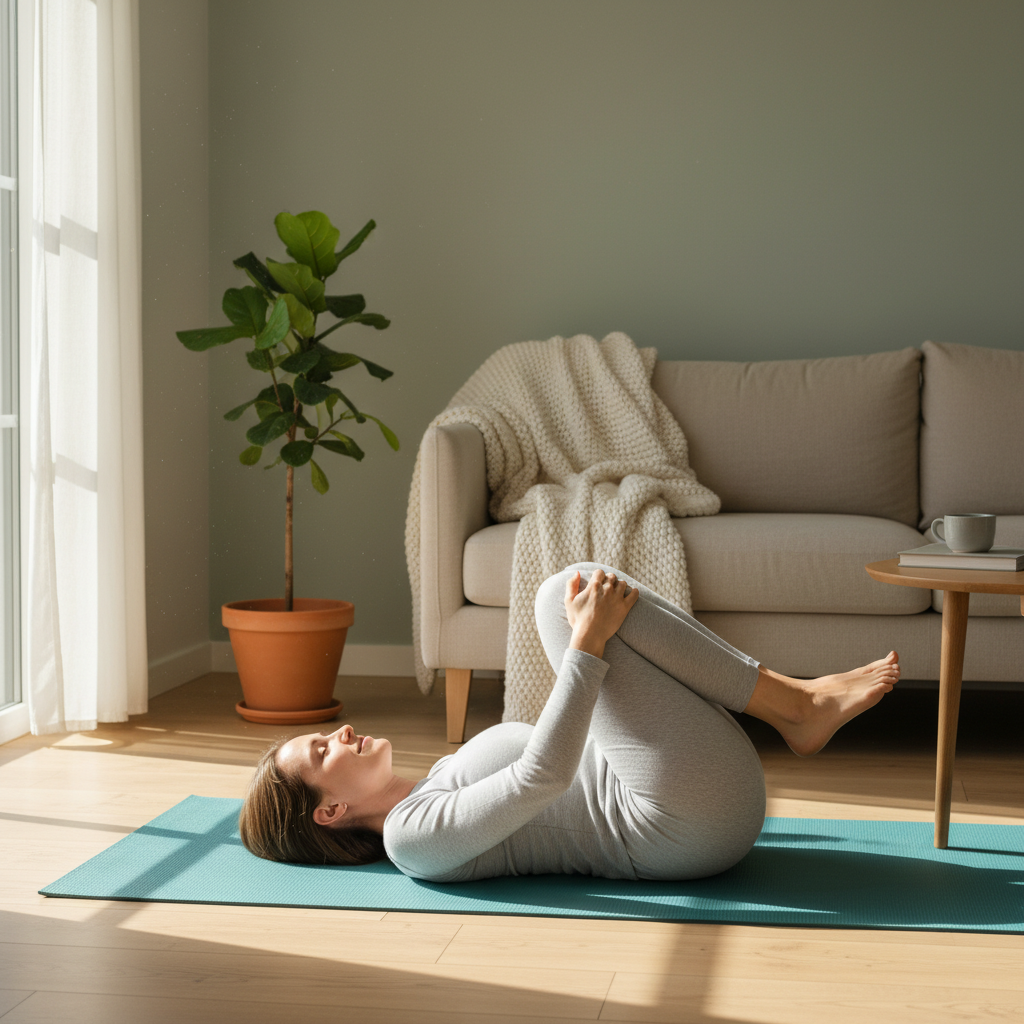
10 Best Stretches for Lower Back Pain Relief
Lower back pain is a common, often debilitating issue that affects millions worldwide. It can turn simple daily tasks into monumental challenges, impacting everything from your work performance to your ability to enjoy time with loved ones. If you’ve ever experienced that nagging ache, sharp twinge, or persistent stiffness in your lower back, you know how much it can disrupt your life. The good news is that relief is often within reach, and one of the most powerful, accessible tools for managing and preventing lower back pain is stretching.
This comprehensive guide will walk you through the 10 best stretches specifically designed to target the muscles contributing to lower back discomfort. We’ll explain why these stretches work, provide step-by-step instructions for proper form, and offer practical tips for integrating them into your daily routine. Get ready to reclaim your comfort, improve your flexibility, and move through life with greater ease.
Understanding Lower Back Pain and Why Stretching Helps
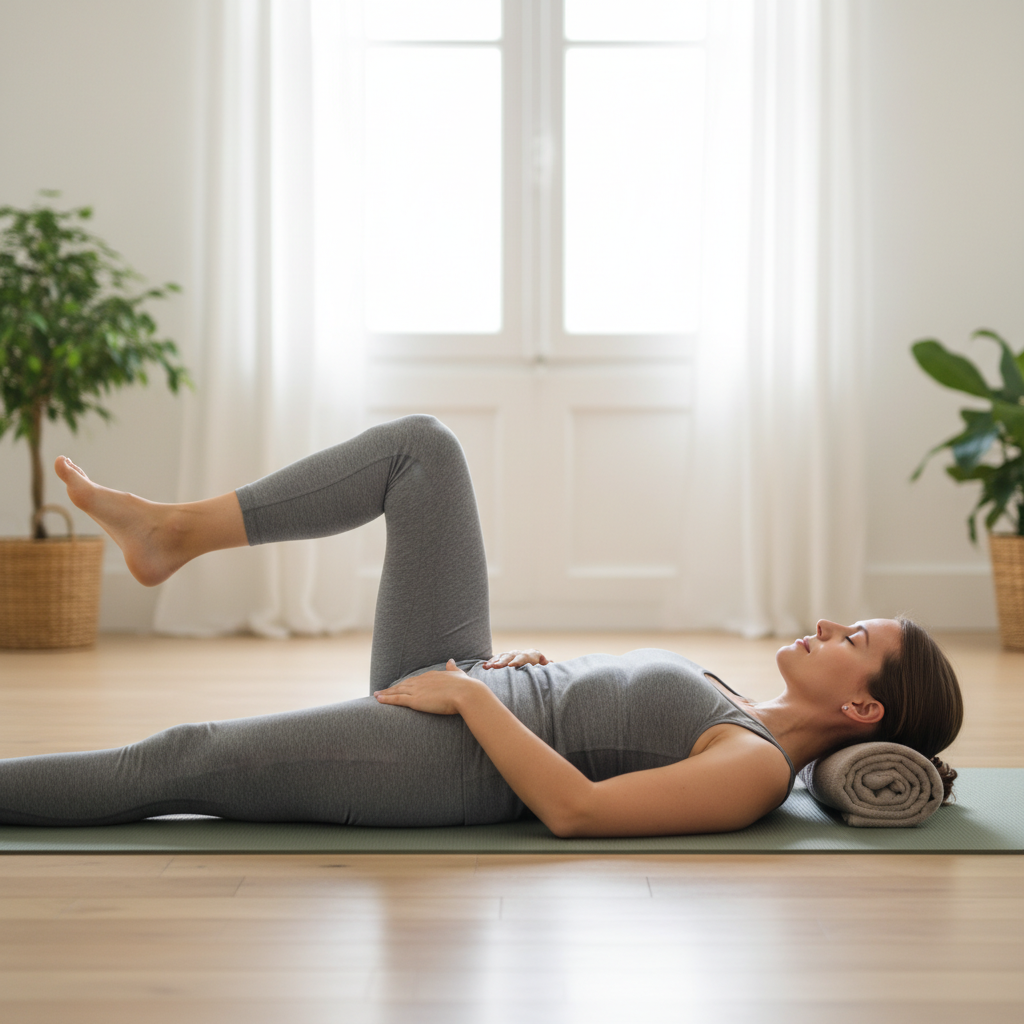
Your lower back, or lumbar spine, is a complex structure of bones, ligaments, muscles, and nerves. It supports the weight of your upper body, provides flexibility for movement, and protects your spinal cord. When any of these components are stressed, strained, or tight, it can lead to pain. Common culprits include prolonged sitting, poor posture, muscle imbalances, injuries, or even stress.
Stretching offers a natural and effective way to combat lower back pain by addressing several key factors:
- Increased Flexibility Tight muscles, especially in the hips, hamstrings, and glutes, can pull on the pelvis and lumbar spine, contributing to pain. Stretching helps lengthen these muscles, reducing tension.
- Improved Blood Flow Gentle movement and stretching can enhance circulation to the affected areas, bringing vital nutrients and oxygen for healing.
- Reduced Muscle Spasms Stretching can help calm overactive or spasming muscles, providing immediate relief from acute discomfort.
- Better Posture By improving flexibility and muscle balance, stretching can help correct postural issues that place undue stress on your lower back.
- Stress Reduction The act of mindfully stretching can also be a calming practice, helping to reduce overall body tension which often exacerbates pain.
Before You Begin – Important Considerations
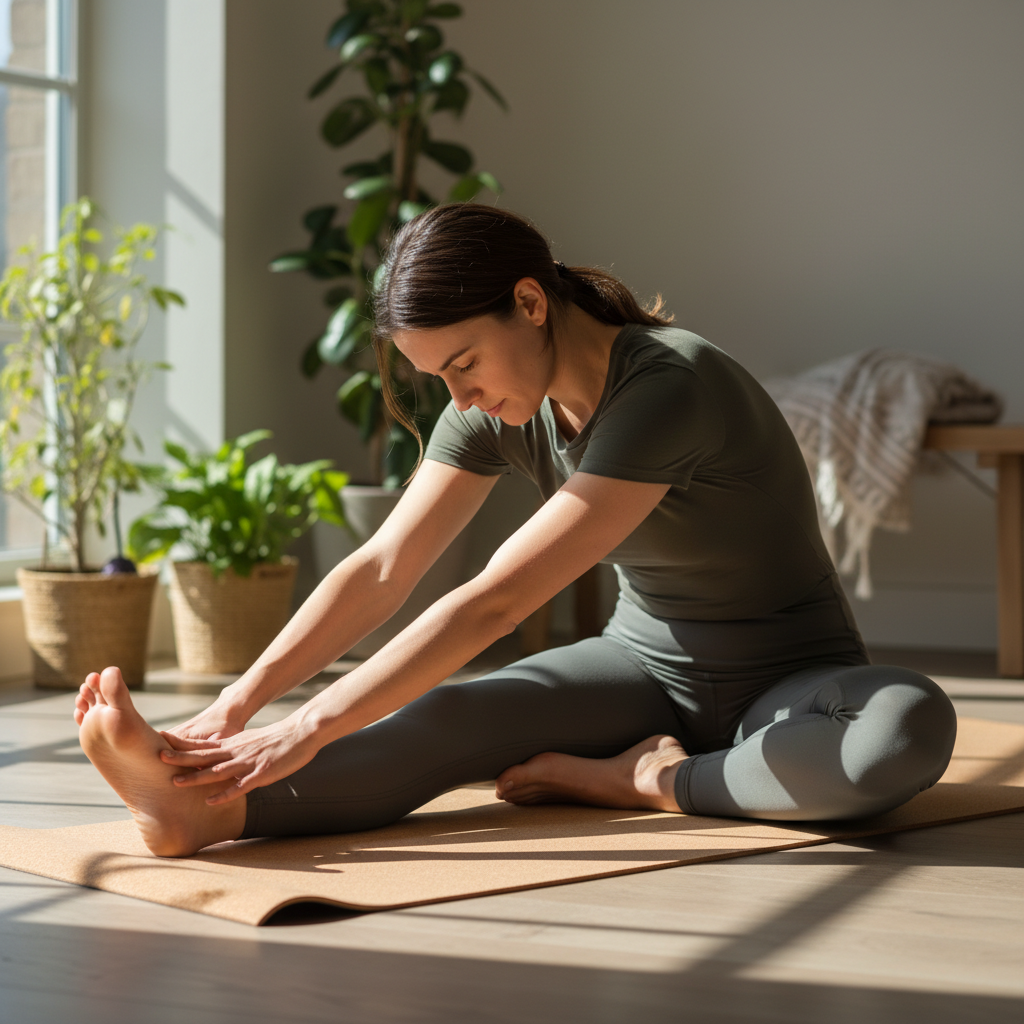
While stretching is generally safe and beneficial, a few guiding principles will ensure you get the most out of your routine and avoid any potential setbacks.
Listen to Your Body
This is perhaps the most crucial rule. A stretch should feel like a gentle pull, not sharp pain. If you feel any intense pain, ease off immediately. Never force a stretch. Your body will tell you what it needs.
Consistency is Key
Like any healthy habit, the benefits of stretching accumulate over time. Aim for short, regular stretching sessions rather than infrequent, intense ones. Even 5-10 minutes a day can make a significant difference.
Proper Form Matters
Executing each stretch correctly is essential to target the intended muscles and prevent injury. Pay close attention to the instructions provided for each movement.
The 10 Best Stretches for Lower Back Pain Relief
Here are our top picks for stretches that can provide significant relief for your lower back.
1. Knee-to-Chest Stretch
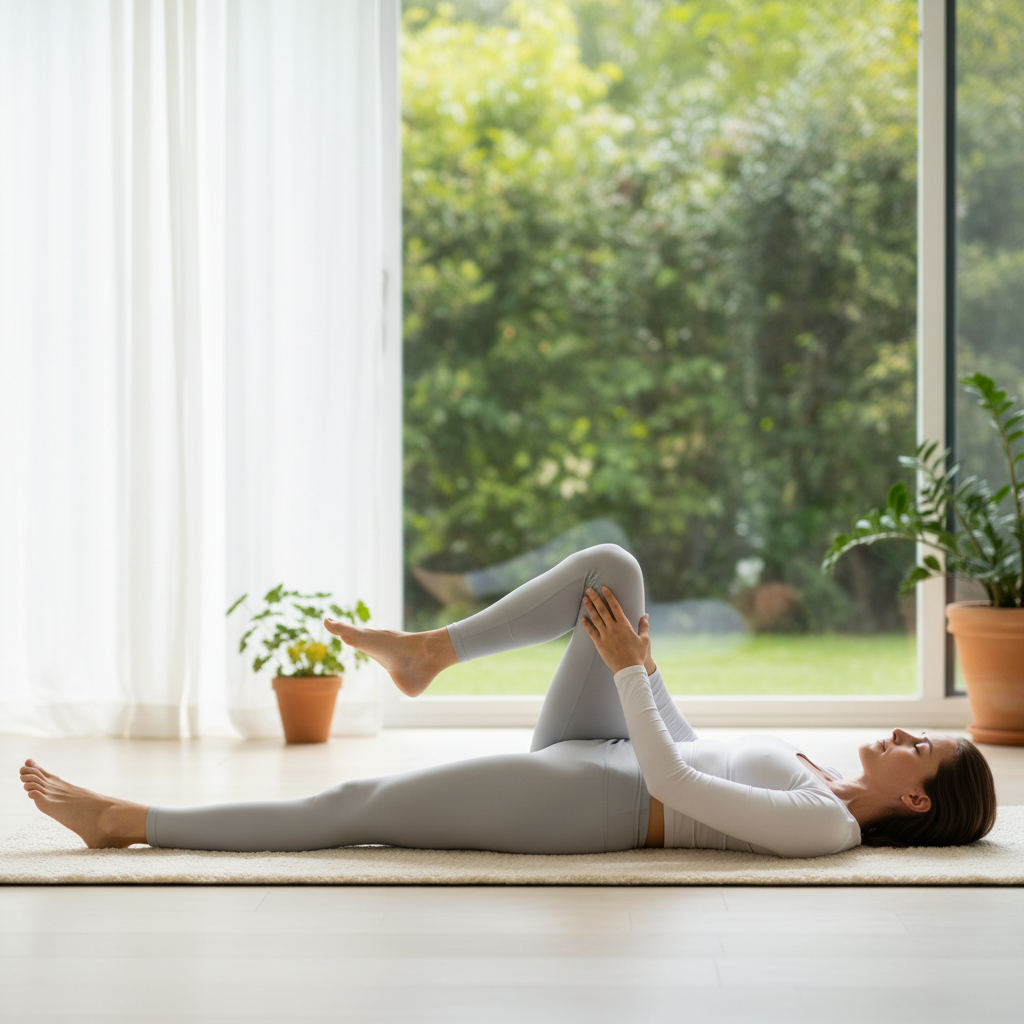
This classic stretch gently lengthens the muscles in your lower back and glutes, helping to decompress the spine.
How to Perform
- Lie on your back with your knees bent and feet flat on the floor.
- Bring one knee towards your chest, grasping it with both hands.
- Gently pull the knee closer to your chest until you feel a comfortable stretch in your lower back and glute.
- Hold for 20-30 seconds.
- Release and repeat with the other leg.
- For a deeper stretch, you can try pulling both knees towards your chest simultaneously.
Benefits
Relieves tension in the lumbar spine, stretches glutes and hamstrings, and can help with sciatica.
2. Pelvic Tilts
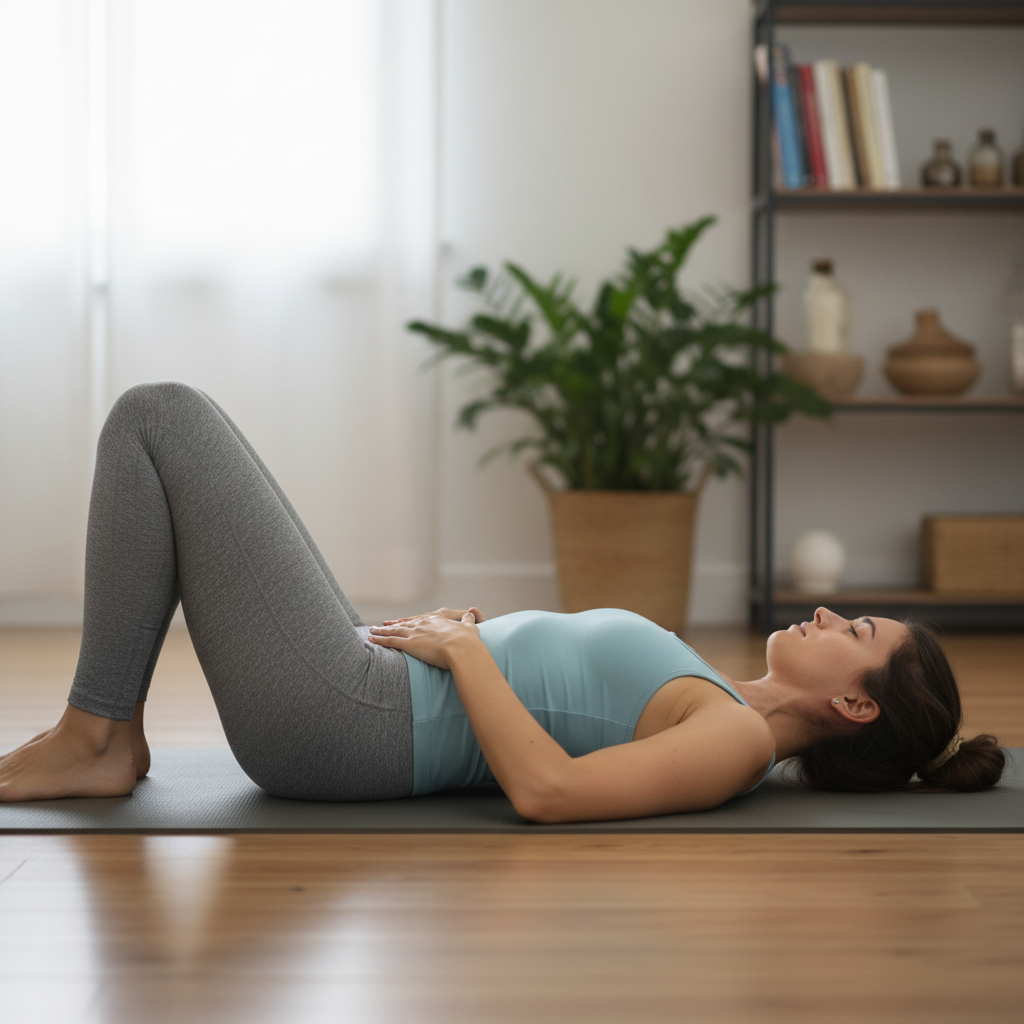
Pelvic tilts are excellent for gently mobilizing the lower spine and strengthening core muscles without putting stress on the back.
How to Perform
- Lie on your back with your knees bent and feet flat on the floor, about hip-width apart.
- Flatten your lower back against the floor by tightening your abdominal muscles and gently tilting your pelvis upwards. You should feel your tailbone lift slightly.
- Hold for 5-10 seconds, focusing on pressing your lower back down.
- Relax and gently arch your lower back, creating a small space between your back and the floor, tilting your pelvis downwards.
- Repeat 10-15 times, moving slowly and smoothly.
Benefits
Improves lumbar mobility, strengthens deep core muscles, and increases awareness of pelvic positioning.
3. Cat-Cow Stretch
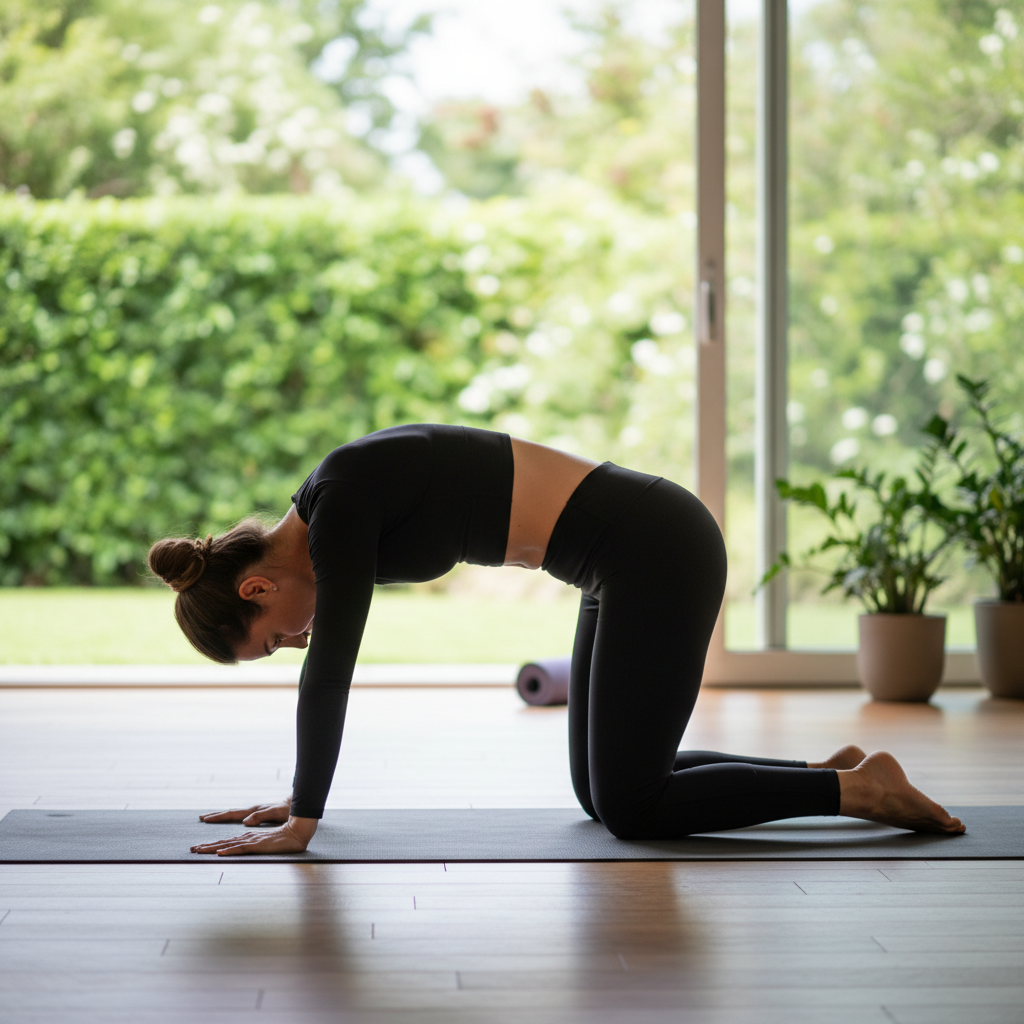
A dynamic stretch that warms up the spine, improves flexibility, and can alleviate stiffness in the back and neck.
How to Perform
- Start on your hands and knees, with your hands directly under your shoulders and knees under your hips.
- Inhale as you drop your belly towards the floor, lift your chest and tailbone, and look gently upwards (Cow Pose).
- Exhale as you round your spine towards the ceiling, tuck your tailbone, and let your head relax towards the floor (Cat Pose).
- Flow smoothly between these two positions for 10-15 repetitions, synchronizing with your breath.
Benefits
Increases spinal flexibility, massages the back muscles, and improves coordination and balance.
4. Child’s Pose

A restorative pose that gently stretches the lower back, hips, and thighs, while promoting relaxation.
How to Perform
- Start on your hands and knees.
- Sit back on your heels, bringing your big toes to touch.
- Widen your knees to the edges of your mat or as far as comfortable.
- Fold your torso forward, resting your chest between your thighs.
- Extend your arms forward with palms down, or rest them alongside your body with palms up.
- Rest your forehead on the mat.
- Breathe deeply and hold for 30 seconds to several minutes.
Benefits
Gently stretches the lower back, hips, and thighs, calms the mind, and relieves stress.
5. Piriformis Stretch
The piriformis muscle, located deep in the buttock, can become tight and irritate the sciatic nerve. This stretch targets it directly.
How to Perform
- Lie on your back with your knees bent and feet flat on the floor.
- Cross one ankle over the opposite knee, creating a figure-four shape.
- Gently grasp the thigh of the leg that is on the floor (the supporting leg) and pull it towards your chest.
- You should feel a stretch in the glute and hip of the crossed leg.
- Hold for 20-30 seconds.
- Release and repeat on the other side.
Benefits
Relieves tension in the piriformis muscle, which can help alleviate sciatica-like pain.
6. Seated Spinal Twist
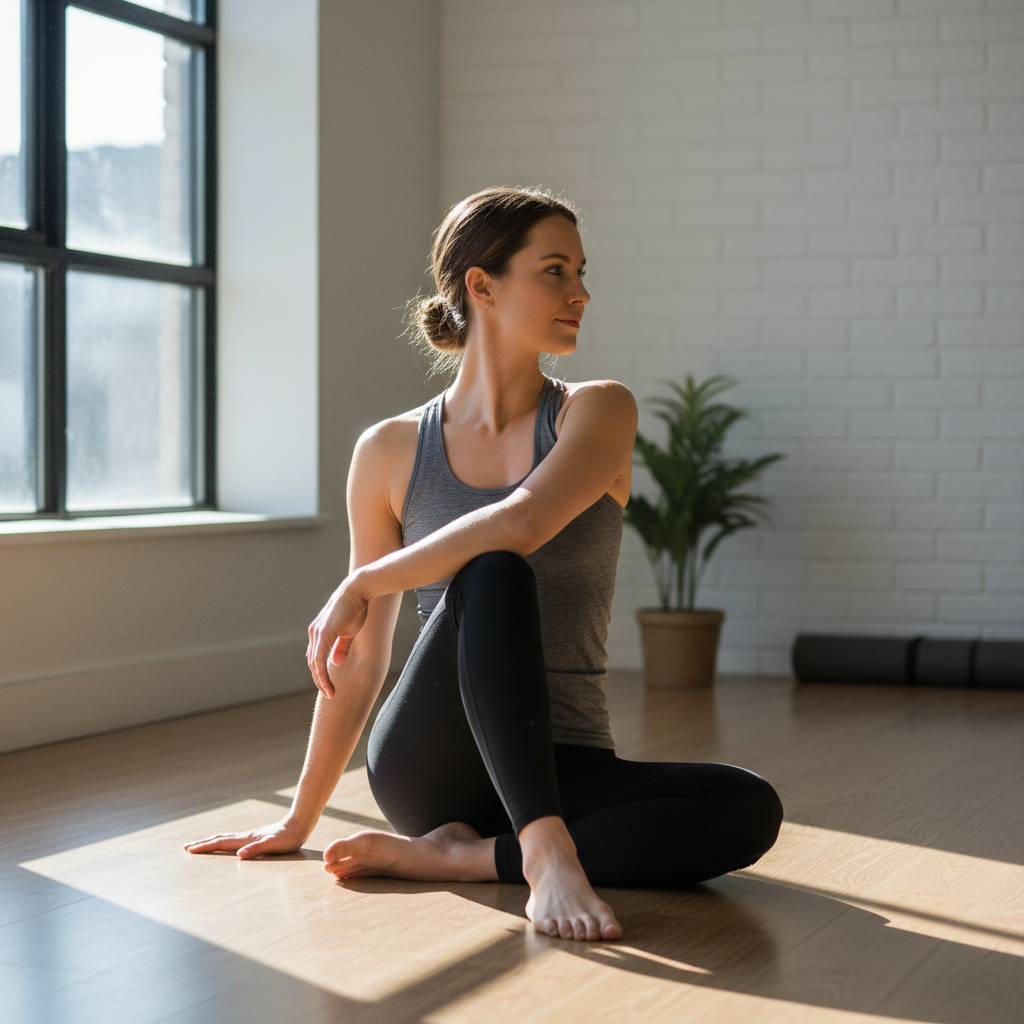
This twist mobilizes the spine, stretches the back muscles, and can improve overall spinal flexibility.
How to Perform
- Sit on the floor with both legs extended in front of you.
- Bend your right knee and place your right foot flat on the floor outside your left knee.
- Place your right hand on the floor behind you for support.
- Place your left elbow on the outside of your right knee, or hug your right knee with your left arm.
- Gently twist your torso to the right, looking over your right shoulder.
- Hold for 20-30 seconds.
- Release and repeat on the other side.
Benefits
Increases spinal rotation, stretches the back and abdominal muscles, and can improve digestion.
7. Hamstring Stretch – Wall or Towel Assisted
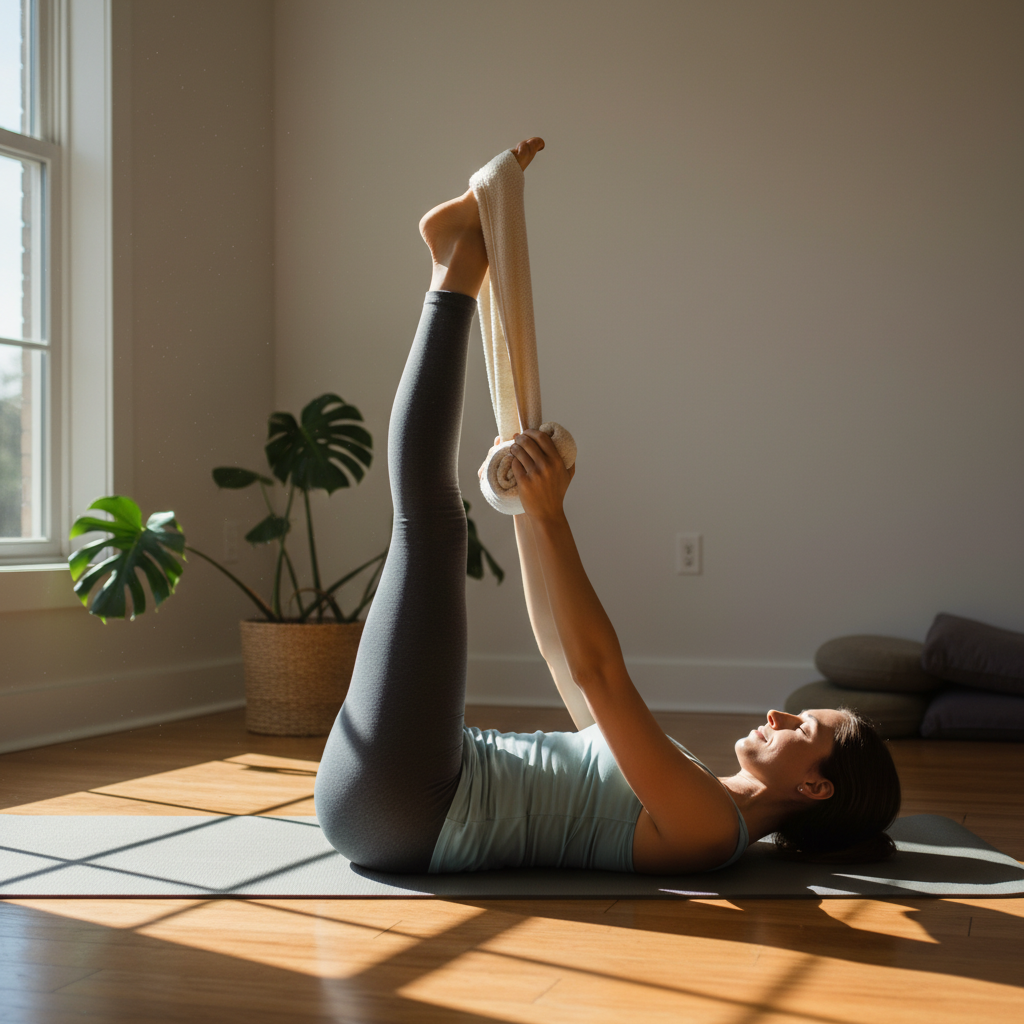
Tight hamstrings can pull on the pelvis, contributing to lower back pain. This stretch effectively lengthens them.
How to Perform
- Lie on your back near a wall, or with a towel/strap handy.
- If using a wall, extend one leg up against the wall, keeping the other leg bent with the foot flat on the floor.
- If using a towel, loop it around the ball of one foot. Extend that leg straight up towards the ceiling.
- Gently pull the leg towards you using the towel or by inching closer to the wall, until you feel a comfortable stretch in the back of your thigh.
- Keep your lower back pressed into the floor.
- Hold for 20-30 seconds.
- Release and repeat with the other leg.
Benefits
Lengthens tight hamstrings, which can alleviate tension on the lower back and improve posture.
8. Figure Four Stretch

Similar to the piriformis stretch, this variation can be done seated and targets the outer hip and glute muscles.
How to Perform
- Sit upright in a chair with your feet flat on the floor.
- Cross your right ankle over your left knee, creating a figure-four shape with your legs.
- Keeping your back straight, gently lean forward from your hips until you feel a stretch in your right glute and outer hip.
- Hold for 20-30 seconds.
- Release and repeat on the other side.
Benefits
Stretches the glutes and outer hips, helping to release tension that can contribute to lower back pain.
9. Sphinx or Cobra Pose – Gentle Backbend

Gentle backbends can help strengthen the back muscles and improve spinal extension, counteracting the effects of prolonged sitting.
How to Perform (Sphinx Pose)
- Lie on your stomach with your forearms on the floor, elbows directly under your shoulders.
- Press your forearms and palms into the floor, gently lifting your chest and head.
- Keep your hips and legs relaxed on the floor.
- Feel a gentle arch in your lower back. Avoid pushing too far if you feel discomfort.
- Hold for 20-30 seconds, breathing deeply.
- Release slowly back down.
Benefits
Strengthens back muscles, improves spinal flexibility, and helps to decompress the spine.
10. Standing Side Bend

This stretch targets the obliques and quadratus lumborum (QL) muscles, which run along the sides of your lower back and can often be tight.
How to Perform
- Stand tall with your feet hip-width apart.
- Raise your right arm overhead.
- Gently bend your torso to the left, reaching your right hand towards the left side. Keep your hips stable and avoid twisting.
- You should feel a stretch along the right side of your torso and lower back.
- Hold for 20-30 seconds.
- Return to center and repeat on the other side.
Benefits
Stretches the side body muscles, including the QL, which often contribute to stiffness and pain.
Integrating Stretches into Your Daily Life – A Path to Lasting Relief
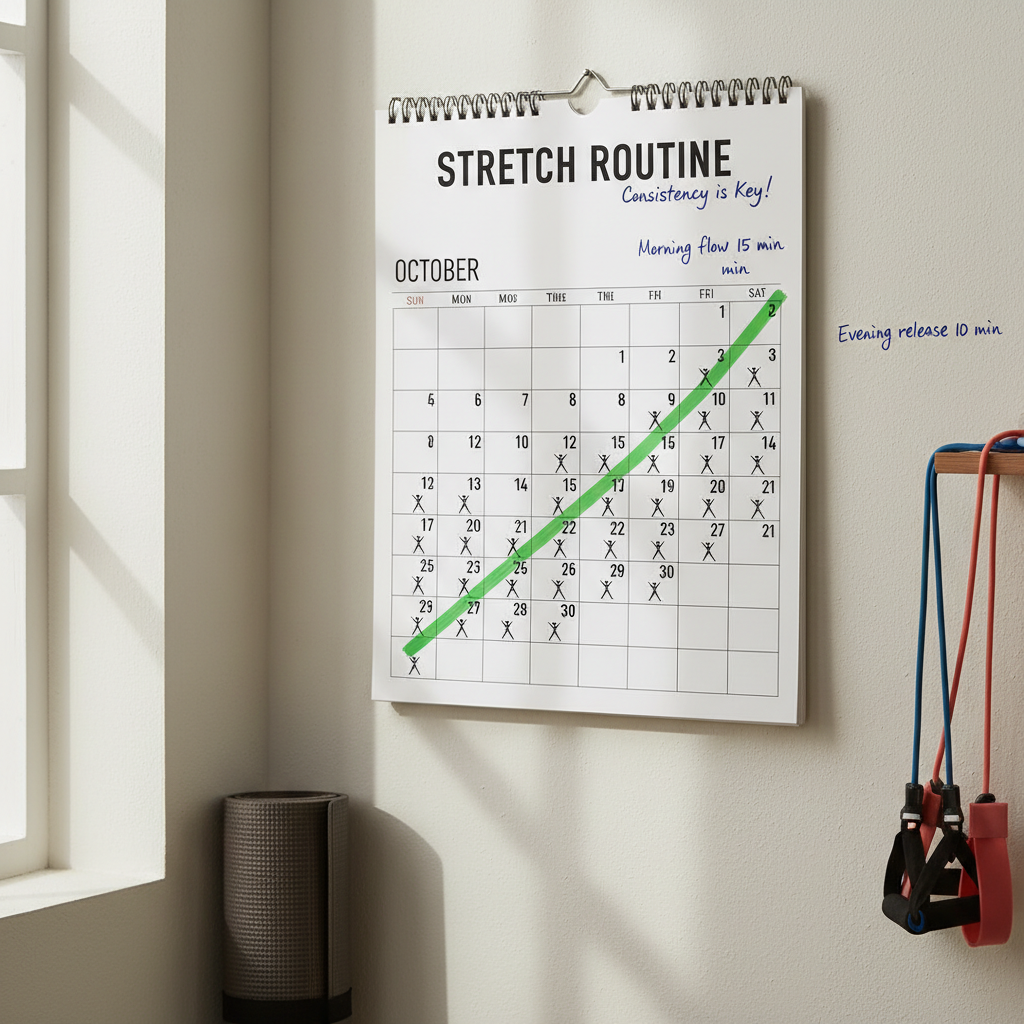
Knowing the stretches is one thing, but making them a consistent part of your routine is where the real magic happens. Here’s how to build lasting habits for a pain-free back.
Building a Consistent Routine
- Morning Ritual Start your day with a few gentle stretches to wake up your spine and muscles.
- Desk Breaks If you have a sedentary job, incorporate short stretching breaks every hour or two. Even a minute or two can make a difference.
- Evening Wind-Down Use stretching as a way to unwind and release tension before bed.
- Pair with an Existing Habit Link your stretching to something you already do daily, like brushing your teeth or drinking your morning coffee.
- Set Reminders Use your phone or a smart device to remind you to stretch throughout the day.
Sample Daily Stretching Plan
Here’s a simple routine you can follow daily:
- Knee-to-Chest Stretch (both legs) – 30 seconds each
- Pelvic Tilts – 10-15 repetitions
- Cat-Cow Stretch – 10-15 repetitions
- Child’s Pose – 30-60 seconds
- Piriformis Stretch (both sides) – 30 seconds each
This quick 5-10 minute sequence can be done once or twice a day to maintain flexibility and keep your lower back happy.
Mindset and Patience
Healing and strengthening take time. Don’t get discouraged if you don’t feel immediate, complete relief. Consistency, patience, and a positive mindset are your greatest allies. Celebrate small improvements, like being able to bend a little further or having fewer painful twinges throughout your day. Your body is incredibly resilient, and with mindful movement, you’re empowering it to heal and thrive.
When to Seek Professional Guidance
While these stretches are highly effective for many, it’s crucial to know when to seek professional medical advice. Consult a doctor or physical therapist if:
- Your pain is severe or worsening.
- You experience numbness, tingling, or weakness in your legs.
- Your pain is accompanied by fever, unexplained weight loss, or changes in bowel/bladder function.
- Stretching aggravates your pain.
- Your pain persists despite consistent stretching.
Conclusion – Reclaim Your Comfort and Movement
Lower back pain doesn’t have to be a life sentence. By incorporating these 10 simple yet powerful stretches into your daily routine, you’re taking a proactive step towards greater comfort, improved mobility, and a higher quality of life. Remember, your body is designed to move, and gentle, consistent stretching is a profound way to honor its capabilities and support its well-being.
Don’t wait for the pain to become unbearable. Start today. Choose a few stretches that feel good, commit to a consistent practice, and experience the transformative power of mindful movement. You deserve to move freely, live fully, and embrace every moment without the constant shadow of lower back discomfort. Take that first step towards a stronger, more flexible, and pain-free you.


