7 Bodyweight Exercises to Build Muscle Without Using Weights
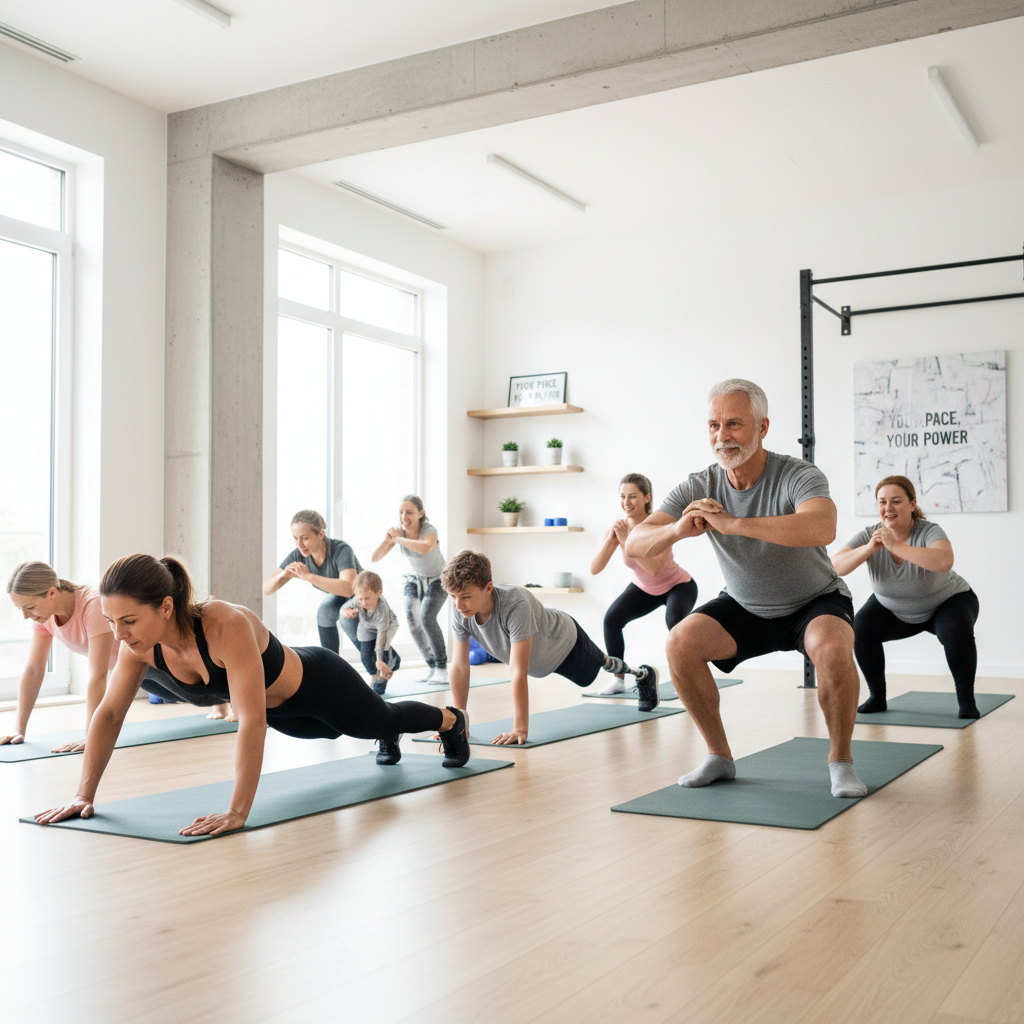
Dreaming of a stronger, more muscular physique but don’t have access to a gym or expensive equipment? It’s a common misconception that you need heavy weights to build significant muscle. The truth is, your own body provides a powerful and incredibly versatile tool for strength and muscle growth. Bodyweight training isn’t just for beginners; it’s a foundational, effective, and accessible path to a lean, powerful physique.
This guide will introduce you to seven essential bodyweight exercises that target major muscle groups, along with strategies to ensure continuous progress. Get ready to transform your body, build lasting strength, and embrace a fitness journey that’s always within reach.
Understanding Bodyweight Training for Muscle Growth

Building muscle, or hypertrophy, occurs when your muscles are challenged beyond their current capacity, leading to microscopic tears that repair and grow back stronger. While barbells and dumbbells are effective, your bodyweight offers a unique form of resistance that can be just as demanding and rewarding.
How Bodyweight Builds Muscle
Bodyweight exercises leverage gravity and your own mass to create resistance. When you perform movements like push-ups or squats, your muscles work against your body’s weight, stimulating growth. The beauty of bodyweight training lies in its emphasis on functional strength, core stability, and improved body control, translating into real-world benefits far beyond just aesthetics.
Progressive Overload Without Weights
The core principle of muscle growth is progressive overload—consistently making your workouts more challenging over time. Without external weights, you might wonder how to achieve this. Here are key strategies:
- Increase Repetitions and Sets: Simply doing more reps or adding an extra set can significantly increase the demand on your muscles.
- Decrease Rest Times: Shorter breaks between sets keep your muscles under tension for longer, boosting intensity.
- Slow Down the Tempo: Performing movements slower, especially the eccentric (lowering) phase, increases time under tension and muscle activation.
- Improve Form and Range of Motion: Deeper squats or fuller push-ups make the exercise more challenging and effective.
- Advanced Variations: Once a basic exercise becomes easy, switch to a harder variation (e.g., knee push-ups to regular push-ups, then decline push-ups).
- Unilateral Training: Working one limb at a time (e.g., pistol squats, single-leg lunges) dramatically increases the challenge.
The 7 Essential Bodyweight Exercises
These exercises form the cornerstone of a comprehensive bodyweight strength program, targeting your entire body for balanced development.
Push-ups- The Chest and Triceps Builder
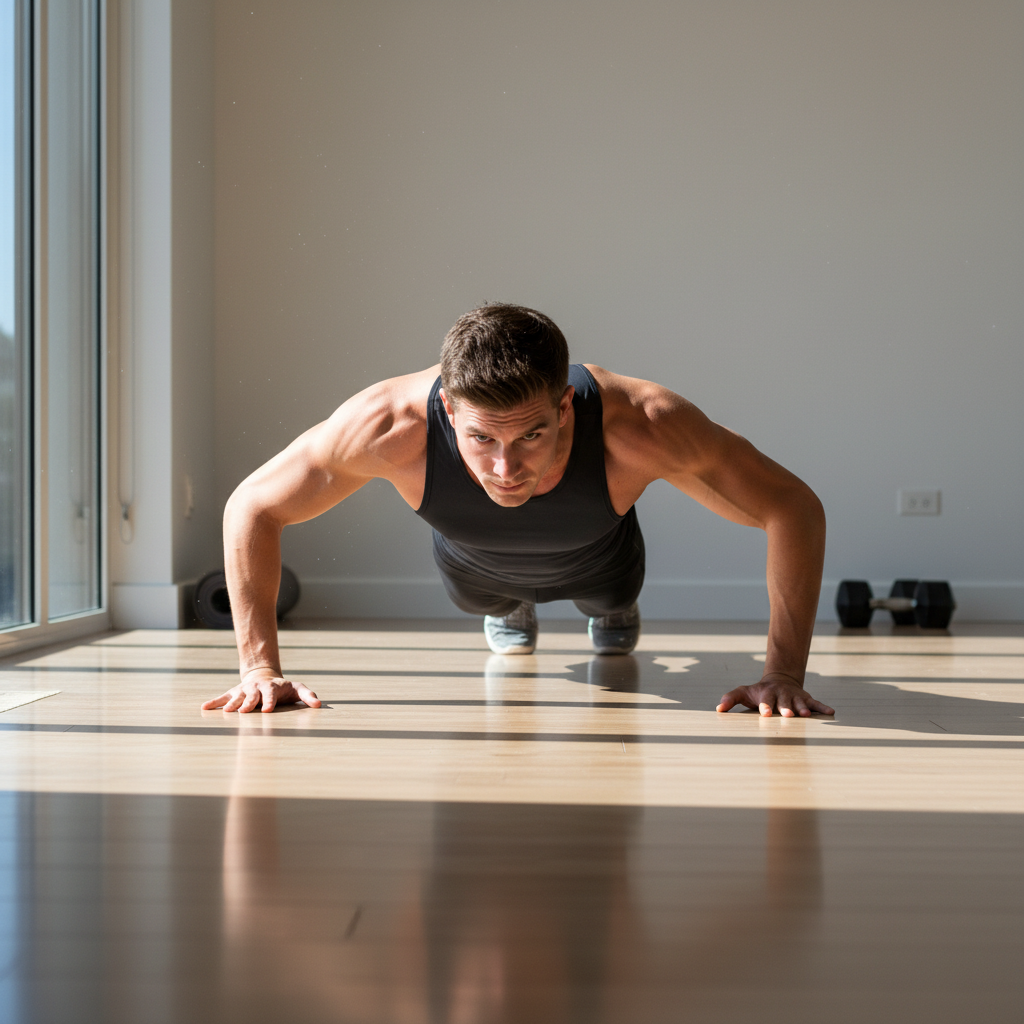
The push-up is a classic compound exercise that effectively works your chest, shoulders, and triceps, while also engaging your core. It’s incredibly versatile and scalable.
- How to Perform: Start in a plank position, hands slightly wider than shoulder-width, fingers pointing forward. Keep your body in a straight line from head to heels. Lower your chest towards the floor by bending your elbows, keeping them tucked slightly. Push back up to the starting position.
- Variations for Progression:
- Knee Push-ups: For beginners, drop to your knees to reduce the load.
- Incline Push-ups: Elevate your hands on a bench or sturdy surface to make it easier.
- Decline Push-ups: Elevate your feet on a bench to increase the difficulty, targeting the upper chest more.
- Diamond Push-ups: Bring your hands close together, forming a diamond shape with your thumbs and index fingers, to heavily emphasize triceps.
Squats- Lower Body Powerhouse
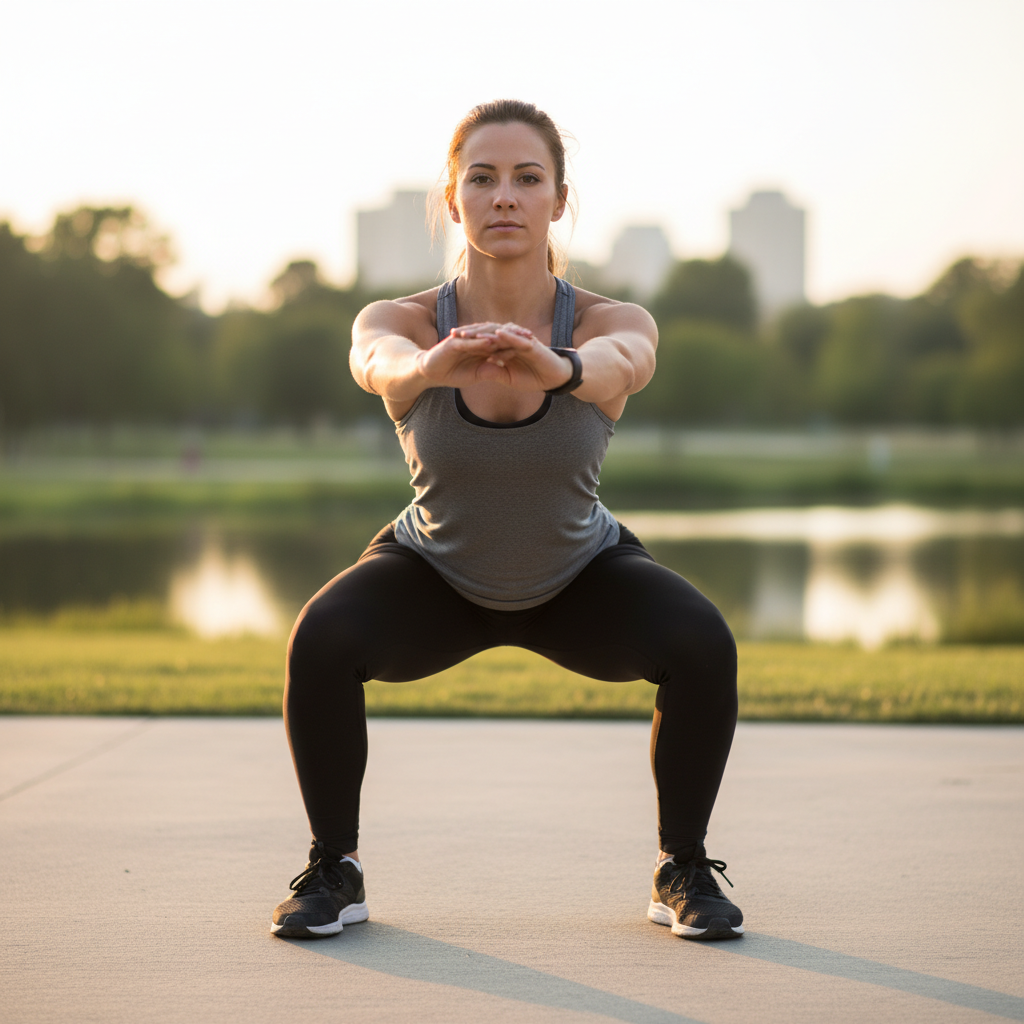
Squats are fundamental for building strong legs and glutes. They are a compound movement that mimics everyday activities and are crucial for overall lower body strength and mobility.
- How to Perform: Stand with your feet shoulder-width apart, toes pointing slightly out. Keep your chest up and core engaged. Initiate the movement by pushing your hips back as if sitting in a chair, then bend your knees. Lower until your thighs are parallel to the floor (or as deep as comfortable with good form). Push through your heels to return to the starting position.
- Variations for Progression:
- Wall Squats: Lean against a wall and hold a squat position for time.
- Sumo Squats: Widen your stance and point toes further out to target inner thighs and glutes more.
- Jump Squats: Explode upwards from the bottom of the squat, landing softly back into a squat.
- Pistol Squats: An advanced unilateral exercise where you squat on one leg while extending the other forward.
Lunges- Unilateral Leg Strength
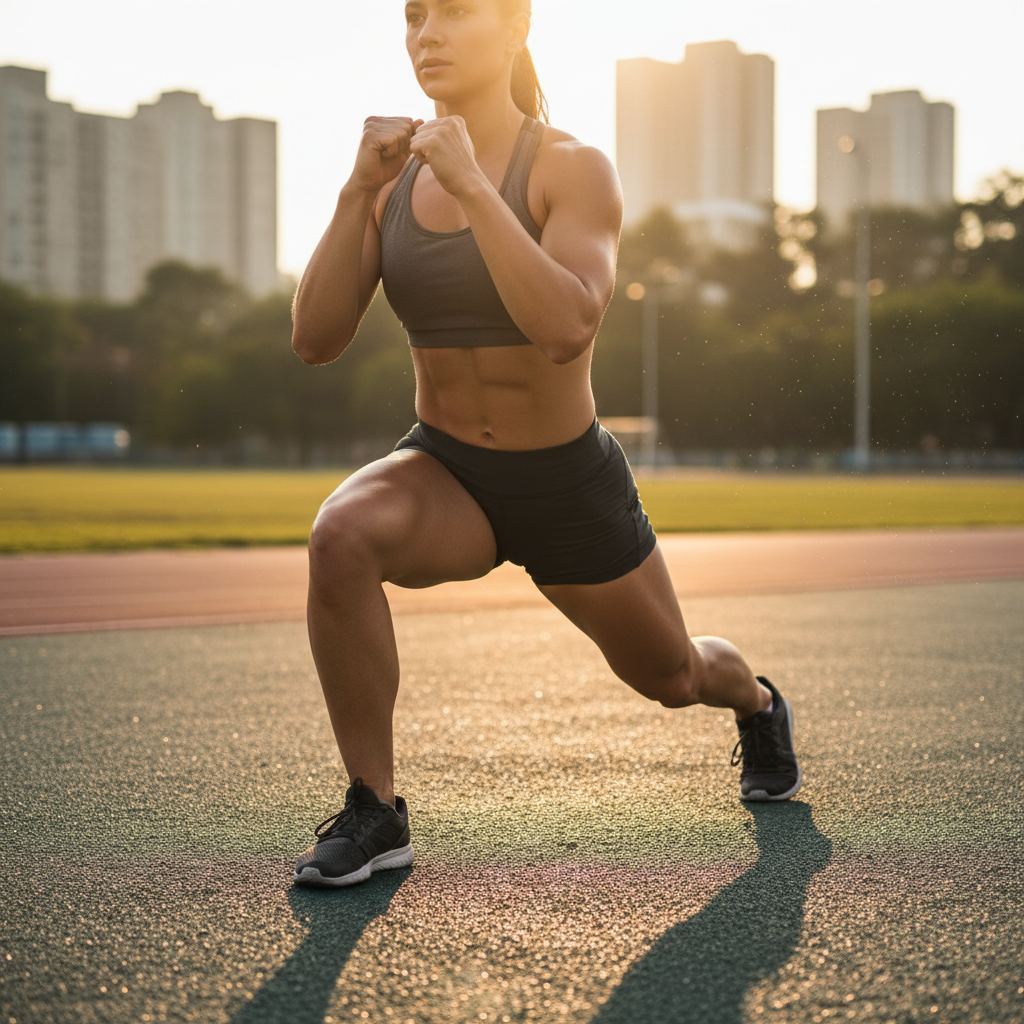
Lunges are excellent for building unilateral leg strength, improving balance, and targeting each leg independently, which can help correct muscle imbalances.
- How to Perform: Stand tall with your feet hip-width apart. Step forward with one leg, lowering your hips until both knees are bent at approximately a 90-degree angle. Ensure your front knee is directly over your ankle and your back knee hovers just above the floor. Push off your front foot to return to the starting position. Alternate legs.
- Variations for Progression:
- Reverse Lunges: Step backward instead of forward, often easier on the knees.
- Walking Lunges: Continue stepping forward, moving across a space.
- Lateral Lunges: Step to the side, keeping one leg straight, to target inner and outer thighs.
- Jump Lunges: Explode upwards from the bottom of a lunge, switching legs in mid-air.
Planks- Core Stability and Strength
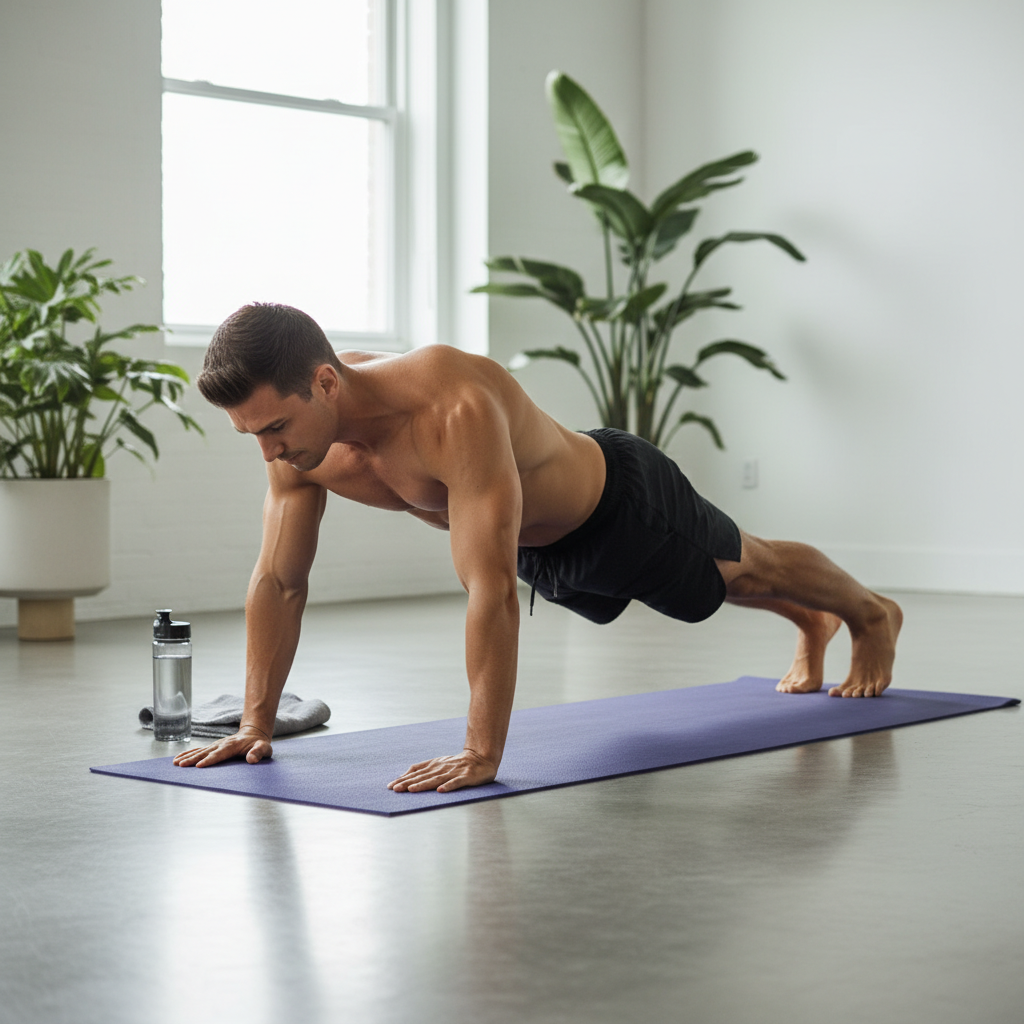
The plank is a powerhouse for core strength, far more effective than traditional crunches for building foundational stability in your abs, back, and shoulders.
- How to Perform: Start in a push-up position, then lower onto your forearms, keeping your elbows directly under your shoulders. Maintain a straight line from your head to your heels, engaging your core, glutes, and quads. Avoid letting your hips sag or rise too high. Hold for time.
- Variations for Progression:
- Side Plank: Support your body on one forearm and the side of your foot, keeping your body in a straight line.
- Plank Jacks: While holding a plank, jump your feet wide and then back together, similar to a jumping jack.
- Plank Shoulder Taps: From a full plank position (on hands), tap your opposite shoulder, minimizing hip movement.
Dips- Triceps and Chest Strength
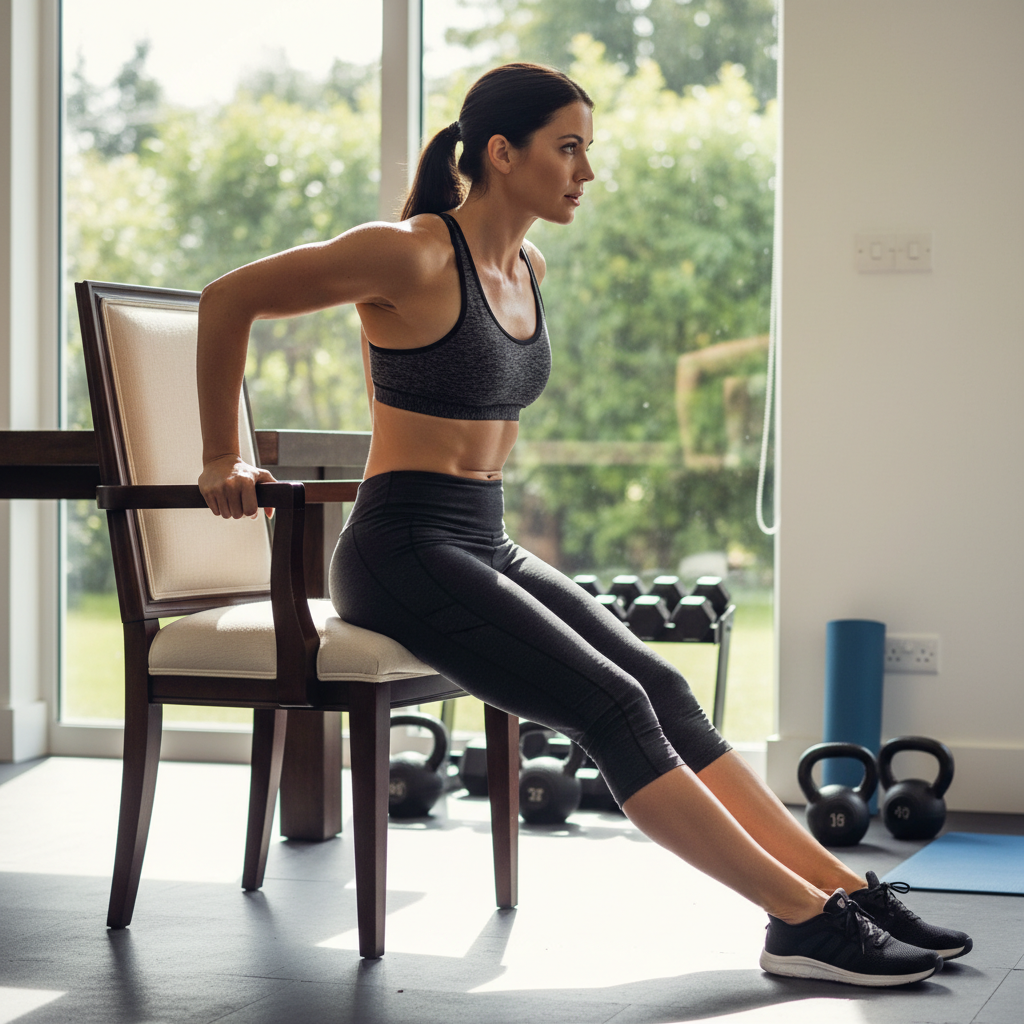
Bodyweight dips are fantastic for isolating the triceps and also engage the chest and shoulders. They are easily performed using a sturdy chair, bench, or even a low table.
- How to Perform: Sit on the edge of a sturdy chair or bench, hands gripping the edge beside your hips, fingers pointing forward. Slide your hips off the chair, supporting your weight with your arms. Keep your legs extended or bent, depending on your strength level. Lower your body by bending your elbows until they reach about a 90-degree angle, keeping your back close to the chair. Push back up to the starting position.
- Variations for Progression:
- Bent-Knee Dips: Keep knees bent and feet flat for an easier version.
- Elevated Feet Dips: Place your feet on another chair or elevated surface to increase the resistance.
- Single-Leg Dips: Lift one leg off the ground to increase the load on the working arms.
Pull-ups or Inverted Rows- Upper Body Pulling Power
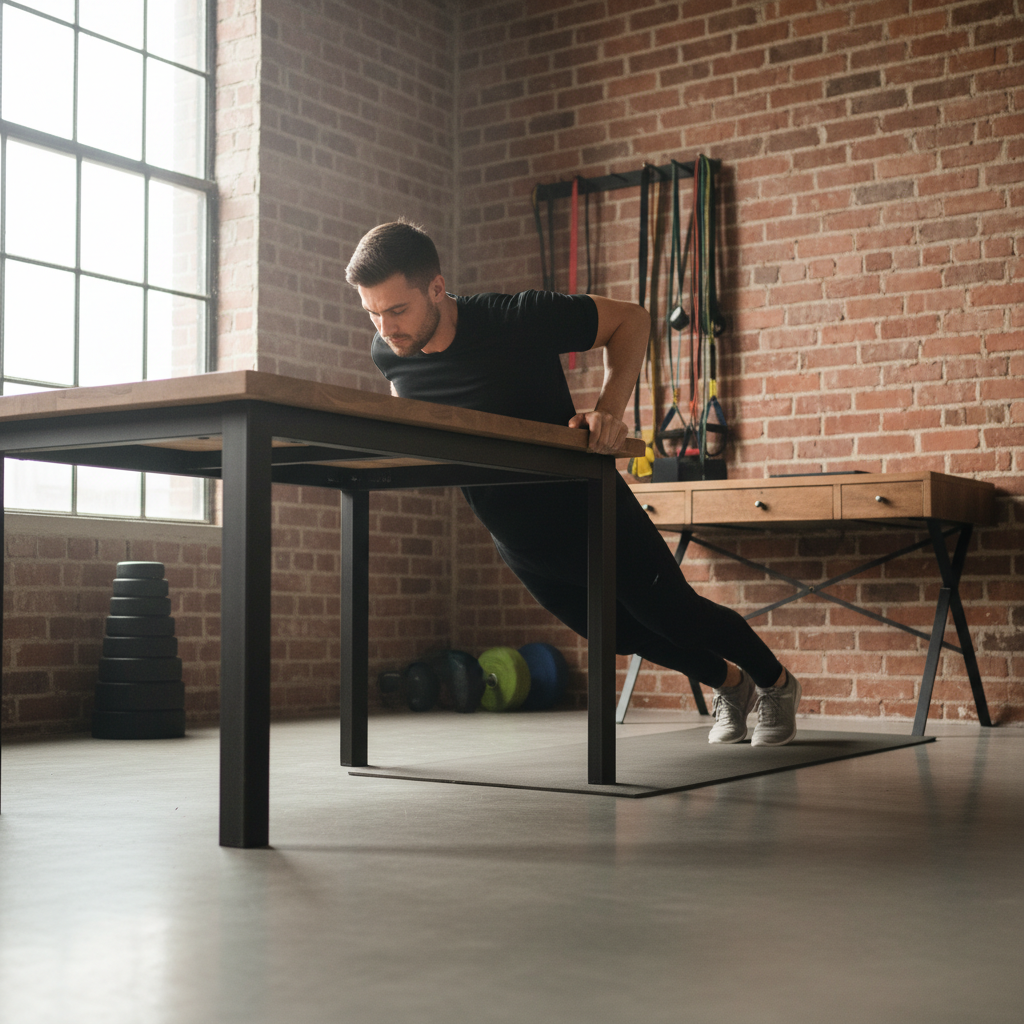
Building a strong back and biceps often feels challenging without a pull-up bar. The inverted row is an excellent alternative that builds foundational pulling strength.
- How to Perform (Inverted Rows): Lie on your back underneath a sturdy table, a low sturdy bar, or even a broomstick placed across two chairs. Grip the edge of the table or bar with an overhand grip, hands shoulder-width apart. Keep your body straight from head to heels. Pull your chest towards the table/bar, squeezing your shoulder blades together. Lower yourself slowly and with control.
- Variations for Progression:
- Bent Knee Inverted Rows: Bend your knees and place your feet flat on the floor for less resistance.
- Elevated Feet Inverted Rows: Place your feet on a chair or elevated surface to increase the difficulty.
- Vary Grip Width: Experiment with wider or narrower grips to target different back muscles.
Burpees- Full Body Conditioning
The burpee is a highly effective, full-body exercise that combines strength, cardio, and agility. It’s a fantastic way to elevate your heart rate and challenge multiple muscle groups simultaneously.
- How to Perform: Start standing tall. Drop into a squat, placing your hands on the floor in front of you. Kick your feet back into a plank position. Perform a push-up (optional). Jump your feet back towards your hands. Explode upwards into a jump, reaching your hands overhead. Land softly and repeat.
- Variations for Progression:
- No Push-up Burpees: Omit the push-up portion if it’s too challenging.
- Step-out Burpees: Step your feet back and forward instead of jumping.
- Box Jump Burpees: Finish with a jump onto a sturdy box or elevated surface.
Crafting Your Bodyweight Workout Plan
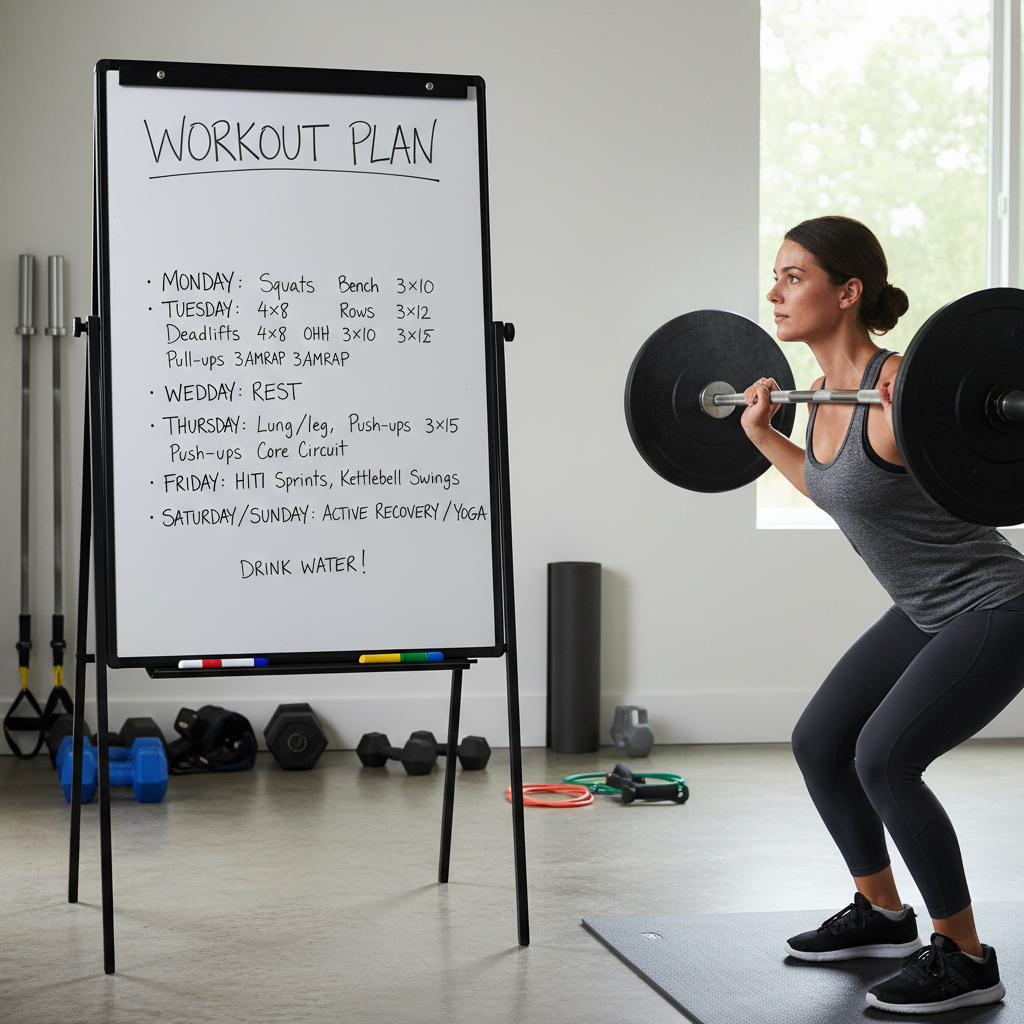
Consistency and structure are vital for seeing results. Here’s how to put these exercises into a powerful routine.
Sample Weekly Routine
Aim for 3-4 full-body workouts per week, allowing a day of rest between sessions for muscle recovery. This sample routine focuses on balanced development.
- Warm-up (5-10 minutes): Light cardio (jogging in place, jumping jacks), dynamic stretches (arm circles, leg swings, torso twists).
- Workout Structure: Perform each exercise for 3-4 sets. For strength-focused movements, aim for 8-15 repetitions. For endurance or core exercises, aim for longer holds or higher reps. Rest 60-90 seconds between sets.
Example 3-Day Full-Body Plan:
Monday, Wednesday, Friday
- Push-ups: 3-4 sets of 8-15 repetitions (choose a variation that challenges you by the last few reps).
- Squats: 3-4 sets of 15-20 repetitions.
- Inverted Rows: 3-4 sets of as many reps as possible (AMRAP) with good form.
- Lunges: 3-4 sets of 10-12 repetitions per leg.
- Plank: 3-4 sets, hold for 30-60 seconds.
- Dips: 3-4 sets of 8-15 repetitions.
- Burpees: 3-4 sets of 8-12 repetitions (can be done as a finisher).
- Cool-down (5-10 minutes): Gentle static stretches, holding each stretch for 20-30 seconds. Focus on major muscle groups worked.
Progressive Overload Strategies
Remember, once an exercise feels too easy, it’s time to make it harder. Here’s a practical approach:
- Increase Reps/Sets: If you can comfortably do 15 perfect push-ups, try for 18, or add a fourth set.
- Decrease Rest: Shorten your rest periods from 90 seconds to 60 seconds.
- Move to a Harder Variation: Once you’ve maxed out reps on standard push-ups, try decline push-ups.
- Incorporate Tempo Training: For squats, try lowering for 3 seconds, pausing for 1 second, then standing up in 1 second.
Mindset and Consistency- The Real Muscle Builders
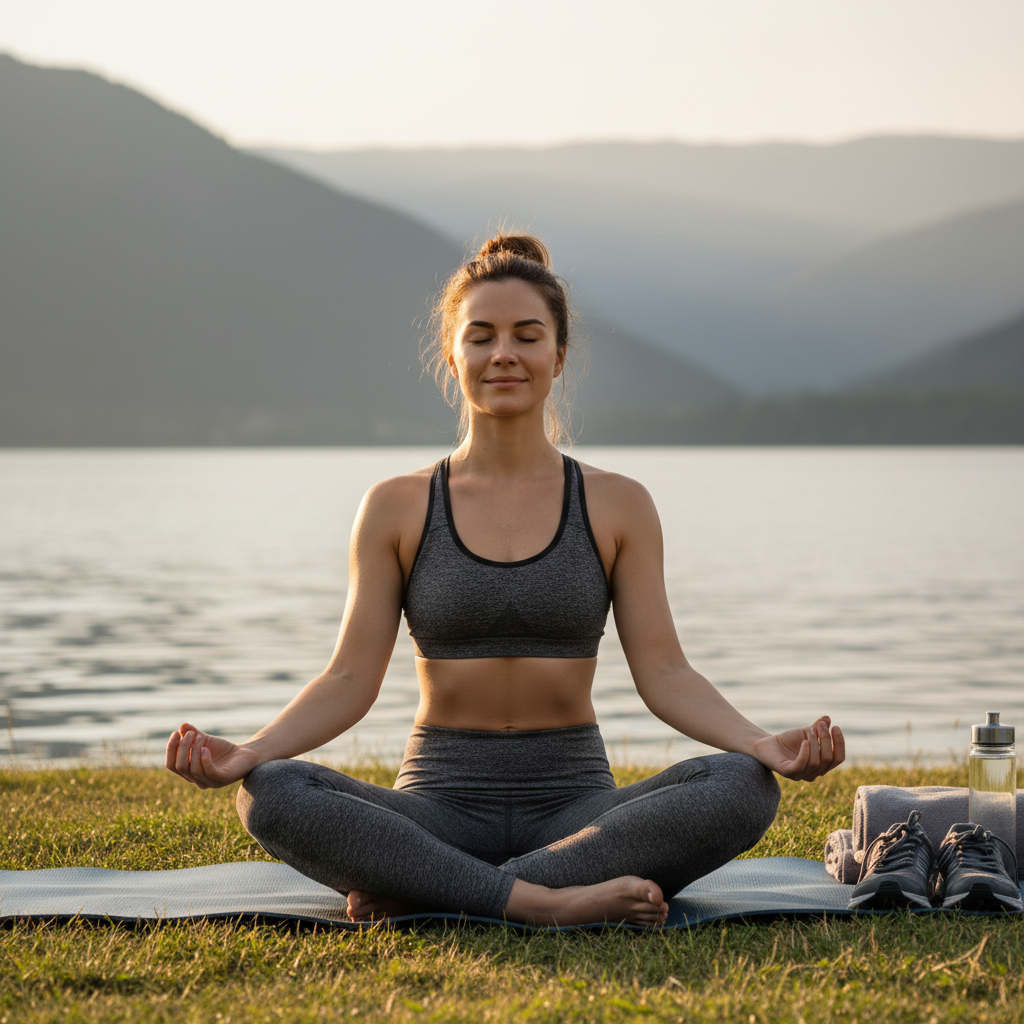
Physical training is only part of the equation. Your mindset and commitment to consistency are what truly drive long-term success.
Embrace the Journey
Building muscle takes time and patience. Don’t get discouraged if you don’t see immediate results. Focus on small, consistent improvements—an extra rep, a longer hold, better form. Celebrate these small victories. Your body is capable of incredible things, and every workout is a step forward.
Listen to Your Body
Recovery is just as important as the workout itself. Ensure you’re getting adequate sleep (7-9 hours), staying hydrated, and fueling your body with nutritious foods, especially protein for muscle repair. Don’t push through sharp pain; differentiate between muscle fatigue and injury. Rest days are when your muscles actually grow stronger.
Conclusion
You don’t need a gym, fancy equipment, or an expensive membership to build a strong, capable, and muscular physique. With just your bodyweight, dedication, and the right approach to progressive overload, you have everything you need to embark on an incredible fitness journey. These seven exercises are your foundation, a toolkit for lifelong strength and vitality.
Start today. Choose a few exercises, commit to a consistent routine, and watch as your body adapts, strengthens, and transforms. Believe in your inherent power and the incredible potential of your own body. Your journey to a stronger you begins now—one push-up, one squat, one determined effort at a time.