

The tricep kickback is a staple in many arm workouts, celebrated for its ability to isolate and sculpt the triceps. It seems straightforward enough—grab a dumbbell, extend your arm, and feel the burn. Yet, for many, this seemingly simple exercise becomes a source of frustration, yielding minimal results. If you’ve been diligently doing tricep kickbacks but your triceps aren’t growing, you’re likely falling prey to common mistakes that undermine your efforts. This guide will walk you through these pitfalls and provide clear, actionable steps to correct your form, ensuring every rep counts towards stronger, more defined triceps.
Why Your Triceps Deserve Attention
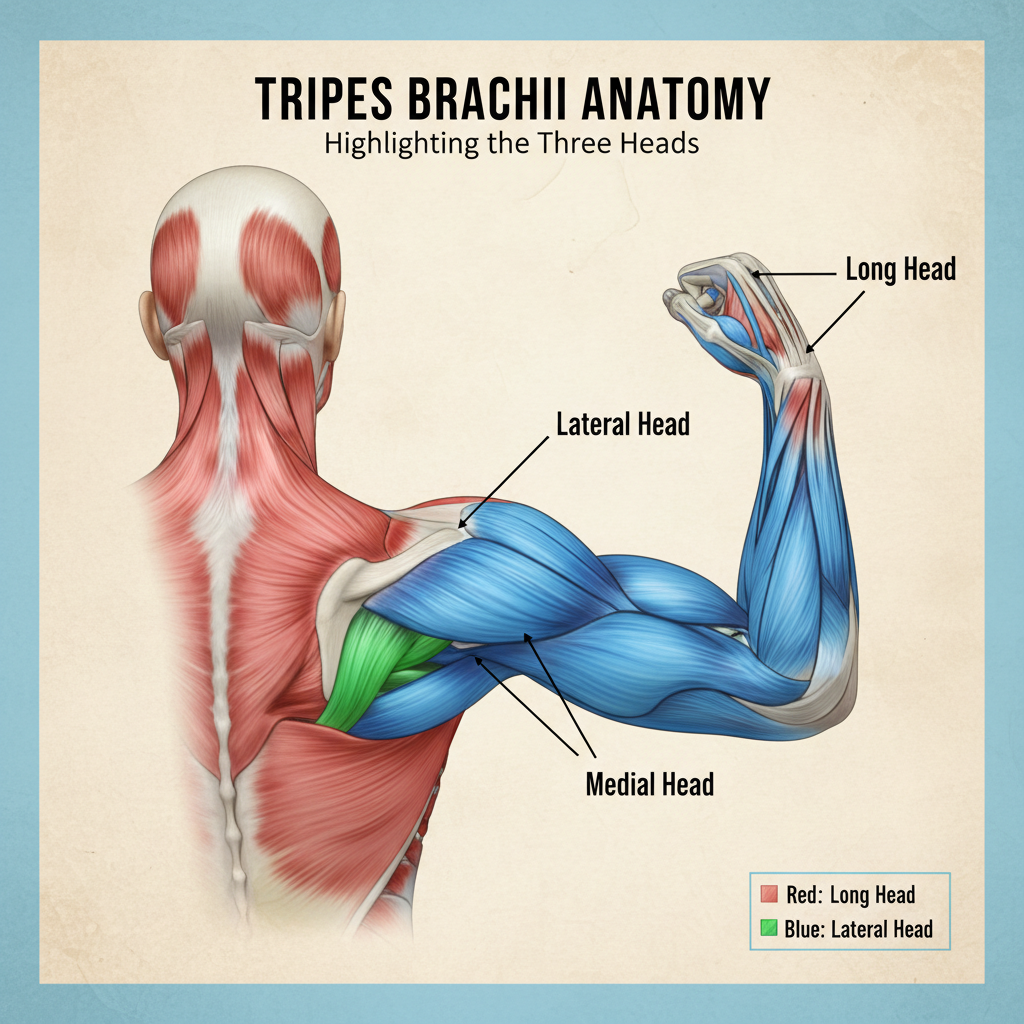
Your triceps brachii muscle, often overlooked in favor of biceps, makes up two-thirds of your upper arm mass. It’s crucial for extending your elbow joint, playing a vital role in pushing movements like push-ups, bench presses, and even everyday tasks. Strong triceps contribute to overall arm strength, improve athletic performance, and give your arms a toned, sculpted appearance. Neglecting them means missing out on significant upper body potential.
The Tricep Kickback’s Unique Benefit
The tricep kickback is unique because it emphasizes the long head of the triceps, which is often less activated in other tricep exercises. By extending your arm behind your body, you put the triceps in a fully contracted position, promoting peak contraction and muscle engagement. When done correctly, it’s an incredibly effective exercise for isolation and definition.
Common Tricep Kickback Mistakes That Limit Growth
Using Too Much Weight

This is perhaps the most common mistake. When the weight is too heavy, your body compensates by recruiting other muscles, primarily your shoulders and back, reducing the load on your triceps. You’ll often see the elbow dropping or the body swaying to generate momentum. The goal of a tricep kickback is isolation, which requires lighter weight and strict form.
How to Fix It
- Reduce the weight Focus on feeling the triceps contract.
- Prioritize form Choose a weight that allows you to perform the exercise flawlessly for 10-15 controlled repetitions.
Poor Elbow Position – Dropping the Elbow

Your upper arm should remain parallel to the floor and tucked close to your torso throughout the entire movement. If your elbow drops as you extend the weight, you lose the crucial leverage that isolates the triceps. This often happens when trying to lift too much weight or rushing the movement.
How to Fix It
- Anchor your elbow Imagine your elbow is pinned to your side and only your forearm moves.
- Maintain a stable upper arm Keep your upper arm still and parallel to the ground. If it moves, the weight is too heavy.
Lack of Full Extension – Not Locking Out

To fully engage the triceps, especially the long head, you need to extend your arm completely at the top of the movement. If you stop short, you miss out on the peak contraction that stimulates maximum muscle growth. This partial range of motion significantly reduces the exercise’s effectiveness.
How to Fix It
- Extend fully Consciously push the dumbbell back until your arm is straight, but without hyperextending your elbow.
- Squeeze at the top Focus on squeezing your triceps hard for a second at the very end of the extension.
No Squeeze at the Top
Connecting to the previous point, a quick extension without a deliberate squeeze diminishes the exercise’s impact. The triceps are most engaged in the fully contracted position. Without this intentional squeeze, you’re leaving gains on the table.
How to Fix It
- Hold the contraction Briefly pause (1-2 seconds) at the top of the movement, actively squeezing your triceps.
- Mind-muscle connection Really think about the muscle working.
Swinging the Weight – Using Momentum
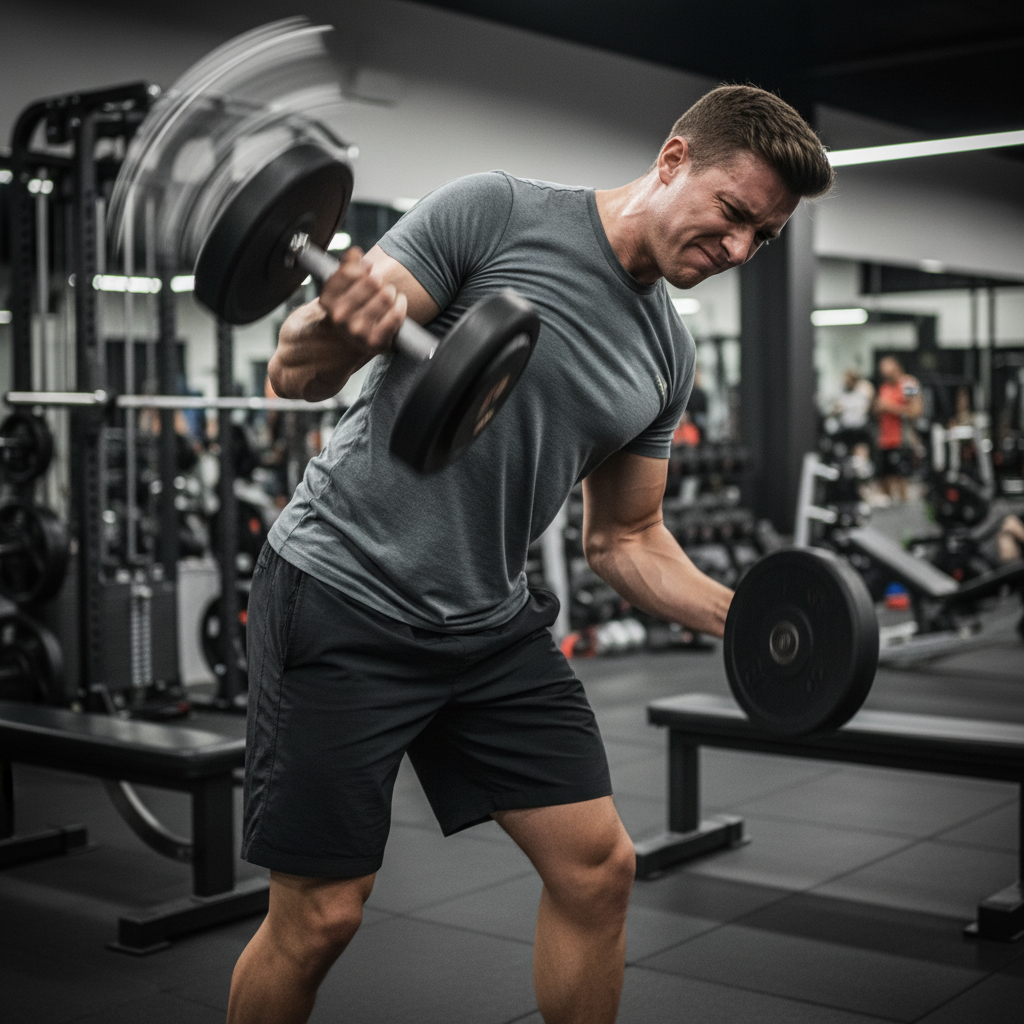
Momentum is the enemy of muscle growth in isolation exercises. If you’re swinging the weight up and letting it drop quickly, you’re not controlling the movement with your triceps. This not only reduces effectiveness but also increases the risk of injury to your elbow or shoulder.
How to Fix It
- Slow and controlled Perform both the extension and the return phase slowly and deliberately.
- Focus on the eccentric Control the weight as you bring it back to the starting position.
Incorrect Body Posture – Rounded Back

Maintaining a flat back and a strong core is essential for stability during tricep kickbacks. A rounded back or hunched shoulders can put unnecessary strain on your spine and reduce your ability to isolate the triceps effectively. Your body should form a straight line from your head to your hips.
How to Fix It
- Engage your core Brace your abdominal muscles.
- Maintain a neutral spine Keep your back flat, almost as if you’re trying to touch your shoulder blades together slightly.
- Use a bench Support one hand on a bench for added stability if needed.
Rushing the Movement
Speed over control is a common error. When you rush through repetitions, you sacrifice form and muscle engagement. Each rep should be intentional, focusing on the contraction and slow release, not just getting the rep count up.
How to Fix It
- Embrace tempo training Count 2 seconds for the extension, 1 second hold, and 2 seconds for the return.
- Focus on quality, not quantity Fewer perfect reps are better than many sloppy ones.
Mastering the Tricep Kickback – A Step-by-Step Guide
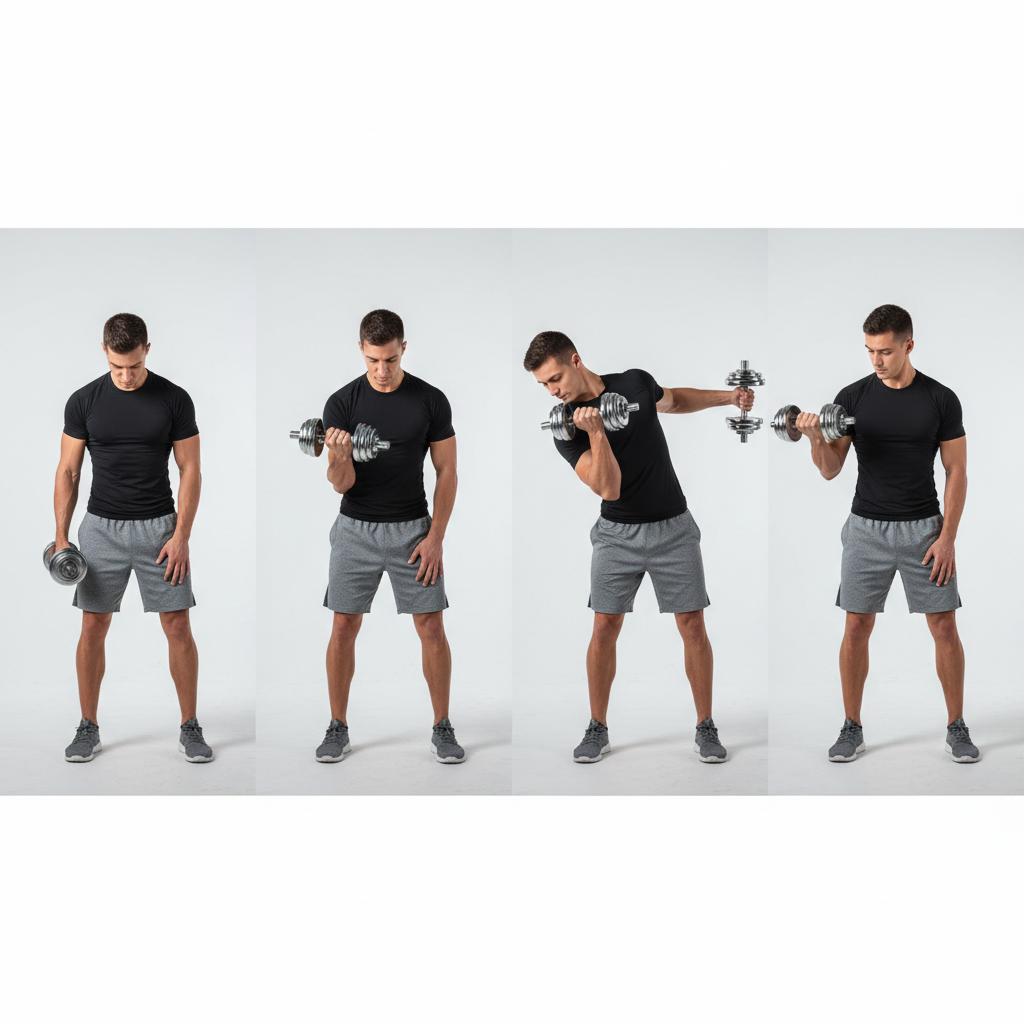
- Setup Stand with your feet shoulder-width apart, holding a dumbbell in one hand. Hinge at your hips, keeping your back flat and core engaged, until your torso is nearly parallel to the floor. Your working arm’s elbow should be bent at 90 degrees, upper arm tucked close to your side and parallel to the floor.
- The Extension Exhale and slowly extend your forearm straight back, pushing the dumbbell behind you. Focus on using your triceps to straighten your arm.
- The Squeeze At the top of the movement, your arm should be fully extended (but not locked out), and you should feel a strong contraction in your triceps. Hold this squeeze for a second.
- The Return Inhale and slowly lower the dumbbell back to the starting position, controlling the weight throughout the eccentric (lowering) phase. Do not let your elbow drop or swing the weight.
- Repeat Perform your desired number of repetitions on one arm before switching to the other.
Integrating Triceps into Your Routine and Staying Consistent
For optimal triceps growth, aim to train them 2-3 times per week, allowing for adequate recovery. Incorporate kickbacks along with other compound (like close-grip bench press) and isolation exercises (like overhead triceps extensions).
Sample Triceps-Focused Workout
| Exercise | Sets | Reps |
|---|---|---|
| Close-Grip Bench Press | 3 | 8-12 |
| Overhead Dumbbell Extension | 3 | 10-15 |
| Tricep Kickback (Dumbbell or Cable) | 3 | 12-15 |
| Tricep Pushdowns (Cable) | 3 | 12-15 |
Mindset for Growth and Consistency

- Patience is key Muscle growth takes time. Don’t get discouraged if you don’t see immediate results.
- Progressive overload Once you can comfortably perform your target reps with perfect form, gradually increase the weight or reps.
- Listen to your body Rest when needed, and don’t push through pain.
- Nutrition and recovery Fuel your body with adequate protein and get enough sleep for muscle repair and growth.
- Form over weight Always prioritize impeccable form. It’s the most direct path to hypertrophy and injury prevention.
Conclusion
The tricep kickback, when executed correctly, is a potent tool for building strong, defined triceps. By understanding and correcting the common mistakes—from using too much weight to neglecting that crucial top squeeze—you can unlock the full potential of this exercise. Remember, true strength and visible results come from mindful movement, unwavering consistency, and a commitment to perfect form. Don’t let these simple errors hold you back any longer. Take control of your tricep training, implement these corrections, and watch your arms transform. Your journey to stronger, more sculpted triceps starts with a single, perfectly executed rep. Embrace the challenge, stay consistent, and celebrate every step of your progress.