

The idea of hitting the weights every single day can sound incredibly appealing. Imagine the gains, the strength, the feeling of constant progress. It’s a compelling thought for anyone looking to transform their body and boost their fitness. But is it truly beneficial to lift weights daily, or does it come with hidden downsides?
In the world of fitness, consistency is king, but there’s a fine line between dedication and overdoing it. Lifting weights every day sets off a complex chain of events in your body, impacting everything from your muscles and hormones to your mood and energy levels. Let’s break down what really happens when you commit to daily weightlifting and how to approach it smartly.
The Immediate Effects: What Your Body Goes Through Daily

When you pick up those weights, your body doesn’t just passively respond; it launches into a flurry of activity. Understanding these immediate reactions helps you grasp the bigger picture of daily training.
Muscle Micro-Tears and Repair
Every time you lift, your muscle fibers undergo tiny, controlled damage. These are called micro-tears. It’s a normal and necessary part of the process. Your body then rushes to repair these tears, making the muscle fibers stronger and slightly bigger than before. This is the essence of muscle growth.
If you lift daily, this repair process is constantly ongoing. Your body needs a continuous supply of building blocks and energy to keep up with the demand.
Energy Depletion and Replenishment
Lifting weights burns calories and depletes your immediate energy stores, primarily glycogen in your muscles. This is why you might feel a slump after a tough session.
When you train daily, you’re consistently drawing down these reserves. Your body becomes very efficient at replenishing them, provided you’re fueling it properly through your diet.
Hormonal Responses
Weightlifting triggers a cascade of hormonal responses. Hormones like testosterone and growth hormone, crucial for muscle repair and growth, see a temporary spike. Cortisol, often called the “stress hormone,” also rises during and after exercise.
In moderation, these hormonal shifts are beneficial. Daily, high-intensity training, however, can potentially lead to chronically elevated cortisol, which might hinder recovery and even muscle growth in the long run if not managed.
Nervous System Activation
Your central nervous system (CNS) is deeply involved in weightlifting. It sends signals to your muscles, telling them to contract. Heavy lifting places significant demands on your CNS.
Daily training, especially with heavy loads, means your CNS is constantly working hard. Without adequate rest, your CNS can become fatigued, leading to feelings of sluggishness, decreased performance, and even irritability.
The Potential Benefits of Consistent Daily Lifting (When Done Right)

While there are considerations, lifting weights every day can offer remarkable benefits, assuming your program is smart and includes proper recovery.
Accelerated Muscle Growth (Hypertrophy)
If you structure your daily workouts to target different muscle groups or vary intensity, you might see faster gains. Your muscles are consistently stimulated, encouraging more frequent protein synthesis and growth.
This constant stimulus, combined with good nutrition, can help you build muscle mass more quickly than less frequent training.
Increased Strength Gains
Regularly challenging your muscles means they adapt by becoming stronger. Daily exposure to resistance training can rapidly improve your strength levels.
Your body learns to recruit more muscle fibers and move weight more efficiently, leading to impressive strength increases over time.
Enhanced Metabolism and Fat Loss
Muscle tissue is metabolically active, meaning it burns more calories at rest than fat tissue. With more muscle from daily lifting, your resting metabolic rate increases.
This can make it easier to manage your weight, burn fat, and maintain a leaner physique over the long term.
Improved Bone Density
Weight-bearing exercises, like lifting weights, put healthy stress on your bones. This signals your body to lay down new bone tissue, making your bones denser and stronger.
Daily training can be particularly effective in combating age-related bone loss and reducing the risk of osteoporosis.
Better Mood and Mental Clarity
Exercise, including weightlifting, releases endorphins, natural mood elevators. A daily routine can significantly reduce stress, anxiety, and symptoms of depression.
Many lifters report feeling more focused, productive, and generally happier when they stick to their daily training. It offers a sense of accomplishment and routine.
Skill Acquisition and Movement Mastery
When you perform movements daily, you refine your technique. This leads to better form, increased efficiency, and a deeper understanding of your body’s mechanics.
It’s not just about lifting heavy; it’s about mastering the movement patterns and making your body move more intelligently.
The Risks and Downsides: Why Daily Lifting Isn’t Always Ideal

Despite the alluring benefits, there are significant risks associated with lifting weights every day without a well-thought-out plan and proper recovery.
Overtraining Syndrome: The Tipping Point
This is perhaps the biggest danger of daily, intense weightlifting. Overtraining occurs when your body doesn’t get enough rest and recovery to adapt to the stress of exercise. It’s not just muscle fatigue; it’s a systemic breakdown.
Symptoms of Overtraining
* Persistent muscle soreness and fatigue
* Decreased performance and strength
* Increased resting heart rate
* Sleep disturbances
* Irritability and mood swings
* Frequent illness (weakened immune system)
* Loss of appetite
* Lack of motivation for training
Increased Risk of Injury
When your muscles and joints are constantly under stress and not fully recovered, they become more vulnerable. Fatigue compromises your form, making you more susceptible to strains, sprains, and other injuries.
Daily, high-intensity training dramatically increases the chances of an overuse injury.
Joint and Tendon Strain
Your muscles might adapt quickly, but your joints, ligaments, and tendons often take longer to strengthen. Consistent pounding on these structures without adequate rest can lead to inflammation, pain, and chronic issues like tendinitis.
This is especially true for repetitive movements or if you consistently lift heavy.
Mental Burnout and Fatigue
The physical demands are one thing, but the mental aspect of training every day can be draining. The constant pressure to perform, combined with physical fatigue, can lead to mental burnout.
You might start to dread workouts, lose motivation, and even develop a negative relationship with exercise.
Stalled Progress (Plateaus)
Ironically, overtraining can actually halt your progress. If your body is constantly in a state of repair without ever fully recovering, it won’t have the resources to build new muscle or increase strength.
You might find yourself lifting the same weights, hitting the same reps, and seeing no improvements, which can be incredibly frustrating.
How to Lift Weights Daily Safely and Effectively (If You Choose To)

If the idea of daily lifting still resonates with you, it’s absolutely possible to do it safely and effectively. The key lies in smart programming and an unwavering commitment to recovery.
Smart Programming: The Art of the Split
You can’t effectively train your entire body to failure every single day. The solution is to “split” your workouts, targeting different muscle groups on different days or varying the intensity.
Full-Body Split (Lower Intensity)
This involves training your entire body each day but with lower volume and intensity per muscle group. It’s effective for beginners or those focusing on endurance and technique. You might alternate between heavier and lighter days.
Upper/Lower Split
You train upper body muscles one day, lower body muscles the next. This allows each major muscle group 48 hours of rest before being targeted again.
* Example: Monday (Upper), Tuesday (Lower), Wednesday (Upper), Thursday (Lower), Friday (Rest or light cardio), Saturday (Upper), Sunday (Lower).
Push/Pull/Legs (PPL) Split
A very popular and effective split for daily training. You divide your workouts into:
* Push day: Chest, shoulders, triceps (muscles that push)
* Pull day: Back, biceps (muscles that pull)
* Legs day: Quads, hamstrings, glutes, calves
You can then cycle these, perhaps doing PPL twice a week (6 days on, 1 day off) or alternating with rest days.
Body Part Split (Advanced)
This is common among bodybuilders, where you dedicate an entire day to one or two muscle groups (e.g., Chest day, Back day, Leg day, Shoulder day, Arm day). This allows for very high volume and intensity on specific muscles, with sufficient rest for them before the next session.
Prioritize Recovery: Your Non-Negotiables
Your daily training is only as good as your daily recovery. This is where the real magic happens.
Sleep Quality
Aim for 7-9 hours of high-quality sleep every night. This is when your body repairs tissues, releases growth hormones, and replenishes your energy stores. Without sufficient sleep, daily training is a recipe for disaster.
Nutrition for Repair
Fuel your body with nutrient-dense foods. Focus on adequate protein intake (essential for muscle repair), complex carbohydrates (for energy), and healthy fats (for hormone production and overall health). Don’t skimp on micronutrients from fruits and vegetables.
Hydration
Water is vital for every bodily function, including muscle contractions, nutrient transport, and waste removal. Drink plenty of water throughout the day, especially before, during, and after your workouts.
Active Recovery and Mobility
Don’t just sit on rest days. Engage in light activities like walking, gentle stretching, yoga, or foam rolling. This helps improve blood flow, reduce muscle soreness, and maintain flexibility without adding significant stress.
Listen to Your Body
This is perhaps the most crucial advice. Your body gives you signals. Learn to interpret them.
Adjusting Intensity
If you wake up feeling unusually sore, tired, or mentally drained, it’s okay to reduce the weight, do fewer sets, or even switch to active recovery. Pushing through severe fatigue will only lead to diminishing returns.
Taking Deload Weeks
Regularly schedule “deload” weeks, where you significantly reduce your training volume and intensity (e.g., half the weight, half the reps, fewer sets) every 4-8 weeks. This allows your body and CNS to fully recover and prepare for another block of intense training.
A Sample Week: Making Daily Training Work
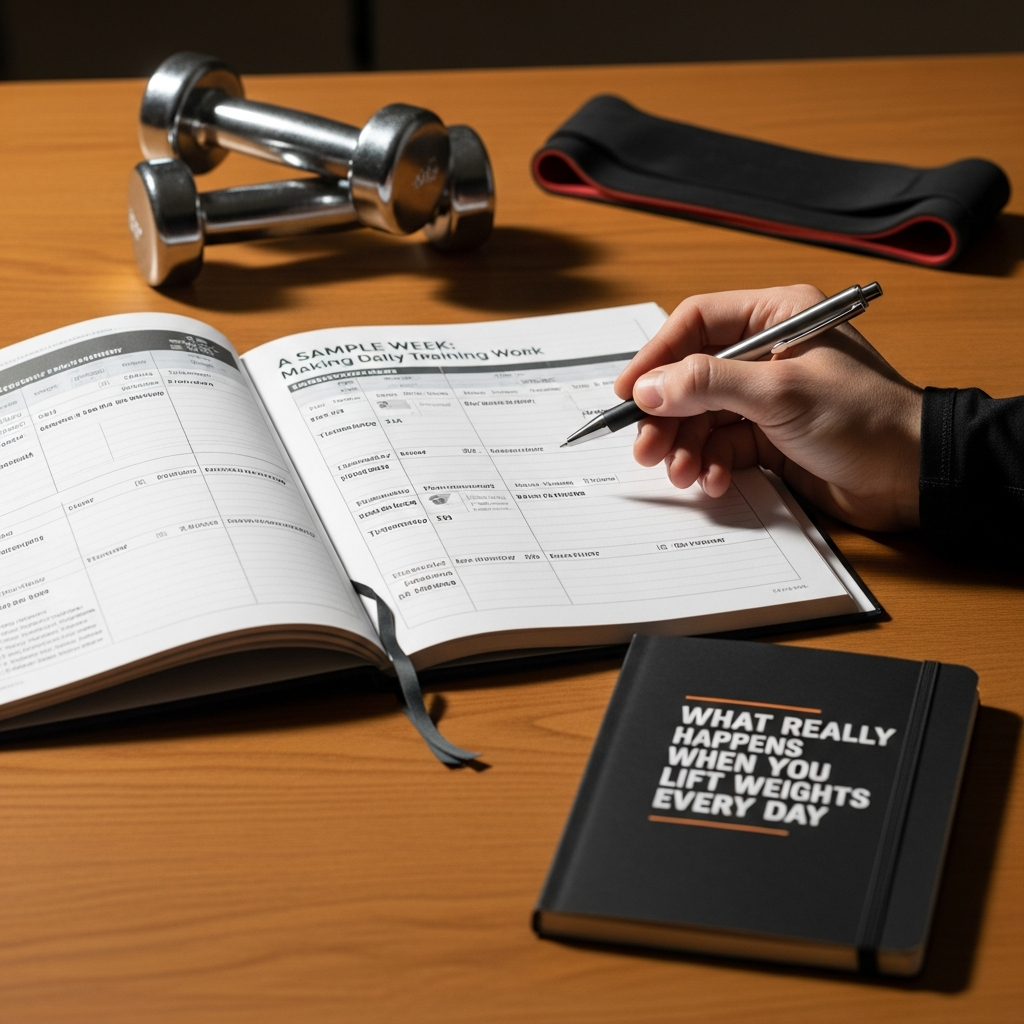
Here’s an example of how you might structure a daily weightlifting plan using a PPL split, emphasizing recovery.
| Day | Focus | Example Exercises (Higher Intensity) | Notes |
| Monday | Push Day | Bench Press, Overhead Press, Incline Dumbbell Press, Tricep Extensions | Focus on compound movements. |
| Tuesday | Pull Day | Deadlifts (or RDLs), Pull-ups, Rows, Bicep Curls | Emphasize back strength. |
| Wednesday | Legs Day | Squats, Lunges, Leg Press, Calf Raises | Foundation of strength. |
| Thursday| Active Recovery | Light walk, stretching, foam rolling, yoga | Focus on blood flow and flexibility. |
| Friday | Push Day (Lighter) | Dumbbell Press, Lateral Raises, Tricep Pushdowns | Lower volume, focus on form or lighter weight. |
| Saturday| Pull Day (Lighter)| Lat Pulldowns, Face Pulls, Hammer Curls | Maintain muscle activation, avoid heavy loads. |
| Sunday | Legs Day (Lighter) | Goblet Squats, Glute Bridges, Leg Extensions | Active recovery for legs, light intensity. |
*Remember to adjust sets, reps, and specific exercises to your own fitness level and goals.*
The Mindset of a Daily Lifter: Consistency and Patience

Beyond the physical, daily lifting requires a strong mental game. It’s about building habits and maintaining perspective.
Setting Realistic Expectations
Understand that progress isn’t always linear. There will be days you feel strong, and days you feel weak. Daily lifting is a marathon, not a sprint. Focus on the long-term journey.
The Power of Small Wins
Celebrate consistency, mastering a new movement, or simply showing up on a tough day. These small victories keep you motivated and reinforce your commitment.
Building Habits, Not Just Workouts
View daily lifting as a part of your lifestyle, like eating or sleeping. It’s a non-negotiable appointment with yourself. Over time, it becomes less about motivation and more about routine.