
Leg Curl Alternative Using a Stability Ball at the Gym
Are you at the gym, ready to sculpt those hamstrings, but the leg curl machine is occupied? Or perhaps you’re looking for a fresh challenge that also engages your core? Look no further. The stability ball leg curl is a fantastic, versatile alternative that delivers incredible results, building strength, stability, and control in your posterior chain. It’s an accessible exercise that can be done almost anywhere, offering a unique blend of muscle activation and functional benefits.
This guide will walk you through everything you need to know to master the stability ball leg curl. We’ll cover its many benefits, the muscles it targets, a detailed step-by-step execution, common pitfalls to avoid, and how to seamlessly integrate it into your existing workout routine. Get ready to unlock stronger, more resilient hamstrings and glutes!
Unlocking Strong Hamstrings- The Stability Ball Advantage
The hamstrings are a powerhouse muscle group, crucial for everything from sprinting and jumping to simply walking and maintaining good posture. Traditional leg curl machines isolate these muscles effectively, but they aren’t always available, nor do they offer the added stability challenge that a stability ball provides. Embracing alternatives like the stability ball leg curl ensures your progress never stalls, even when gym equipment is limited.
Why Choose the Stability Ball Leg Curl
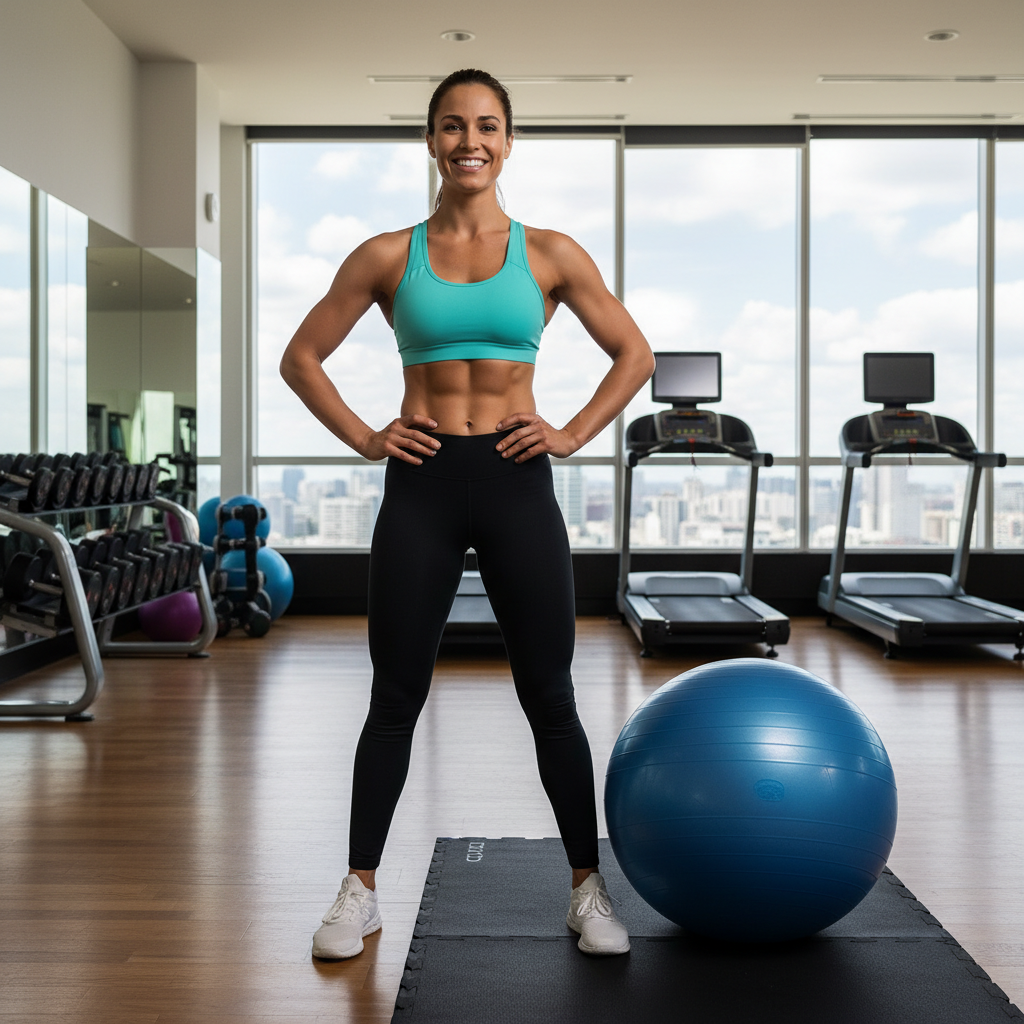
Beyond convenience, the stability ball leg curl offers several distinct advantages that make it a valuable addition to any fitness regimen:
- Enhanced Core Engagement: Unlike a machine, the stability ball requires constant core activation to stabilize your body, turning a hamstring exercise into a full-body effort.
- Improved Proprioception and Balance: Working with an unstable surface challenges your body’s awareness in space, enhancing balance and coordination.
- Joint-Friendly Movement: The smooth, controlled motion of the stability ball leg curl is often gentler on the knees and lower back compared to some machine variations.
- Versatility and Accessibility: All you need is a stability ball, making it perfect for crowded gyms, home workouts, or travel.
- Targeted Hamstring Isolation: Despite the added stability challenge, this exercise effectively isolates and strengthens all three hamstring muscles (biceps femoris, semitendinosus, and semimembranosus).
Muscles Activated- Beyond Just Hamstrings
While the primary focus of the stability ball leg curl is the hamstrings, it’s a compound-like movement that recruits several other muscle groups for support and stability:
- Hamstrings: The primary movers, responsible for flexing the knee and extending the hip.
- Glutes: Especially the gluteus maximus, which works synergistically with the hamstrings to extend the hips and stabilize the pelvis.
- Core Muscles: Rectus abdominis, obliques, and erector spinae all engage to maintain a neutral spine and prevent your hips from dropping or arching your back.
- Calves: Provide some stability at the ankle joint.
Step-by-Step Guide to Perfect Stability Ball Leg Curls
Mastering the form is key to maximizing the benefits and preventing injury. Follow these steps for a perfect stability ball leg curl.
Setting Up for Success
- Lie Down: Start by lying on your back on a mat, arms extended flat on the floor beside you for stability, palms down.
- Position Your Feet: Place your heels on top of the stability ball, with your knees bent at about a 90-degree angle. Your calves should rest comfortably on the ball.
- Lift Your Hips: Engage your glutes and core to lift your hips off the floor, forming a straight line from your shoulders to your knees. Your body should be supported by your shoulders and the ball. This is your starting position.
Executing the Movement with Precision
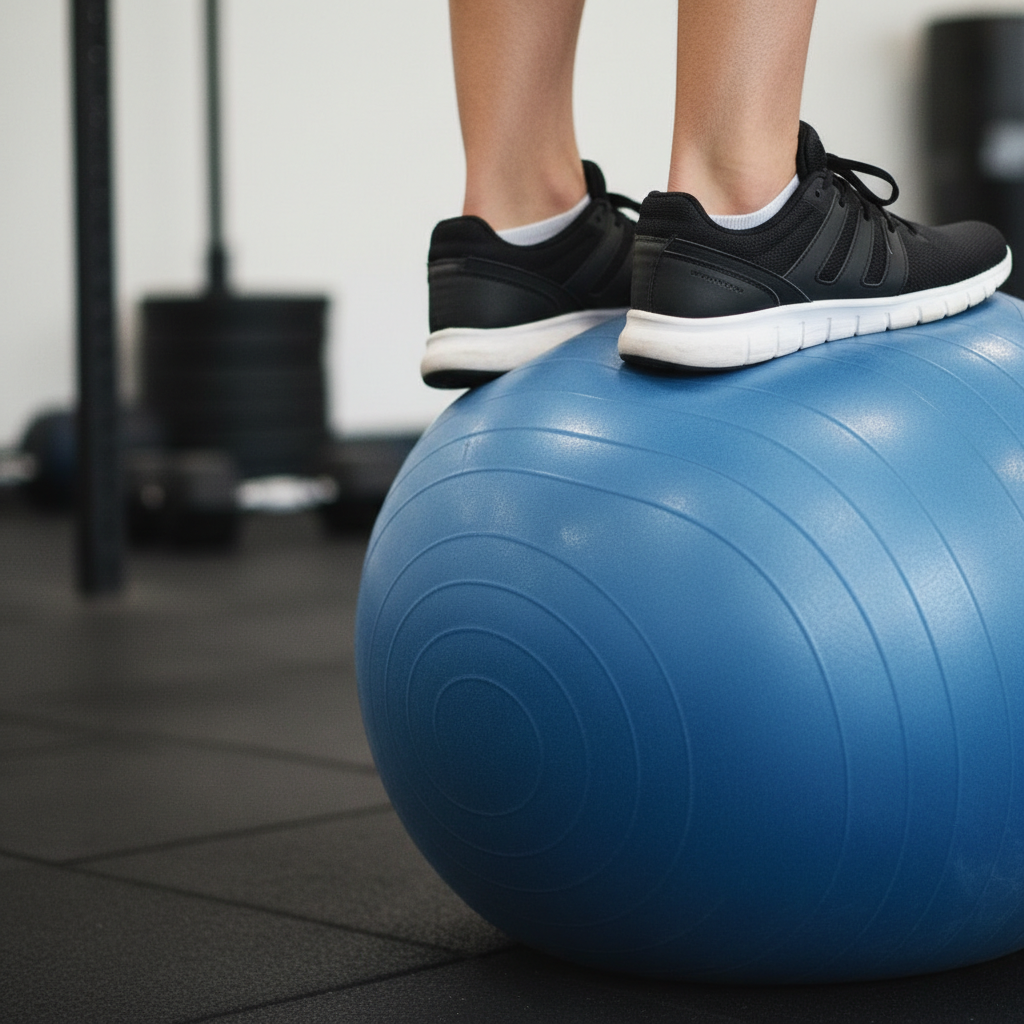
- Curl the Ball In: Slowly and with control, use your hamstrings to pull the stability ball towards your glutes. Your feet will roll the ball closer, and your knees will bend further. Focus on squeezing your hamstrings.
- Maintain Hip Elevation: Throughout the curling motion, keep your hips elevated and stable. Avoid letting them drop or sag towards the floor.
- Extend Slowly: Reverse the movement, extending your legs to push the stability ball back to the starting position. Control the movement; don’t let the ball simply roll away.
- Repeat: Perform for the desired number of repetitions.
Key Form Cues for Maximum Benefit
- Slow and Controlled: Avoid momentum. Each rep should be deliberate, focusing on muscle contraction.
- Squeeze at the Top: When the ball is closest to your glutes, pause briefly and squeeze your hamstrings and glutes for an extra contraction.
- Keep Hips Level: Imagine a straight line from your shoulders to your knees. Don’t let your hips sag or rock side-to-side.
- Engage Your Core: Lightly brace your abs throughout the exercise to support your spine.
- Breath Control: Exhale as you curl the ball in, inhale as you extend your legs.
Common Mistakes to Avoid for Optimal Results
Even a seemingly simple exercise can have common pitfalls. Being aware of these will help you perform the stability ball leg curl safely and effectively:
- Sagging Hips: Letting your hips drop during the movement reduces hamstring activation and puts strain on your lower back. Keep them elevated!
- Rushing the Movement: Using momentum rather than muscle control minimizes the benefits. Slow and steady wins the race here.
- Over-Arching the Lower Back: This often happens when trying to compensate for weak glutes or core. Focus on keeping your core engaged and a neutral spine.
- Not Fully Extending: Failing to extend your legs almost straight on the return can limit the range of motion and hamstring stretch.
- Using Your Arms Too Much: While your arms provide some stability, avoid pushing off the floor excessively. The power should come from your posterior chain.
Integrating Stability Ball Leg Curls into Your Routine
The stability ball leg curl is a versatile exercise that can fit into various parts of your workout. It’s excellent as a warm-up, a main strength exercise, or a finisher.
Sample Lower Body Workout Plan
Here’s how you might incorporate it into a typical lower body day:
- Warm-up (5-10 minutes): Light cardio, dynamic stretches.
- Main Lifts: Barbell Squats (3 sets of 6-8 reps), Dumbbell Lunges (3 sets of 8-10 reps per leg).
- Accessory Exercises:
- Stability Ball Leg Curls: 3 sets of 12-15 repetitions (focus on controlled movement).
- Glute Bridges (bodyweight or weighted): 3 sets of 15-20 repetitions.
- Calf Raises: 3 sets of 15-20 repetitions.
- Cool-down (5-10 minutes): Static stretches for hamstrings, quads, and glutes.
For beginners, start with 2-3 sets of 8-10 repetitions, focusing purely on form. As you get stronger, you can increase reps, sets, or progress to more challenging variations.
Progression and Advanced Variations
Once you’ve mastered the basic stability ball leg curl, you can challenge yourself further:
- Single-Leg Stability Ball Leg Curl: Perform the exercise with one leg on the ball, the other lifted. This significantly increases the challenge to your hamstrings, glutes, and core.
- Elevated Feet Stability Ball Leg Curl: Place your feet higher on the ball, or even on a bench with the ball underneath your calves, to increase the range of motion and intensity.
- Stability Ball Hamstring Walkout: Begin in the standard elevated hip position, then slowly walk your feet out on the ball until your legs are nearly straight, then walk them back in. This requires incredible control and strength.
Beyond the Movement- Mindset and Consistency
Achieving your fitness goals, whether it’s building stronger hamstrings or improving overall fitness, is about more than just the exercises you do. It’s about your approach and commitment:
- Focus on Form First: Always prioritize perfect form over lifting heavier or doing more reps. Quality over quantity ensures safety and effectiveness.
- Listen to Your Body: Pay attention to how your body feels. If something hurts, stop and reassess. Recovery is just as important as the workout itself.
- Make it a Habit: Consistency is the single most important factor in seeing results. Schedule your workouts and stick to them. Even short, effective sessions are better than sporadic long ones.
- Celebrate Small Wins: Acknowledge your progress, no matter how small. Feeling stronger, improving your balance, or mastering a new exercise are all victories worth celebrating.
Conclusion- Empower Your Hamstrings, Anywhere
The stability ball leg curl is a true gem in the world of fitness alternatives. It’s not just a substitute for a machine; it’s an exercise that builds functional strength, enhances stability, and deeply engages your core, all while giving your hamstrings the powerful workout they deserve. Whether you’re navigating a busy gym, working out at home, or simply seeking to add variety and challenge to your routine, this exercise offers a practical and highly effective solution.
Embrace the stability ball leg curl, commit to consistent practice with proper form, and watch as your lower body strength, balance, and overall fitness transform. Your hamstrings will thank you, and you’ll feel more empowered in every movement you make. Roll into a stronger you today!