The world of strength training offers a vast array of exercises, each with its unique purpose. Among them, the incline dumbbell press stands out as a foundational movement for building a well-rounded and strong chest. It’s an exercise that many lifters include in their routine, but often without fully understanding its nuances or maximizing its potential.
If you’ve been searching for a way to sculpt your upper chest, improve shoulder stability, and add real functional strength to your physique, you’ve come to the right place. This guide will walk you through everything you need to know about the incline dumbbell press, from perfect technique to its numerous benefits and how to weave it effectively into your fitness journey.
What is the Incline Dumbbell Press and Why Should You Do It?
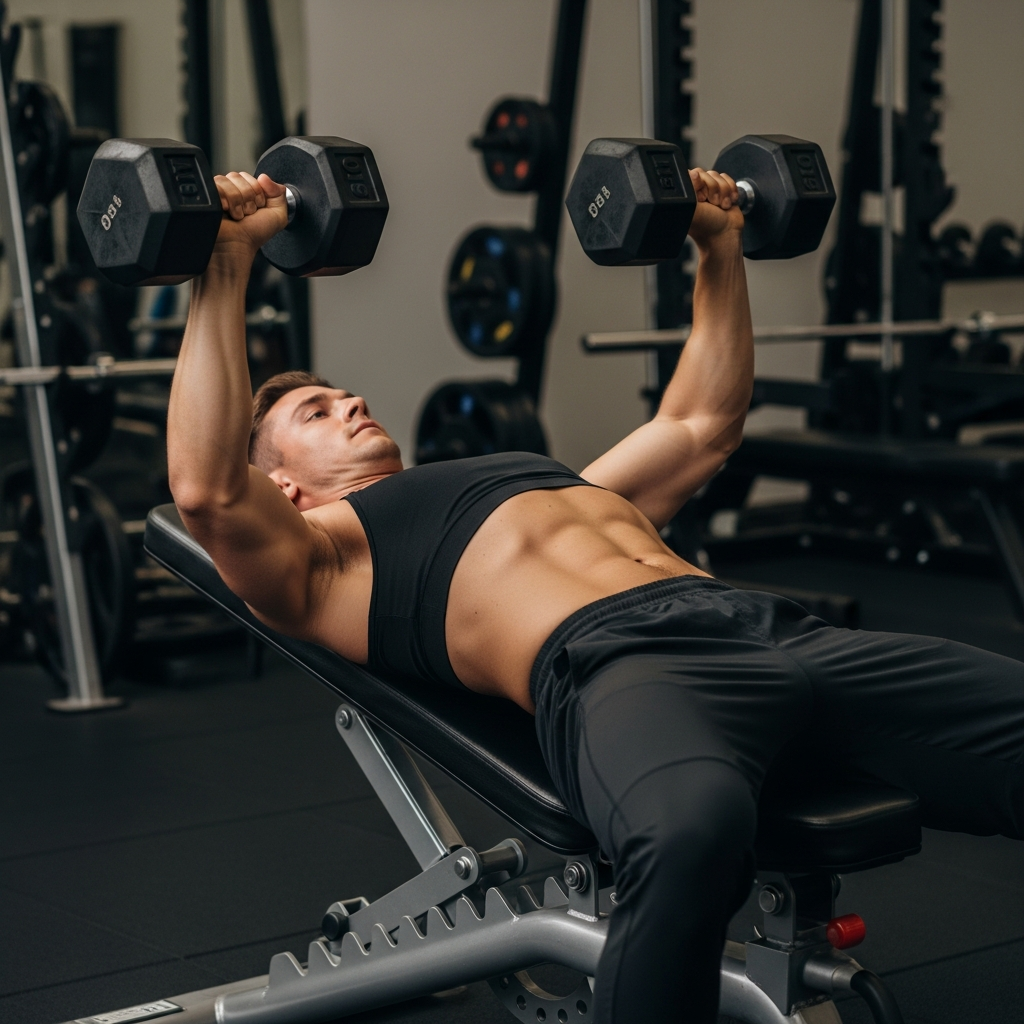
The incline dumbbell press is a classic upper body pushing exercise. It involves pressing a pair of dumbbells upwards while lying on an adjustable bench set at an incline. Unlike the flat bench press, which targets the overall chest, the incline variation places a special emphasis on the upper part of your pectoral muscles.
It’s a fantastic choice for anyone looking to build a balanced chest, enhance pushing strength, and even improve posture. Let’s dive deeper into what makes this exercise so valuable.
Understanding the Movement
When you perform an incline dumbbell press, you’re primarily engaging your chest muscles, specifically the clavicular head of the pectoralis major (the upper chest). Your front deltoids (shoulders) and triceps also play significant roles as secondary movers, assisting in the pressing action.
The incline angle shifts the stress from the middle and lower chest to the upper pecs. This is crucial because a well-developed upper chest contributes significantly to the overall aesthetic and strength of your torso, often creating that desired “shelf-like” appearance.
Key Benefits of the Incline Dumbbell Press
Beyond just aesthetics, incorporating the incline dumbbell press into your routine brings a host of benefits that support overall strength and fitness.
Targeting the Upper Chest (Clavicular Head)
This is the most celebrated benefit. Many people struggle to develop their upper chest, leading to an unbalanced look. The incline press directly addresses this, helping to build thickness and fullness in an often-neglected area.
Improved Shoulder Health and Stability
Using dumbbells allows for a more natural range of motion for your shoulders compared to a barbell. This freedom of movement can reduce stress on the shoulder joints and contribute to better shoulder stability over time, as each arm works independently.
Enhanced Muscle Symmetry and Aesthetics
Since each dumbbell is lifted independently, your weaker side cannot rely on your stronger side. This encourages both sides of your body to work equally hard, helping to correct muscle imbalances and promote symmetrical development.
Greater Range of Motion
Compared to a barbell, dumbbells allow your hands to move more freely, often letting you lower the weights deeper and achieve a greater stretch in the chest muscles. This increased range of motion can stimulate more muscle growth.
Unilateral Strength Development
The independent movement of each dumbbell is key for building unilateral strength. This translates to better performance in other pushing movements and real-world activities where one side of your body might need to exert force independently.
Versatility and Adaptability
Dumbbells are versatile. You can adjust the grip, experiment with different rep ranges, and even perform single-arm variations, adding endless possibilities to your training. This makes the incline dumbbell press adaptable to various fitness goals and experience levels.
Step-by-Step Guide to Perfect Incline Dumbbell Press Technique
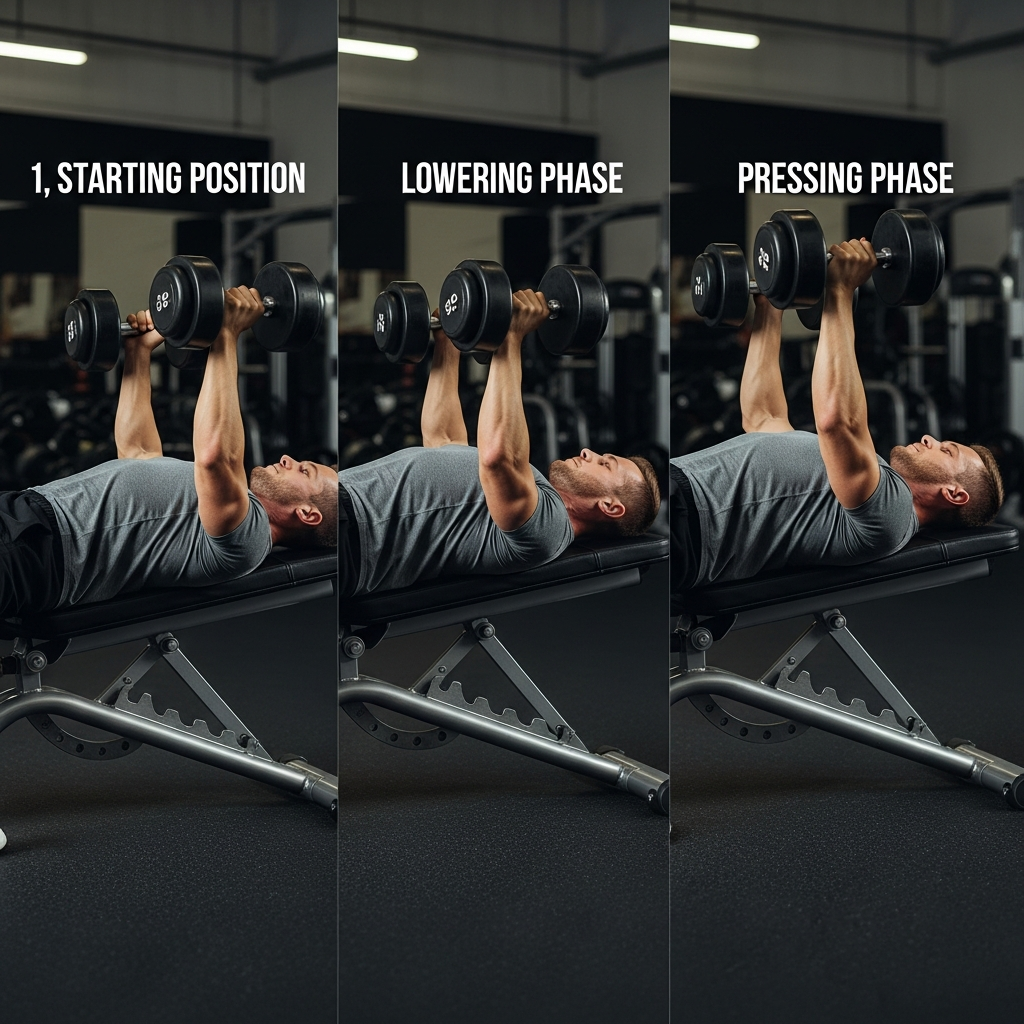
Proper form is paramount, not just for maximizing muscle activation but also for preventing injuries. Rushing through the movement or using improper technique can negate all the benefits. Let’s break it down.
Setting Up for Success
Before you even pick up the dumbbells, a proper setup ensures a safe and effective lift.
Bench Angle
Most experts recommend an incline angle between 30 and 45 degrees. A higher angle (closer to 60 degrees) might engage more of your front deltoids, while a shallower angle (below 30 degrees) could shift focus back to the middle chest. Experiment to find what feels best for your body and muscle activation.
Dumbbell Selection
Choose a weight that challenges you while allowing you to maintain perfect form for your target rep range. It’s better to go lighter with good form than heavier with sloppy technique.
Grip and Starting Position
1. Sit on the bench: Hold a dumbbell in each hand, resting them on your knees.
2. Lie back: Use your knees to kick the dumbbells up and into position. As you lie back, bring the dumbbells to rest on your chest, just outside your shoulders. Your palms should be facing each other initially.
3. Foot placement: Plant your feet firmly on the floor, providing a stable base. Do not let your feet lift or wobble during the set.
4. Scapular retraction: Gently retract and depress your shoulder blades into the bench. This provides a stable platform for your shoulders and helps protect them.
5. Slight arch: Maintain a natural, slight arch in your lower back, but avoid excessive arching. Your glutes should remain in contact with the bench.
Executing the Movement
With a solid setup, you’re ready to perform the press. Focus on control and muscle connection.
The Lowering Phase (Eccentric)
1. Controlled descent: Slowly lower the dumbbells towards the sides of your upper chest. Your elbows should point slightly down and out, forming about a 45-degree angle with your torso.
2. Stretch: Feel a good stretch in your chest muscles at the bottom. The dumbbells should be roughly in line with the top of your chest or slightly below, depending on your shoulder mobility.
3. Inhale: Breathe in deeply as you lower the weights.
The Pressing Phase (Concentric)
1. Drive upwards: Press the dumbbells straight up towards the ceiling. Imagine driving them up and slightly inward, contracting your upper chest powerfully.
2. Full contraction: At the top, fully extend your arms without locking your elbows. Squeeze your chest muscles briefly. The dumbbells should be directly above your upper chest, not over your face or neck.
3. Exhale: Breathe out as you press the weights up.
4. Control: Avoid letting the dumbbells clang together at the top. Maintain tension throughout the movement.
Common Mistakes to Avoid
Even experienced lifters can fall into these traps. Being aware of them can significantly improve your results and safety.
Arching Your Back Too Much
While a slight natural arch is fine, excessive arching shifts tension from your chest to your lower back, potentially causing injury. Keep your glutes firmly on the bench.
Flaring Elbows Out Too Wide
Having your elbows point straight out to the sides (90 degrees to your torso) puts unnecessary stress on your shoulder joints. Aim for that 45-degree angle.
Using Too Much Weight
This is a common pitfall. Lifting weights that are too heavy leads to poor form, a limited range of motion, and a higher risk of injury. Prioritize form over ego.
Incomplete Range of Motion
Only doing half-reps limits muscle activation and growth. Ensure you’re getting a full stretch at the bottom and a good squeeze at the top without locking out your elbows.
Holding Your Breath
Proper breathing is crucial. Exhale on the exertion (pressing up) and inhale on the release (lowering down). This helps maintain core stability and prevents dizzy spells.
Integrating the Incline Dumbbell Press into Your Routine
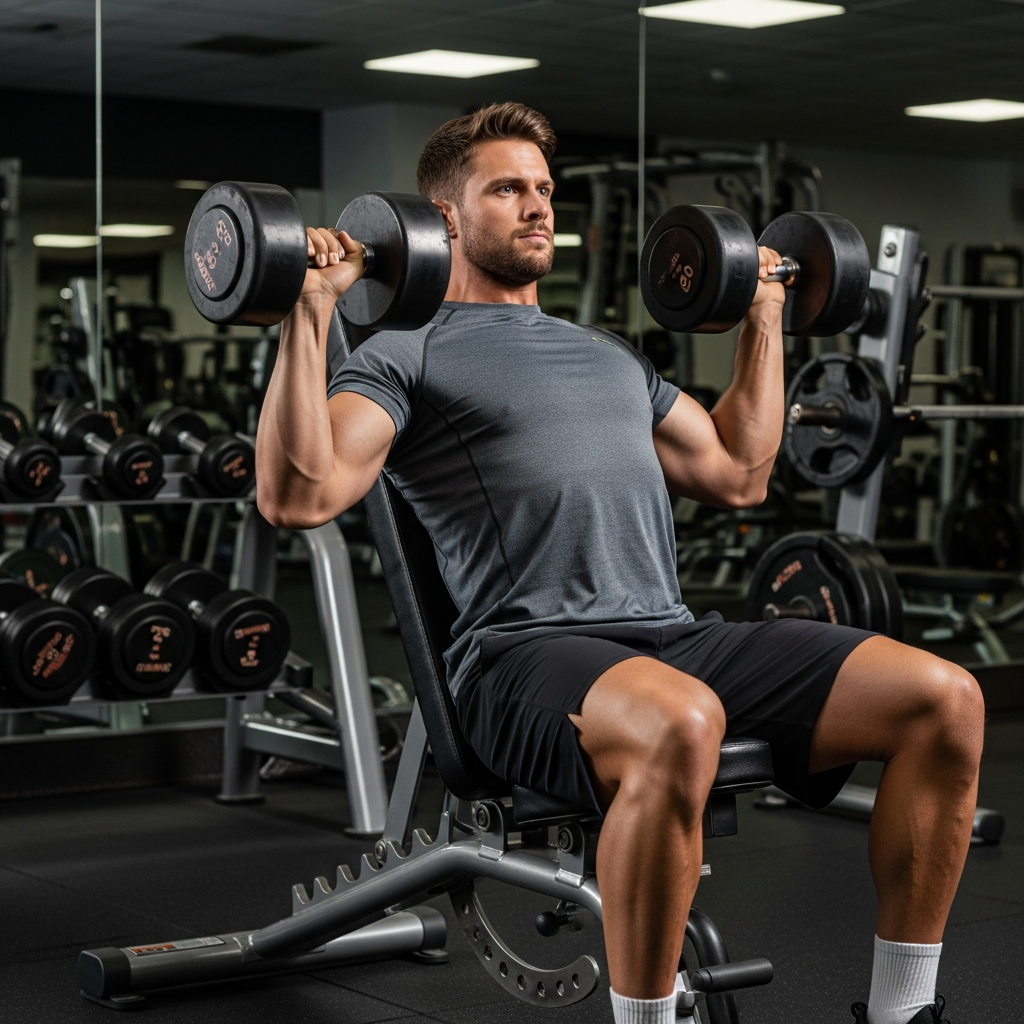
Now that you’ve mastered the technique, let’s talk about how to make it a consistent and productive part of your fitness journey.
Programming for Different Goals
How you incorporate the incline dumbbell press depends on what you’re trying to achieve.
For Muscle Growth (Hypertrophy)
Focus on moderate to high reps with controlled movement.
* Sets: 3-4
* Reps: 8-12
* Rest: 60-90 seconds between sets
For Strength Development
Aim for heavier weights with lower reps.
* Sets: 3-5
* Reps: 4-6
* Rest: 2-3 minutes between sets (to allow for full recovery)
For Endurance
Use lighter weights with higher repetitions.
* Sets: 2-3
* Reps: 15-20+
* Rest: 30-60 seconds between sets
Sample Workout Routine
Here’s an example of how you might include the incline dumbbell press in a chest-focused workout day. Remember to warm up properly before starting and cool down with stretches afterward.
| Exercise | Sets | Reps | Rest (seconds) | Focus |
| Incline Dumbbell Press | 3-4 | 8-12 | 90 | Upper Chest |
| Flat Dumbbell Press | 3 | 8-12 | 90 | Overall Chest |
| Cable Crossover (High to Low) | 3 | 12-15 | 60 | Inner Chest |
| Dumbbell Pullover | 3 | 10-12 | 60 | Chest Expansion |
| Push-ups | 3 | To failure | 60 | Chest Endurance |
Progressive Overload Strategies
To continue making progress, you need to challenge your muscles over time. This is called progressive overload.
Increasing Weight
Once you can comfortably complete your target reps with good form, it’s time to increase the weight slightly. Small increments are key.
Increasing Reps
If you don’t have heavier dumbbells available, try to add one or two more repetitions to each set while maintaining form.
Increasing Sets
Adding an extra set to your workout can provide more volume and challenge your muscles further.
Decreasing Rest Time
Reducing the rest time between sets can increase the intensity and improve muscle endurance, forcing your muscles to work harder in a shorter period.
Mindset, Consistency, and Real-Life Application
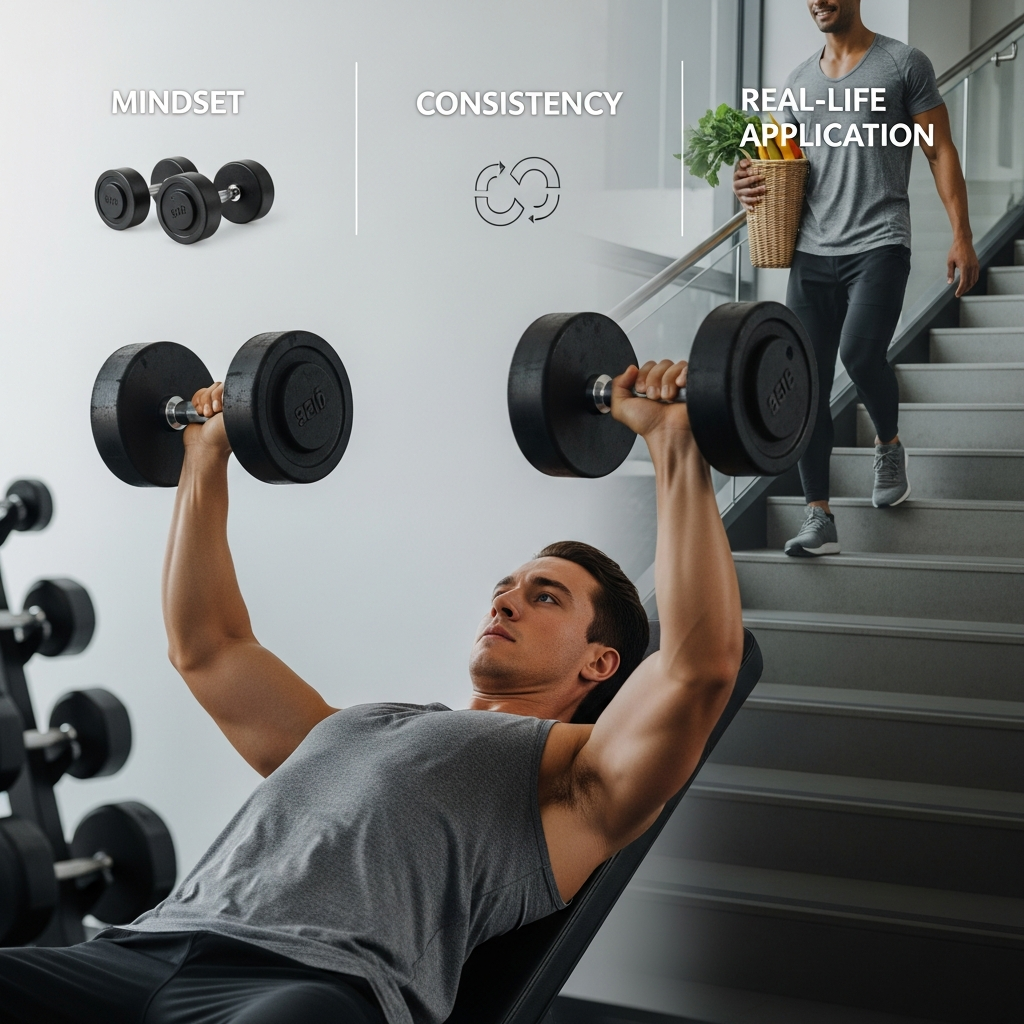
Building strength and achieving your fitness goals is about more than just the physical act of lifting. It’s deeply intertwined with your mental approach and your ability to stay consistent.
The Power of Patience
Muscle growth and strength gains don’t happen overnight. It takes time, dedication, and consistent effort. Embrace the journey and celebrate small victories along the way. Don’t get discouraged if progress seems slow; consistency compounds results.
Listening to Your Body
Pay attention to how your body feels. Some days you might feel strong, while others you might need to dial back the intensity or focus on recovery. Pushing through pain can lead to injury. Rest and recovery are just as vital as the workout itself.
Making It a Habit
Integrate your workouts into your daily or weekly routine just like brushing your teeth or going to work. Schedule your gym time and stick to it. Over time, it will become an ingrained part of your lifestyle, not a chore.
Nutrition and Recovery’s Role
Remember, exercise is only one piece of the puzzle. To truly benefit from the incline dumbbell press and all your training, you need to fuel your body with proper nutrition and allow it sufficient time to recover. Prioritize protein intake, stay hydrated, and aim for 7-9 hours of quality sleep each night. Your muscles grow when you’re resting, not when you’re lifting.