

Resistance bands are often underestimated, relegated to warm-ups or physical therapy. Yet, ask any fitness trainer, and they’ll tell you these unassuming loops and tubes are among the most versatile and effective tools for building strength, increasing mobility, and achieving a full-body workout. Whether you’re a seasoned lifter looking for a new challenge, a beginner starting your fitness journey, or someone who simply needs an effective workout on the go, resistance bands offer a powerful solution.
Forget expensive gym memberships or bulky equipment. This guide will reveal why trainers consistently incorporate resistance bands into their routines and provide you with a comprehensive, full-body workout that you can do almost anywhere. Get ready to transform your body with the simple power of resistance!
Why Resistance Bands Are a Game-Changer for Strength Training
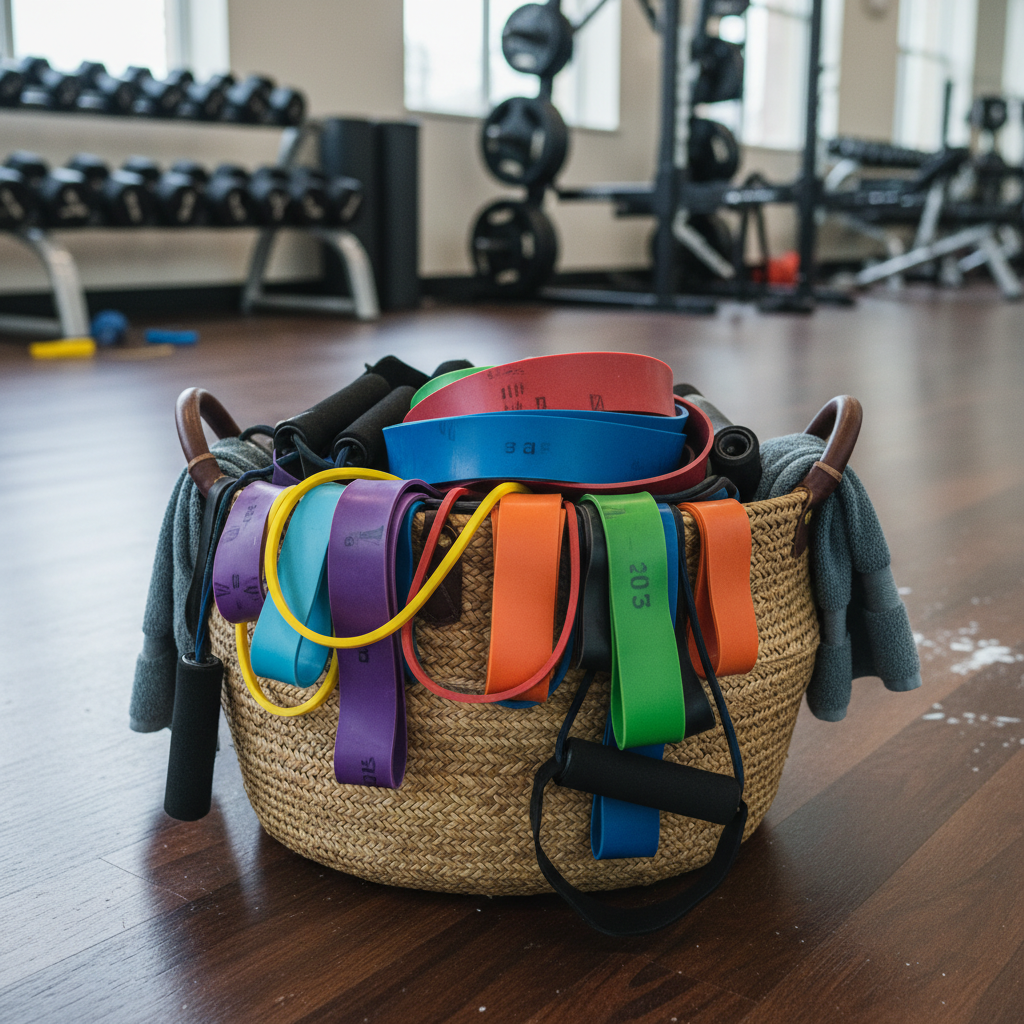
Resistance bands aren’t just for rehabilitation anymore. They provide a unique form of resistance that challenges your muscles differently than traditional weights. Here’s why they deserve a prime spot in your fitness arsenal:
- Portability and Convenience– Lightweight and compact, bands fit easily into a gym bag, suitcase, or even a drawer. Your gym can truly be anywhere.
- Versatility– From squats and presses to rows and curls, bands can mimic almost any free-weight or machine exercise, working every major muscle group.
- Consistent Tension– Unlike free weights where gravity dictates resistance, bands provide continuous tension throughout the entire range of motion, leading to greater muscle activation.
- Joint-Friendly– The elastic resistance is gentler on your joints compared to heavy weights, making them ideal for all fitness levels and those with joint sensitivities.
- Progressive Overload Made Simple– Bands come in various resistance levels, allowing you to easily increase the challenge as you get stronger. You can also combine bands for even more resistance.
- Enhanced Stability and Core Activation– Many band exercises require you to stabilize your body against the pulling force, engaging your core more effectively.
Understanding Your Bands- Choosing the Right Resistance
Resistance bands come in various forms and resistance levels, usually indicated by color. It’s crucial to choose the right bands for your exercises.
- Loop Bands (Power Bands)– Thick, continuous loops, great for pull-ups assistance, squats, deadlifts, and full-body movements.
- Tube Bands with Handles– Ideal for upper body exercises like rows, presses, and curls, offering a comfortable grip.
- Mini Bands (Loop Bands)– Smaller, thinner loops, perfect for glute activation, lateral movements, and targeting smaller muscle groups.
Start with a lighter band to master the form, then gradually increase resistance. It’s common to use different resistance levels for different muscle groups; for instance, a heavier band for legs and a lighter one for shoulders.
Warm-Up- Preparing Your Body for Movement
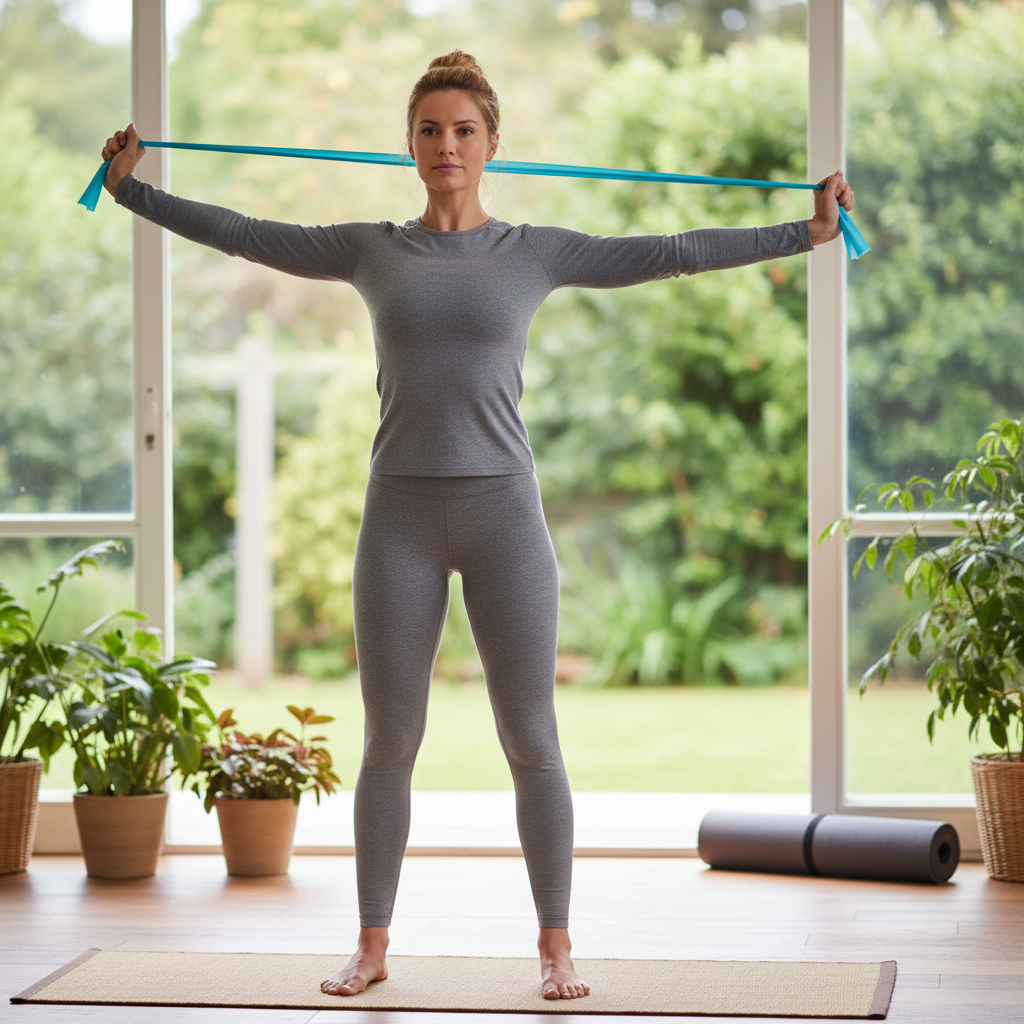
A proper warm-up prepares your muscles and joints for the workout ahead, reducing injury risk and improving performance. Aim for 5-10 minutes.
- Band Pull-Aparts– Hold a light band with both hands shoulder-width apart, arms extended forward. Pull the band apart, squeezing your shoulder blades.
- Arm Circles with Band– Hold a light band loosely, extend arms, and make small circles, gradually increasing size.
- Leg Swings with Band (around ankles)– Gentle forward and backward leg swings, or lateral swings to open up hips.
- Cat-Cow with Band (around knees)– On hands and knees, place a mini band around your knees. Gently arch and round your back.
The Full Body Resistance Band Workout- Trainer Approved Moves
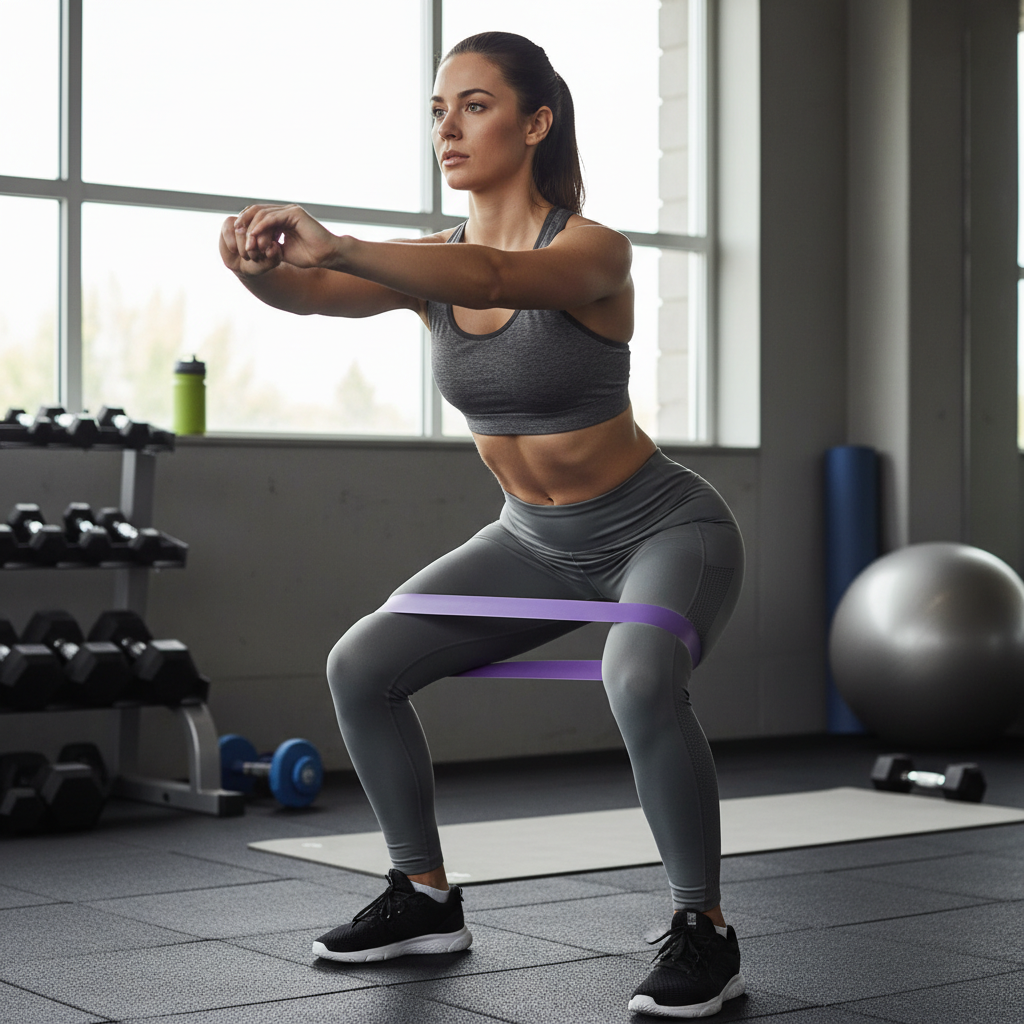
This workout combines foundational movements to hit every major muscle group. Focus on controlled movements and feeling the muscle work. Aim for 3 sets of 10-15 repetitions for each exercise, resting 60-90 seconds between sets.
Lower Body Power
- Resistance Band Squats– Place a loop band above your knees. Stand with feet shoulder-width apart. Squat down, pushing your knees out against the band, keeping your chest up.
- Resistance Band Glute Bridges– Lie on your back, knees bent, feet flat, band above knees. Drive through your heels, lifting your hips while pushing knees out.
- Lateral Band Walks– Place a mini band above your ankles or knees. Get into a slight squat stance and take small, controlled steps sideways, maintaining tension.
- Resistance Band Romanian Deadlifts (RDLs)– Stand on a loop band, holding the ends. Hinge at your hips, keeping a slight bend in your knees and a straight back, lowering the bands towards the floor.
Upper Body Strength
- Resistance Band Rows– Anchor a tube band to a sturdy object or loop it under your feet. Pull the handles towards your torso, squeezing your shoulder blades.
- Resistance Band Chest Press– Loop a band around your back, holding the ends in each hand. Stand or lie down, pushing your hands forward as if doing a chest press. (Requires a sturdy anchor or a partner for best results).
- Resistance Band Bicep Curls– Stand on the band with one foot, holding the other end. Curl your hand towards your shoulder, squeezing your bicep.
- Resistance Band Overhead Press– Stand on the band, holding the ends at shoulder height. Press the bands overhead, extending your arms fully.
Core Stability and Strength
- Resistance Band Rotations (Wood Chops)– Anchor a band at chest height. Stand sideways, grab the band with both hands, and rotate your torso, pulling the band across your body.
- Pallof Press– Anchor a band at chest height. Stand perpendicular to the anchor, holding the band with both hands at your chest. Press the band straight out, resisting rotation.
- Plank with Band Walk-Outs– Assume a plank position with a mini band around your ankles. Slowly “walk” your feet out to the sides, maintaining the plank, then bring them back.
Putting It All Together- Your Weekly Workout Plan
For optimal results, aim for 3-4 full-body resistance band workouts per week, allowing a rest day in between. Listen to your body and adjust as needed.
Sample Weekly Plan:
- Monday– Full Body Resistance Band Workout
- Tuesday– Active Recovery (walk, light stretching)
- Wednesday– Full Body Resistance Band Workout
- Thursday– Rest
- Friday– Full Body Resistance Band Workout
- Saturday/Sunday– Active Recovery or enjoy a hobby
Progression Tips:
- Increase the number of repetitions (e.g., from 10 to 15).
- Add more sets (e.g., from 3 to 4).
- Use a heavier resistance band.
- Decrease rest time between sets.
- Slow down the tempo of each repetition to increase time under tension.
Mastering Form and Mind-Muscle Connection
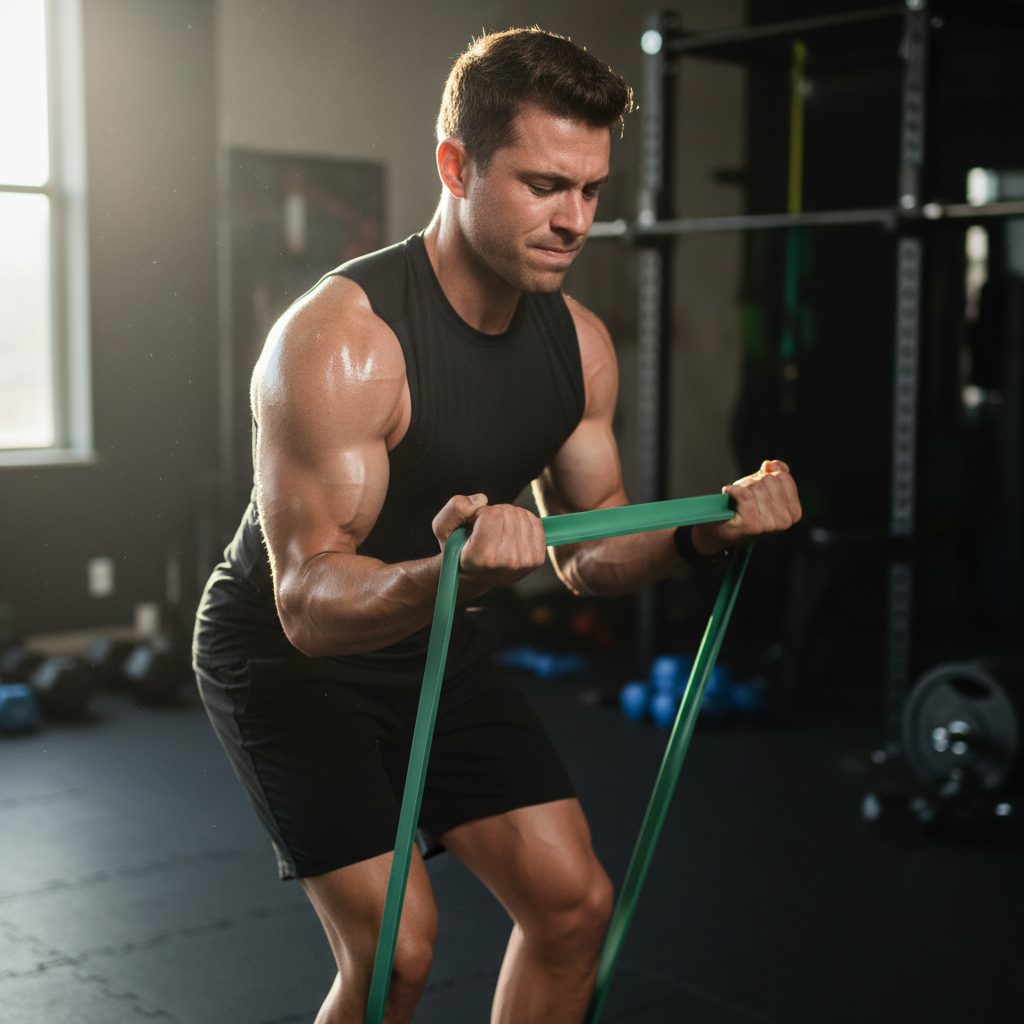
Proper form is paramount, even with bands. It prevents injury and ensures you’re effectively targeting the intended muscles. The “mind-muscle connection” means actively thinking about the muscle you’re working, enhancing its activation.
- Slow and Controlled– Avoid jerky movements. Perform each rep slowly and deliberately, focusing on the eccentric (lowering) phase.
- Full Range of Motion– Ensure you’re moving through the complete range of motion for each exercise without compromising form.
- Breathe Deeply– Exhale during the effort (concentric phase) and inhale during the release (eccentric phase).
- Watch and Learn– If unsure, watch videos of proper technique for each exercise.
Mindset and Consistency- Sticking With Your Band Routine
The best workout plan is the one you stick to. Resistance bands are incredibly accessible, making consistency easier.
- Set Realistic Goals– Don’t expect overnight miracles. Celebrate small victories and focus on continuous improvement.
- Make it a Habit– Schedule your workouts like any other important appointment. Consistency builds momentum.
- Find Your “Why”– Remind yourself why you started. Is it for better health, more energy, or increased strength?
- Listen to Your Body– Some days you’ll feel stronger than others. Adjust your workout intensity rather than skipping it entirely.
- Stay Patient– Progress takes time. Trust the process and enjoy the journey of getting stronger.
Cool-Down and Recovery
After your workout, dedicate 5-10 minutes to cooling down. This helps your heart rate return to normal and improves flexibility.
- Static Stretches– Hold each stretch for 20-30 seconds, focusing on the muscles you worked (e.g., hamstring stretch, quadriceps stretch, chest stretch).
- Hydration and Nutrition– Replenish fluids and consume a balanced meal or snack with protein and carbohydrates to aid muscle repair and recovery.
- Rest– Adequate sleep is crucial for muscle recovery and overall well-being.
Resistance bands are far more than simple accessories; they are powerful tools that can redefine your fitness journey. With the full-body workout outlined here, you have everything you need to build strength, enhance endurance, and sculpt your physique, all while enjoying the freedom and flexibility these bands offer. Embrace the versatility, commit to consistency, and discover why trainers worldwide swear by resistance band training. Your stronger, more resilient self is just a band away- grab yours and get started today!