
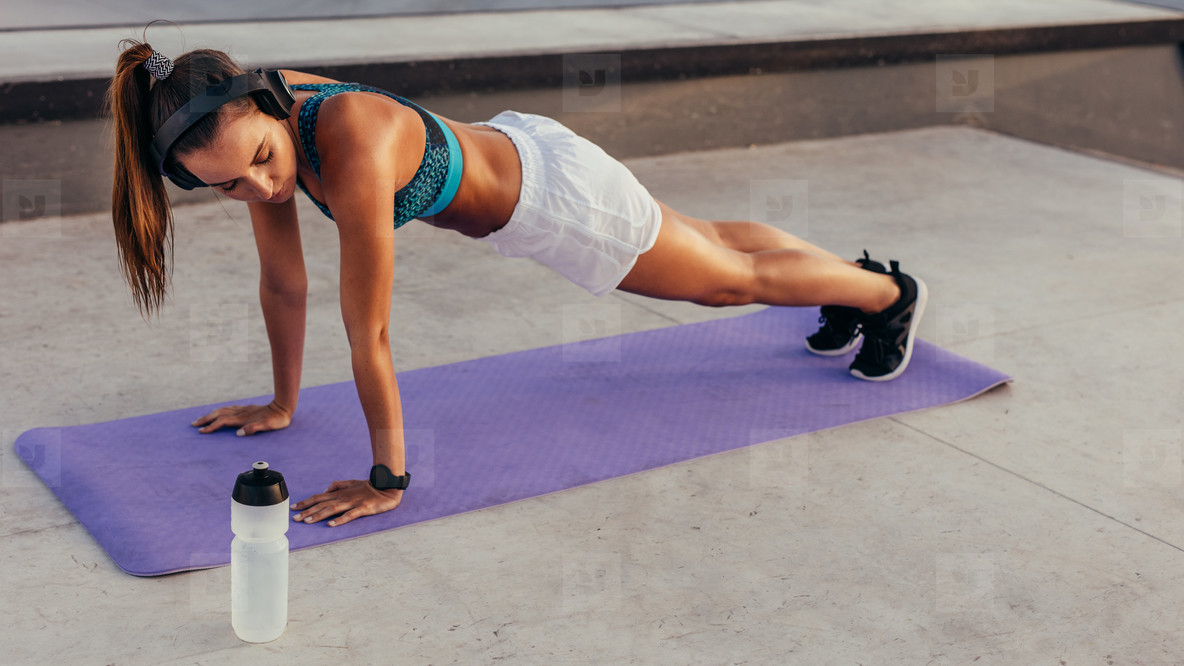
We’ve all been there: glued to our desks for hours, feeling the stiffness creep into our neck, shoulders, and lower back. Modern work life often means long periods of sitting, which can leave us feeling sluggish, achy, and even affect our overall health. But what if you could fight back against the sedentary trap without even leaving your workspace?
The good news is, you absolutely can. Integrating simple, effective exercises into your workday can make a huge difference in how you feel, both physically and mentally. This article will guide you through a practical collection of desk workout exercises, designed for real people with busy schedules, helping you boost your energy, ease discomfort, and improve your well-being right from your office chair.
Why Desk Workouts Matter More Than You Think
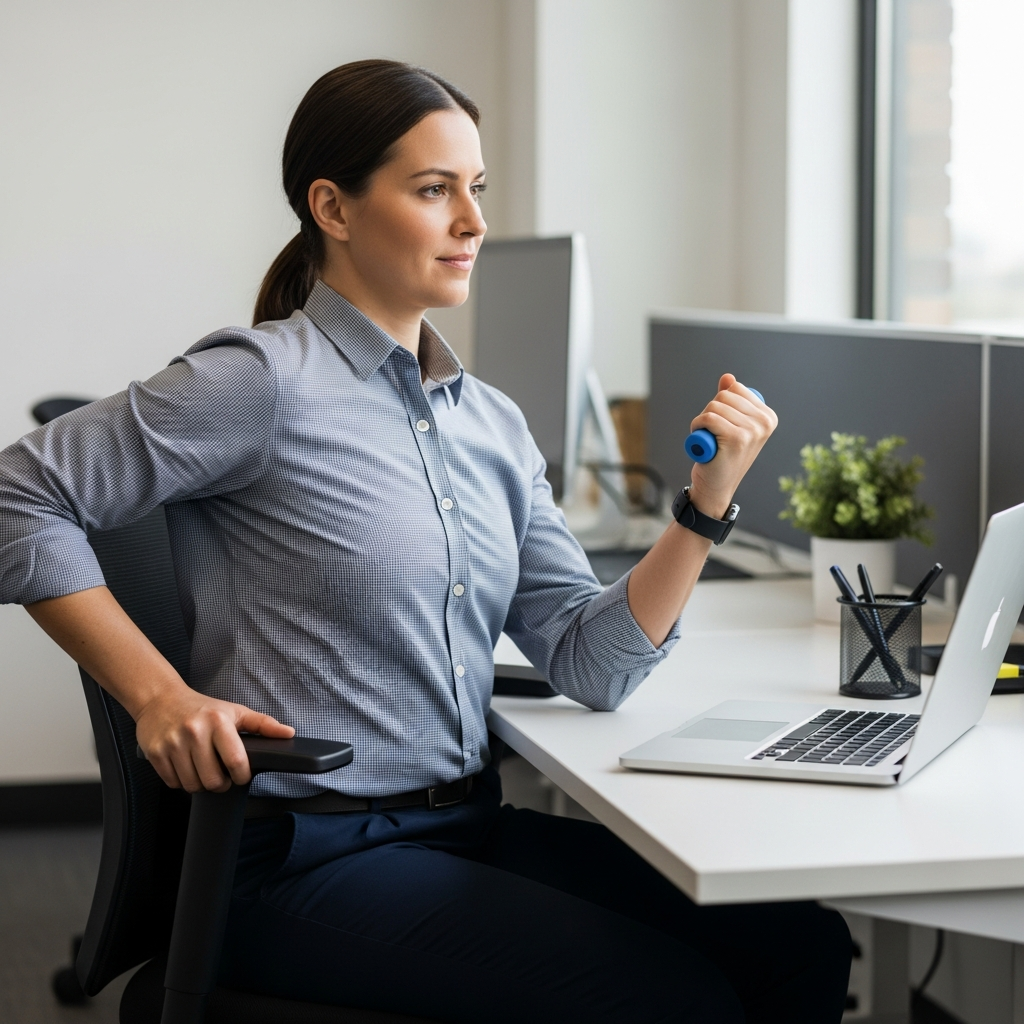
It might seem like a small thing, a few stretches here and there, but consistent movement throughout your day can have a profound impact. Our bodies are designed to move, and sitting for extended periods goes against our natural blueprint.
The Dangers of Prolonged Sitting
When you sit for too long, several things happen inside your body:
* Reduced Circulation: Blood flow slows down, which can lead to fatigue and sluggishness.
* Muscle Stiffness and Weakness: Muscles in your hips, glutes, and core can shorten and weaken, while your chest and shoulders can become tight.
* Back and Neck Pain: Poor posture from prolonged sitting often contributes to chronic pain in these areas.
* Metabolic Health Risks: Research suggests that excessive sitting is linked to higher risks of heart disease, type 2 diabetes, and other metabolic issues.
Instant Benefits of Movement Breaks
Even short bursts of activity can provide immediate advantages:
* Boost Energy: Moving gets your blood flowing, delivering oxygen and nutrients to your brain and muscles.
* Improve Mood: Physical activity releases endorphins, natural mood lifters.
* Enhance Focus: Regular breaks can help clear your head, reduce mental fatigue, and improve concentration.
* Reduce Discomfort: Stretching and gentle exercises can alleviate stiffness and prevent pain from building up.
Quick & Easy Upper Body Desk Stretches & Exercises
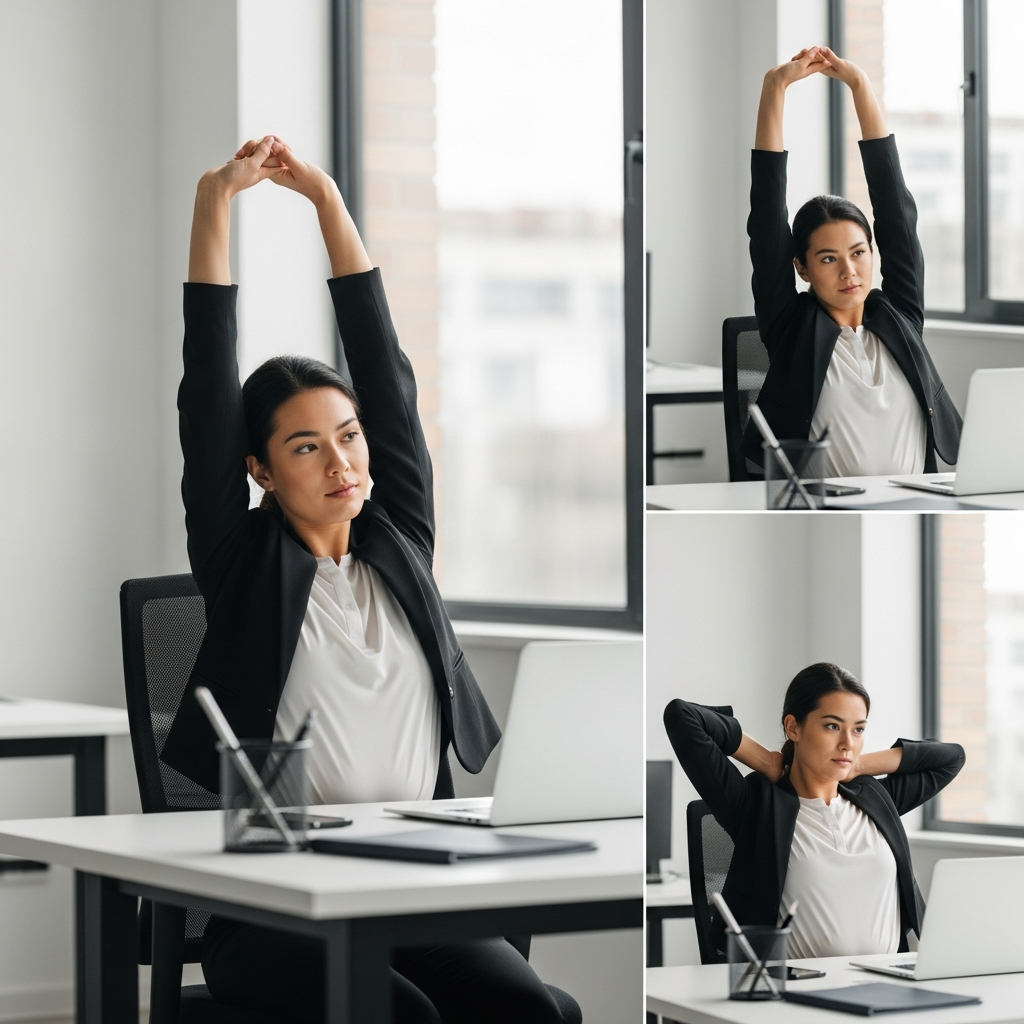
Let’s start from the top. Many of us carry tension in our neck and shoulders, especially when focused on a screen. These exercises are gentle yet effective.
Neck and Shoulder Relief
These movements can help release tension and improve your range of motion.
Neck Tilts
1. Sit tall with your shoulders relaxed.
2. Gently tilt your head, bringing your right ear towards your right shoulder. Hold for 15-20 seconds.
3. Slowly return to the center.
4. Repeat on the left side. Do 2-3 times per side.
Neck Rotations
1. Keep your chin level and shoulders relaxed.
2. Slowly turn your head to look over your right shoulder. Hold for 10-15 seconds.
3. Return to the center.
4. Repeat on the left side. Do 2-3 times per side.
Shoulder Rolls
1. Sit or stand with your arms relaxed at your sides.
2. Shrug your shoulders up towards your ears, then roll them back and down in a smooth, circular motion.
3. Do 10 rolls backward, then 10 rolls forward.
Shoulder Shrugs
1. Sit or stand comfortably.
2. Simply raise your shoulders as high as you can towards your ears.
3. Hold for a count of two, then slowly lower them back down.
4. Repeat 8-10 times.
Arm and Wrist Mobility
Your hands and wrists work hard typing and clicking all day. Give them some much-needed attention.
Wrist Circles
1. Extend one arm straight out in front of you, palm down.
2. Make a fist and slowly rotate your wrist in a circular motion, 5-10 times in each direction.
3. Repeat with the other wrist.
Finger Stretches
1. Extend one arm forward, palm facing away from you.
2. Use your other hand to gently pull your fingers back towards your body, feeling a stretch in your forearm. Hold for 15-20 seconds.
3. Then, make a fist and point your knuckles down, gently pulling your hand towards your body with your other hand. Hold for 15-20 seconds.
4. Repeat on the other hand.
Bicep Curls (no weights)
1. Sit tall with good posture.
2. Make a fist with one hand and place your forearm on your desk, palm facing up.
3. Curl your fist upwards towards your shoulder, squeezing your bicep muscle.
4. Slowly lower it back down. Do 10-15 repetitions per arm.
Tricep Extensions (using chair)
1. Sit on the edge of your chair, placing your hands on the armrests or the edge of the seat beside you.
2. Push down through your hands to slightly lift your hips off the chair.
3. Lower yourself down a few inches by bending your elbows, then push back up.
4. Repeat for 8-12 repetitions. Ensure your chair is stable.
Chest and Upper Back Openers
Counteract the forward slump that often accompanies desk work.
Seated Cat-Cow
1. Sit on the edge of your chair with your feet flat on the floor.
2. Place your hands on your knees.
3. For “Cow,” arch your back, pull your shoulders back, and lift your chest, looking slightly up.
4. For “Cat,” round your spine, tuck your chin to your chest, and gently pull your belly button towards your spine.
5. Flow between Cat and Cow for 8-12 repetitions.
Chest Stretch
1. Sit tall and interlace your fingers behind your head, elbows wide.
2. Gently press your elbows back, opening your chest. Hold for 15-20 seconds.
3. Alternatively, interlace your fingers behind your back and gently pull your hands down, lifting your chest. Hold for 15-20 seconds.
Engaging Your Core and Lower Body at Your Desk
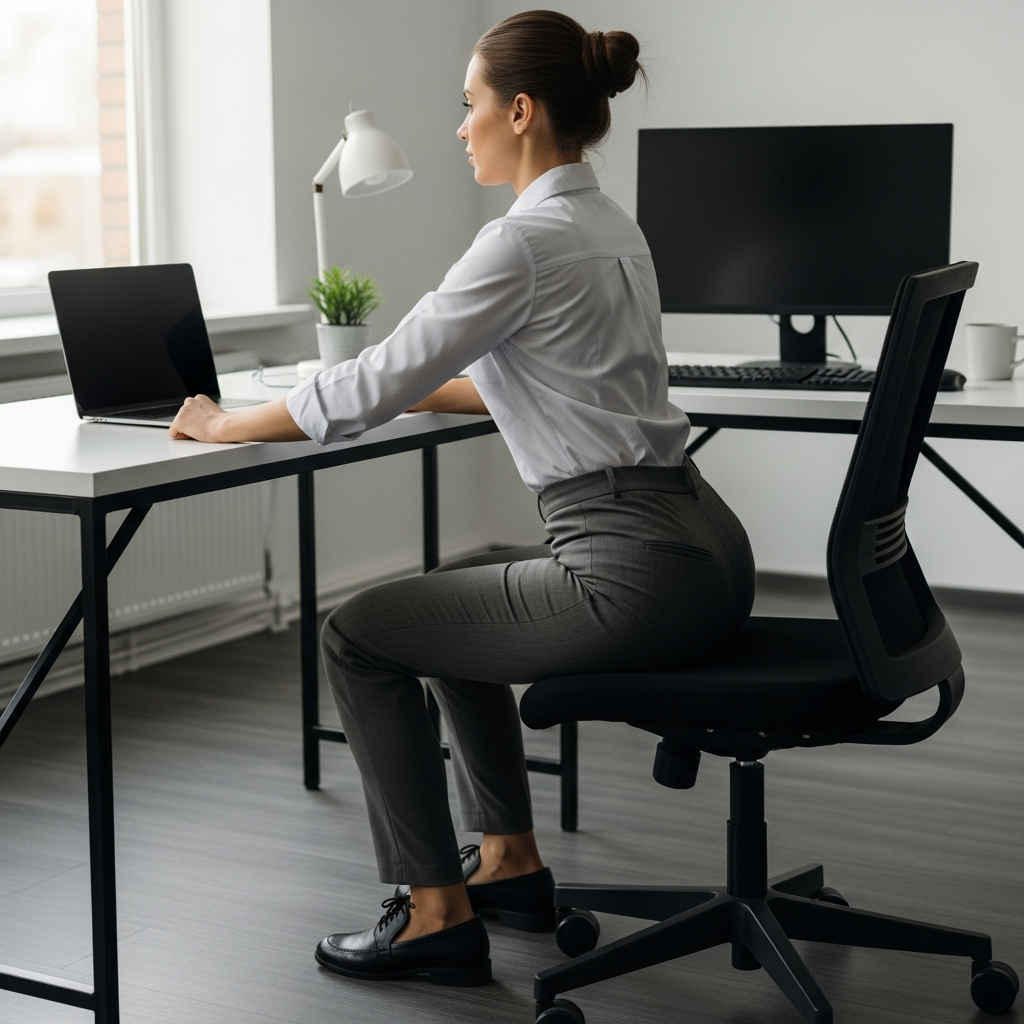
Your core and lower body muscles also need attention. These exercises can help strengthen and stretch those often-neglected areas.
Core Strengthening and Stretching
A strong core supports your spine and improves posture.
Seated Abdominal Squeeze
1. Sit tall in your chair, feet flat on the floor.
2. Gently pull your belly button towards your spine, as if you’re trying to cinch a belt.
3. Hold this gentle contraction for 5-10 seconds, then relax.
4. Repeat 10-15 times. Remember to breathe normally.
Seated Torso Twists
1. Sit tall, feet flat on the floor.
2. Place your right hand on your left knee and your left hand on the back of your chair.
3. Gently twist your torso to the left, looking over your left shoulder. Hold for 15-20 seconds.
4. Return to center and repeat on the other side. Do 2-3 times per side.
Seated Leg Lifts
1. Sit tall with your feet flat on the floor.
2. Straighten one leg out in front of you, lifting your foot a few inches off the floor. Keep your thigh engaged.
3. Hold for 5-10 seconds, then slowly lower your foot.
4. Repeat 8-10 times per leg.
Leg and Glute Activation
Keep your lower body muscles awake and active.
Calf Raises (seated or standing)
1. **Seated:** Sit with your feet flat on the floor. Lift both heels as high as you can, balancing on the balls of your feet. Lower slowly. Repeat 15-20 times.
2. **Standing (if possible):** Stand behind your chair for support. Lift both heels, coming onto your toes. Hold briefly, then lower. Repeat 15-20 times.
Seated Glute Squeeze
1. Sit tall and simply squeeze your glute muscles (buttocks) as tightly as you can.
2. Hold the squeeze for 5 seconds, then relax.
3. Repeat 10-15 times. This is a subtle but effective way to activate these important muscles.
Leg Extensions (seated)
1. Sit with your feet flat.
2. Straighten one leg out in front of you, engaging your thigh muscle.
3. Hold for 5-10 seconds, then slowly lower it back down.
4. Repeat 10-12 times per leg.
Ankle Circles
1. Lift one foot slightly off the floor.
2. Rotate your ankle in a circle, 10 times in each direction.
3. Repeat with the other foot.
Full Body Mini-Workout Flow for Your Break
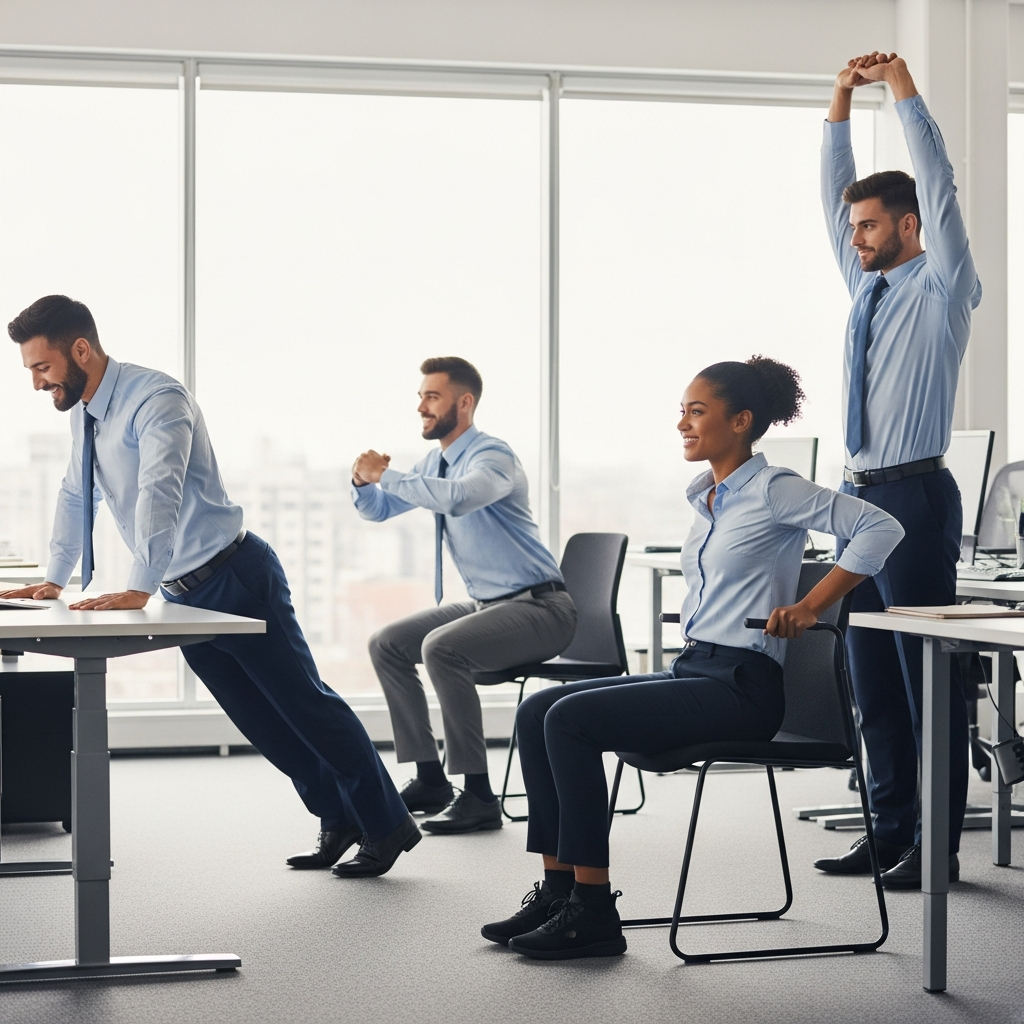
Sometimes it’s helpful to have a structured routine. Here are a couple of quick flows you can do.
Sample 5-Minute Routine
This short routine is perfect for a quick reset when you feel an energy dip.
* Neck Tilts: 30 seconds per side
* Shoulder Rolls: 30 seconds (forward and backward)
* Seated Cat-Cow: 60 seconds (flow slowly)
* Seated Leg Lifts: 30 seconds per leg
* Calf Raises (seated or standing): 60 seconds
* Wrist and Finger Stretches: 30 seconds per hand
Sample 10-Minute Routine
When you have a bit more time, try this comprehensive flow to target more areas.
* Neck Tilts & Rotations:** 60 seconds total
* Shoulder Rolls & Shrugs: 60 seconds total
* Seated Cat-Cow: 60 seconds
* Chest Stretch: 30 seconds
* Seated Abdominal Squeeze: 60 seconds
* Seated Torso Twists: 30 seconds per side
* Seated Leg Lifts: 45 seconds per leg
* Calf Raises (standing if possible): 60 seconds
* Seated Glute Squeeze: 60 seconds
* Wrist Circles & Finger Stretches: 60 seconds total
Integrating Movement into Your Workday: Habits and Strategies

Knowing the exercises is one thing; actually doing them is another. Here’s how to make movement a natural part of your workday.
The Power of Micro-Breaks
You don’t need a gym break. Little bits of movement throughout the day add up significantly.
* Set Reminders: Use your phone, a calendar app, or a simple timer to remind you to move every 30-60 minutes.
* Pair Habits: Link movement to something you already do. For example, every time you finish a task, do 10 shoulder rolls. Every time you get a new email, do a neck stretch.
Desk Setup Considerations
Your environment plays a role in your movement habits.
* Ergonomics: Ensure your chair, desk, and monitor are set up to support good posture. Even the best exercises can’t fully counteract poor ergonomics.
* Standing Desk Options: If your office has standing desks, consider alternating between sitting and standing throughout the day. This alone is a fantastic way to break up prolonged sitting.
The Buddy System
Get a colleague involved!
* Encourage Colleagues: Suggest a 5-minute movement break together. It’s more fun and easier to stay accountable when you have support.
Hydration and Movement Link
Make your water intake work for you.
* Walk to Get Water: Keep your water bottle away from your immediate reach so you have to stand up and walk to refill it. This simple habit adds steps and movement.
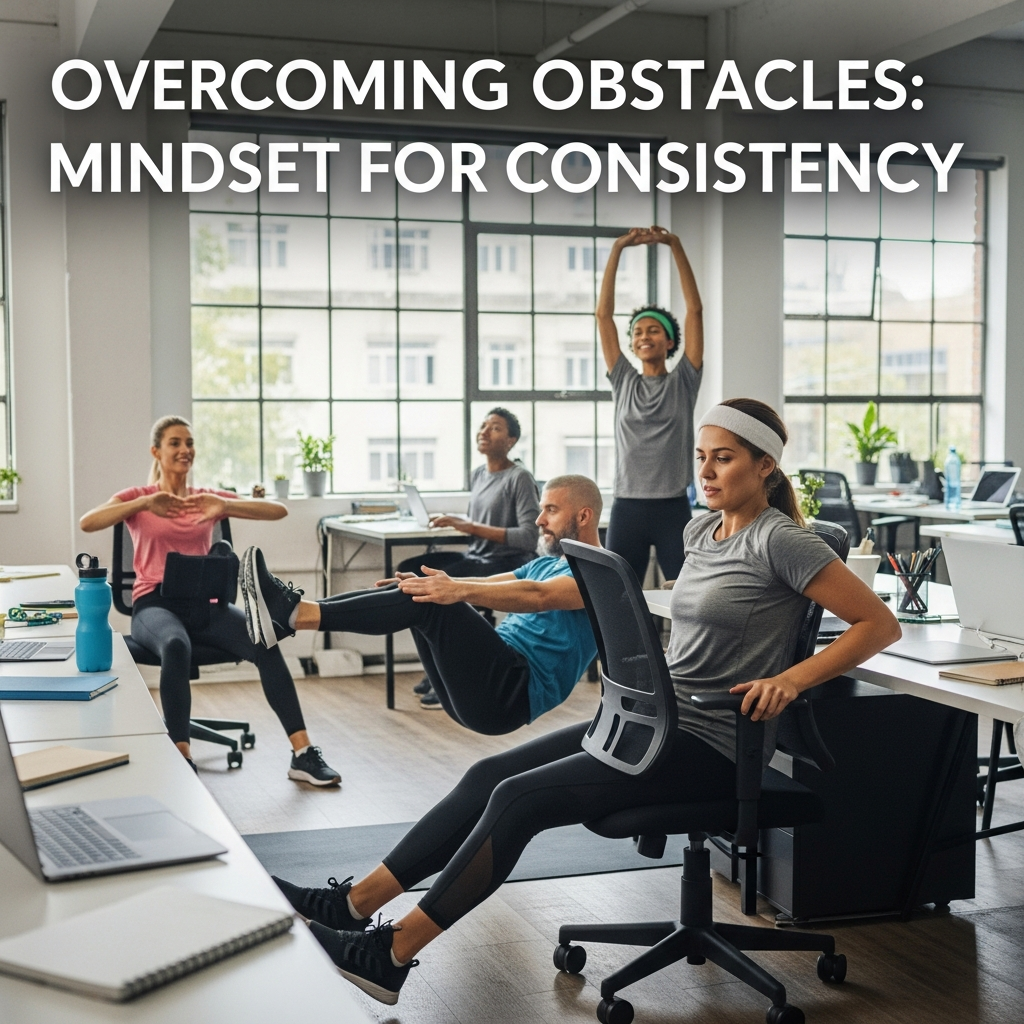
Overcoming Obstacles: Mindset for Consistency
Regenerate Image
Life gets busy, and it’s easy to let good intentions slip. Here’s how to build a sustainable habit.
Start Small, Build Gradually
Don’t feel like you have to do every exercise every day.
* Don’t Aim for Perfection: Even one stretch or one minute of movement is better than nothing. Celebrate these small wins.
* One Step at a Time: Pick one or two exercises to start with, and once they become routine, add more.
Make it Non-Negotiable
Treat your movement breaks with the same importance as your meetings.
* Schedule It: Block out a few 5-minute slots in your calendar for “Movement Break.”
Listen to Your Body
These exercises are meant to help, not hurt.
* Modify as Needed: If an exercise causes pain, stop immediately. Adapt it or choose another. Gentle movement is the goal.
* Focus on Gentle Movement: These are not intense workouts. They are about breaking stillness and restoring flexibility.
Celebrate Small Wins
Acknowledge your efforts to stay motivated.
* Pat Yourself on the Back: Did you take a stretch break? Great! Recognize that you prioritised your well-being. This positive reinforcement encourages consistency.