
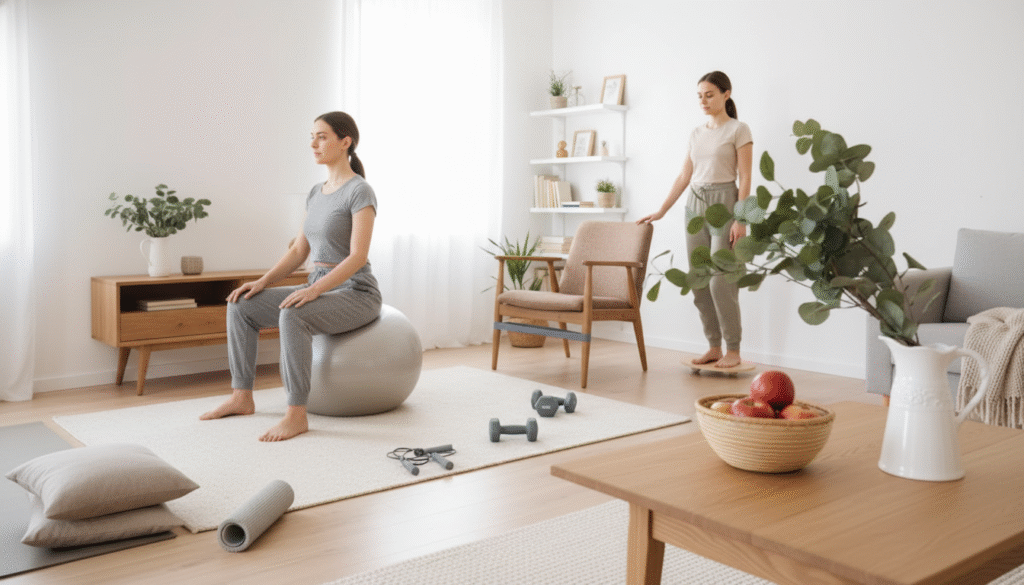
You don’t need a gym membership or fancy equipment to build a strong, balanced body. In fact, some of the best workouts for improving your core strength and balance can be done right at home — using nothing more than your body weight, consistency, and a little focus.
Your core is the foundation of almost everything you do — from sitting and walking to exercising and even breathing. It’s not just about getting toned abs; core strength supports posture, stability, and overall body control.
When your core is strong, you move better, feel stronger, and prevent injuries. And the best part? You can improve your core strength and balance with a few simple, consistent habits — no equipment needed.
Why Core Strength and Balance Matter

Your core includes more than just your abdominal muscles. It also involves your lower back, hips, pelvis, and glutes. Together, these muscles stabilize your spine and allow your body to move efficiently.
Strong core muscles are essential because they:
- Support good posture and alignment
- Reduce back pain and stiffness
- Improve overall strength and movement control
- Enhance balance and coordination
- Make daily activities easier — from lifting groceries to playing sports
Similarly, balance plays a vital role in everyday life. It’s what helps you stay steady, prevent falls, and move confidently — especially as you age. Building both core strength and balance gives you a powerful foundation for a healthier, more active lifestyle.
How Core Strength and Balance Work Together
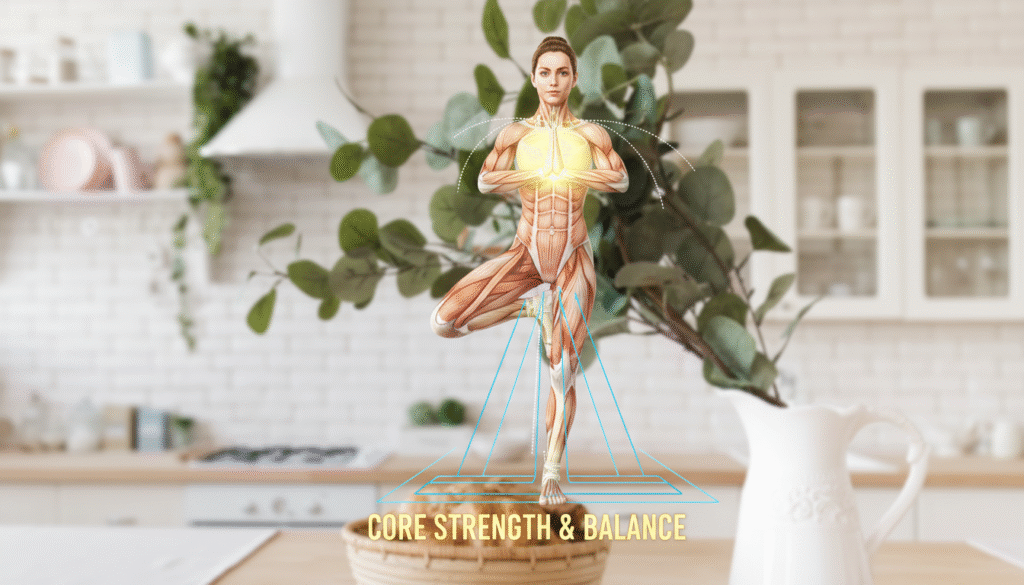
Think of your core as your body’s stability center. When it’s weak, your movements become less controlled, and your balance suffers.
Improving balance relies heavily on strengthening your core muscles — because those muscles stabilize your spine and pelvis every time you move, twist, or shift weight.
In short:
- Strong core = better balance
- Better balance = stronger, more stable core
They go hand-in-hand, and training one automatically helps the other.
Signs You Need to Strengthen Your Core

You don’t have to wait for back pain or posture problems to realize your core needs attention. Here are a few common signs your core might be weaker than you think:
- You slouch when sitting or standing
- You experience frequent back pain or stiffness
- You struggle to maintain balance on one leg
- Your belly sticks out even when you’re standing tall
- You get tired easily during basic movements like climbing stairs
If any of these sound familiar, it’s time to focus on strengthening your core — starting right at home.
Simple Tips to Improve Core Strength and Balance at Home

You don’t need long workouts to make a difference. Even a few minutes a day of focused exercises can build a strong, stable foundation over time.
Here’s how to start.
1. Focus on Posture

Good posture is the first step to building a strong core. You can engage your core muscles simply by standing or sitting correctly.
Try this:
- Stand tall with your shoulders relaxed.
- Pull your belly button gently toward your spine.
- Keep your weight evenly distributed between both feet.
Practice maintaining this alignment throughout the day — while sitting at your desk, cooking, or walking. It trains your core to stay active naturally.
2. Start with Core Activation Exercises
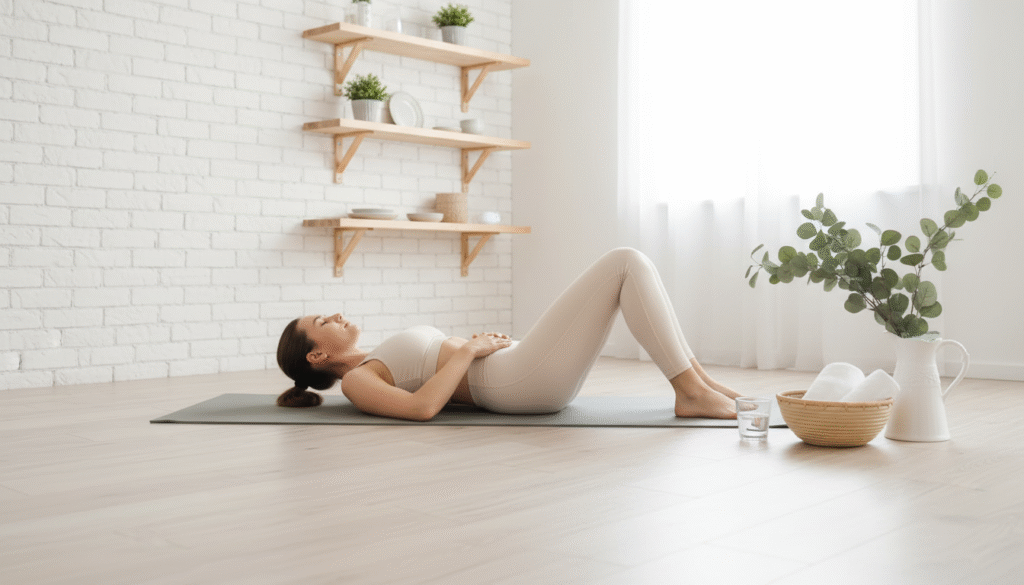
Before jumping into crunches or planks, learn how to activate your core properly.
Lie on your back with your knees bent and feet flat on the floor. Take a deep breath, then exhale while gently pulling your belly button toward your spine without holding your breath. This activates your deep abdominal muscles — your “inner core.”
Once you can engage these muscles consciously, every movement you do will become more effective and controlled.
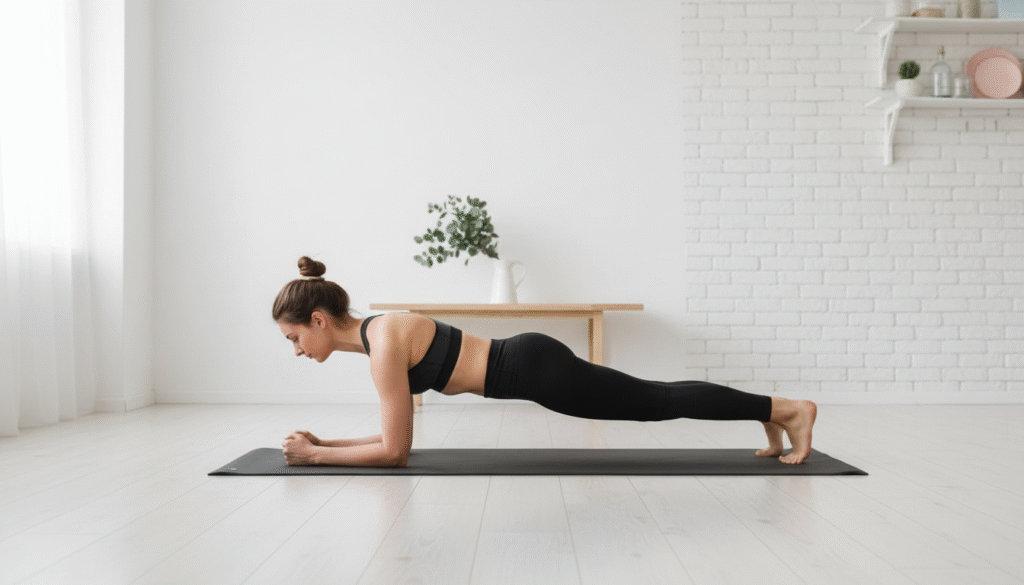
3. Master the Plank
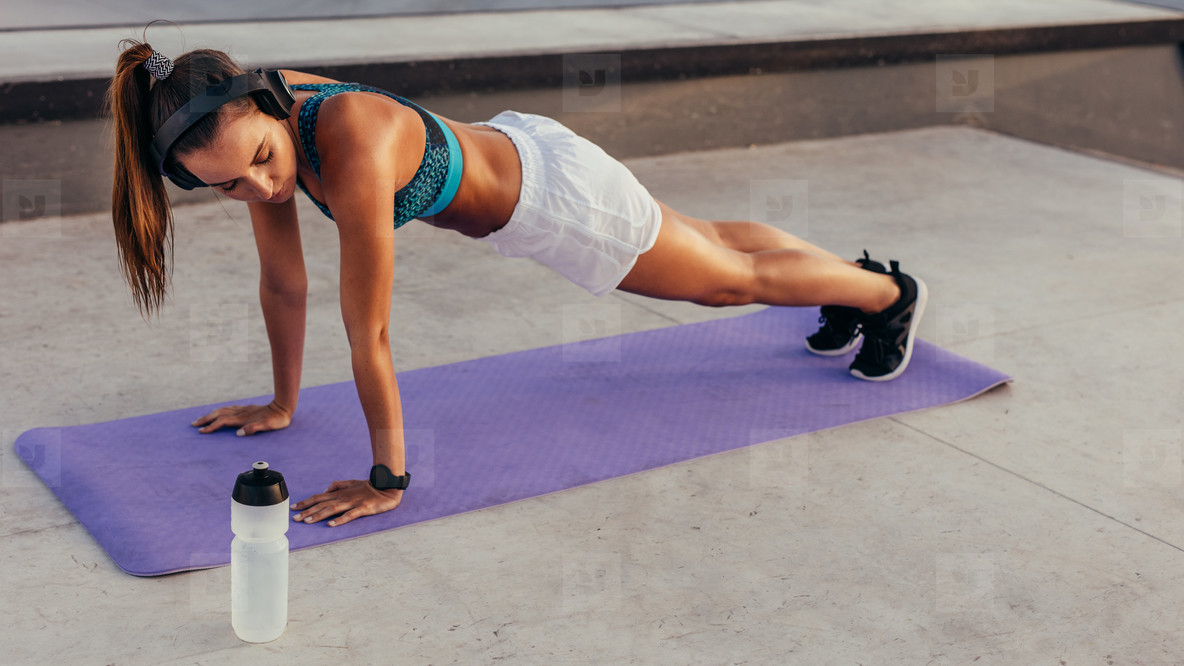
The plank is one of the best full-body exercises for building core strength — and it doesn’t require a single piece of equipment.
How to do it:
- Get into a push-up position on your forearms and toes.
- Keep your body in a straight line from head to heels.
- Engage your abs and glutes, and don’t let your hips sag.
- Hold for 20–30 seconds, then rest.
Over time, increase your hold to 60 seconds or more.
If a full plank feels too difficult, start on your knees or against a wall — it’s just as effective when done correctly.
4. Try Bird-Dog for Stability
The bird-dog is a simple but powerful move that strengthens your core and improves balance simultaneously.
How to do it:
- Start on all fours, with your hands under your shoulders and knees under your hips.
- Extend your right arm and left leg straight out.
- Keep your hips level and your back flat.
- Hold for a few seconds, then switch sides.
Do 10–12 repetitions per side. This move trains your body to stay stable during movement — the foundation of good balance.
5. Practice Standing Balance Exercises
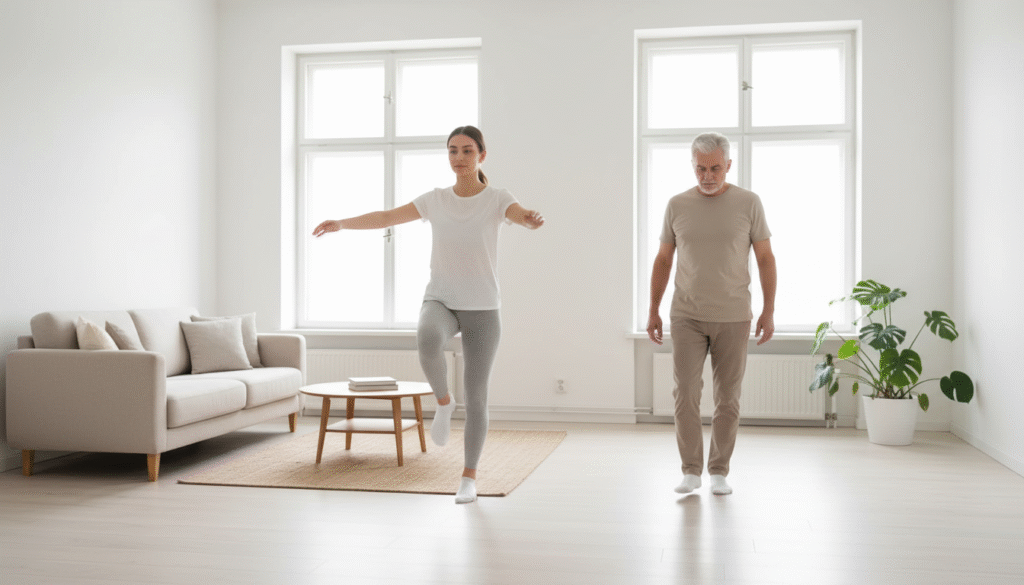
Standing balance exercises challenge your stability and core muscles in real-world ways.
Start with:
- Single-leg stands: Stand on one foot for 20–30 seconds, then switch.
- Heel-to-toe walk: Walk in a straight line, placing your heel directly in front of your toes with each step.
- Balance reach: Stand on one foot and reach your other leg or arm in different directions slowly.
These exercises strengthen stabilizing muscles and improve your coordination — skills that help in daily activities.
6. Engage in Everyday Movements
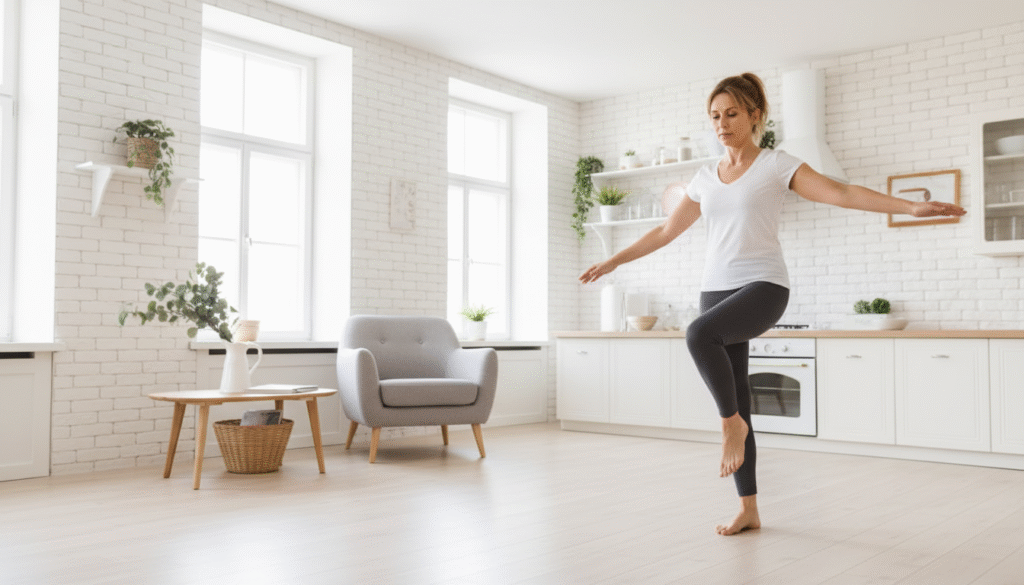
You don’t have to set aside a full workout to improve your core. Many everyday activities naturally strengthen it when done with intention.
Examples include:
- Carrying groceries evenly on both sides
- Climbing stairs while keeping good posture
- Doing housework like sweeping or gardening with mindful movement
When you engage your core during these moments, you’re training it without even realizing it.
7. Try Yoga or Pilates
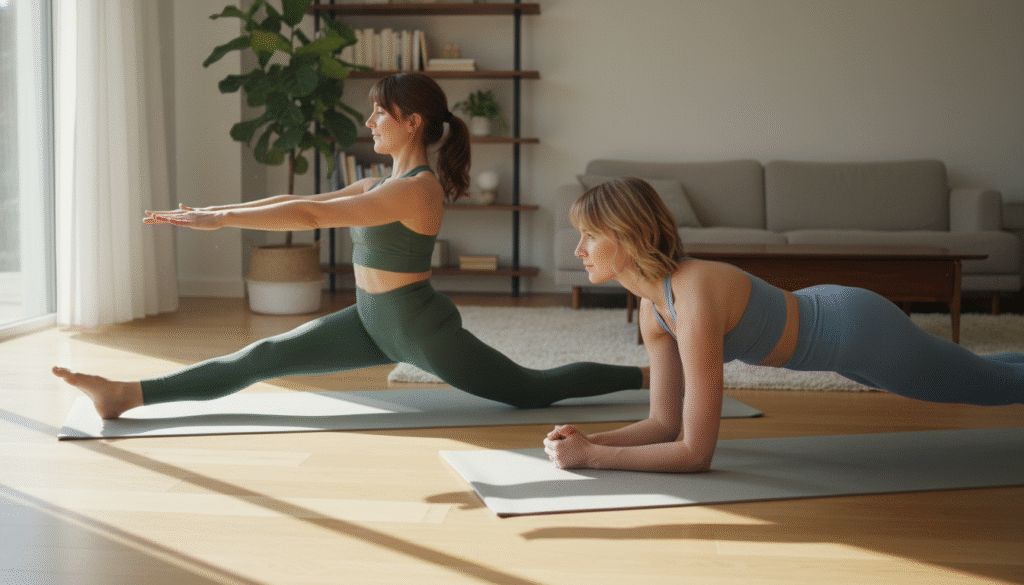
Both yoga and Pilates are excellent for improving core strength and balance.
Yoga focuses on balance, flexibility, and controlled breathing, while Pilates targets deep core muscles through small, precise movements.
You can find countless beginner-friendly classes online or follow short routines at home. Just 15–20 minutes a few times a week can make a big difference in your posture, balance, and core strength.
8. Use a Stability Ball or Cushion
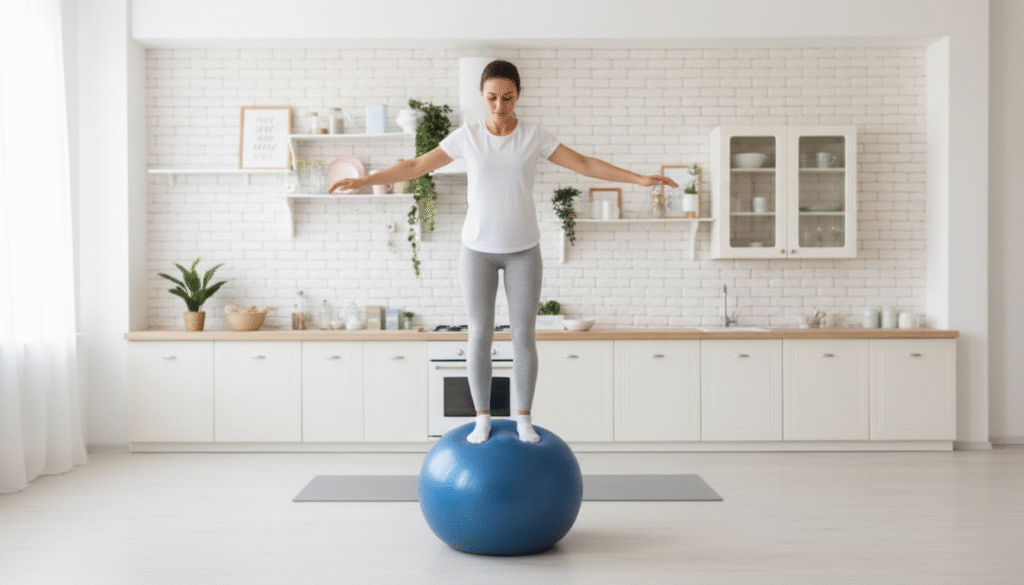
If you have a stability ball or even a soft cushion, you can turn any workout — or even sitting — into a core-strengthening exercise.
Try sitting on a stability ball while working on your laptop or watching TV. The constant small movements your body makes to stay balanced help engage your core muscles naturally.
You can also use it for exercises like crunches, planks, or bridges to make them more challenging.
9. Do the Glute Bridge
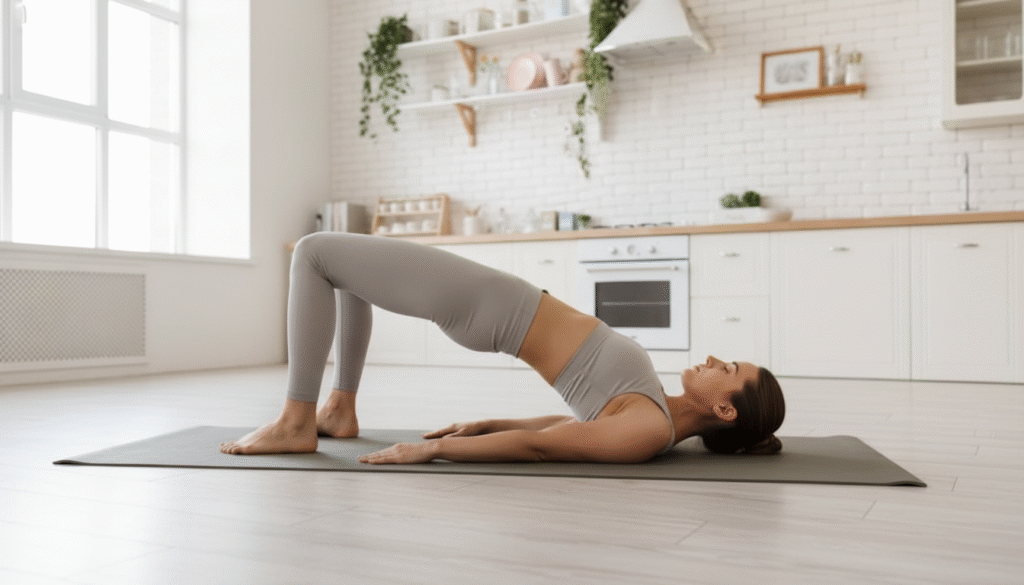
A strong core includes strong glutes — and the glute bridge is one of the best moves for this.
How to do it:
- Lie on your back with knees bent and feet flat on the floor.
- Engage your core and lift your hips toward the ceiling.
- Squeeze your glutes at the top and hold for a few seconds.
- Lower slowly and repeat for 10–15 reps.
This move strengthens your glutes, lower back, and abs — all key components of your core.
10. Incorporate Functional Movement Training
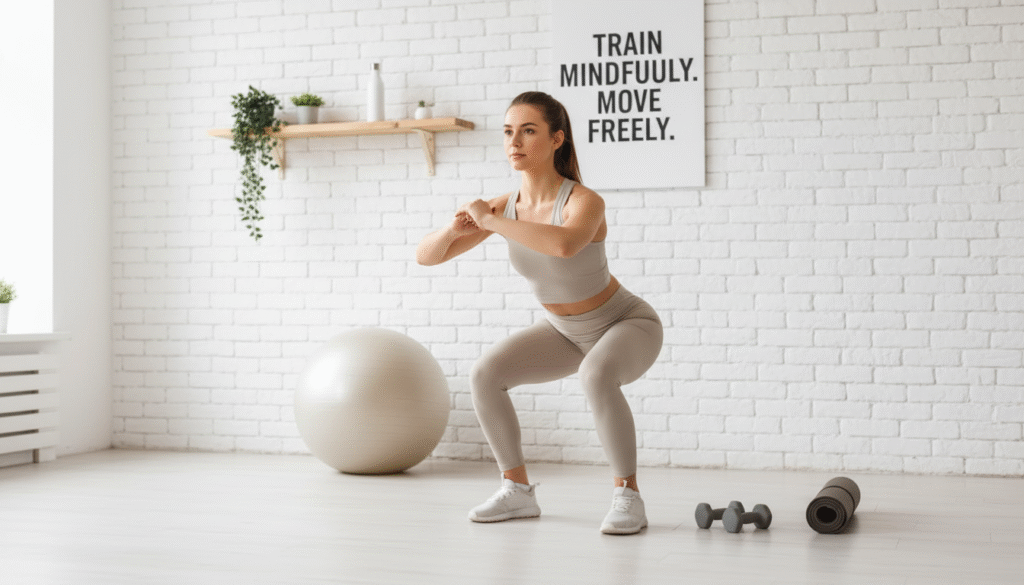
Functional movements are exercises that mimic real-life activities — bending, lifting, reaching — to build practical strength and balance.
Squats, lunges, and twists all engage your core while training your body to move efficiently.
Try bodyweight squats, side lunges, or standing torso rotations with a resistance band or light weight. These movements help your core coordinate with your whole body.
Building Balance Through Mind-Body Connection
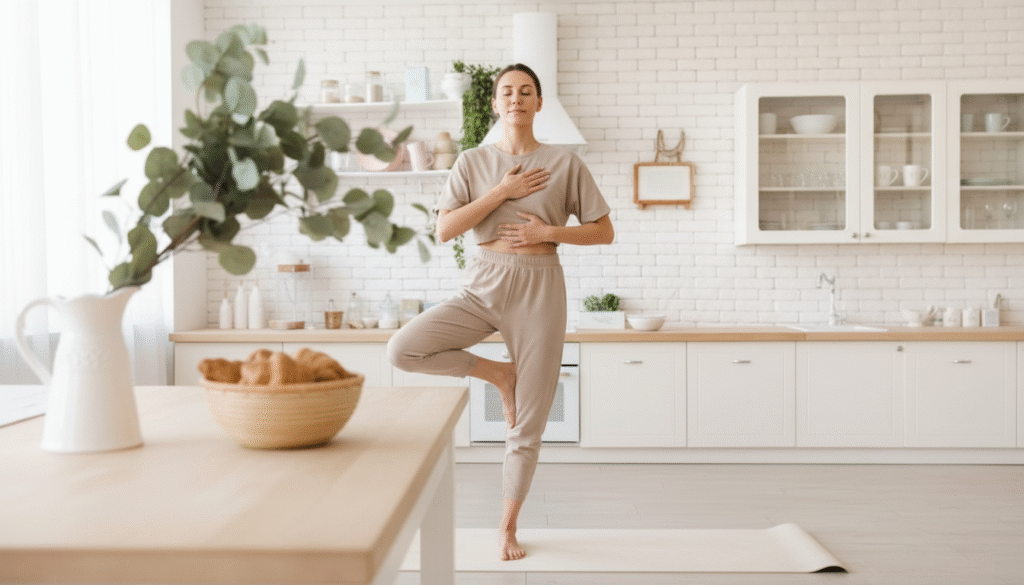
Balance isn’t just physical — it’s mental too.
Practices like mindful movement or meditation can improve your body awareness and help you feel more grounded.
When you focus your mind during exercise — paying attention to how your body moves and feels — you strengthen the connection between your brain and muscles.
Try adding a few deep breaths or short moments of mindfulness before or after your workouts. This not only enhances balance but also reduces stress and improves focus.
How Often Should You Train Your Core?
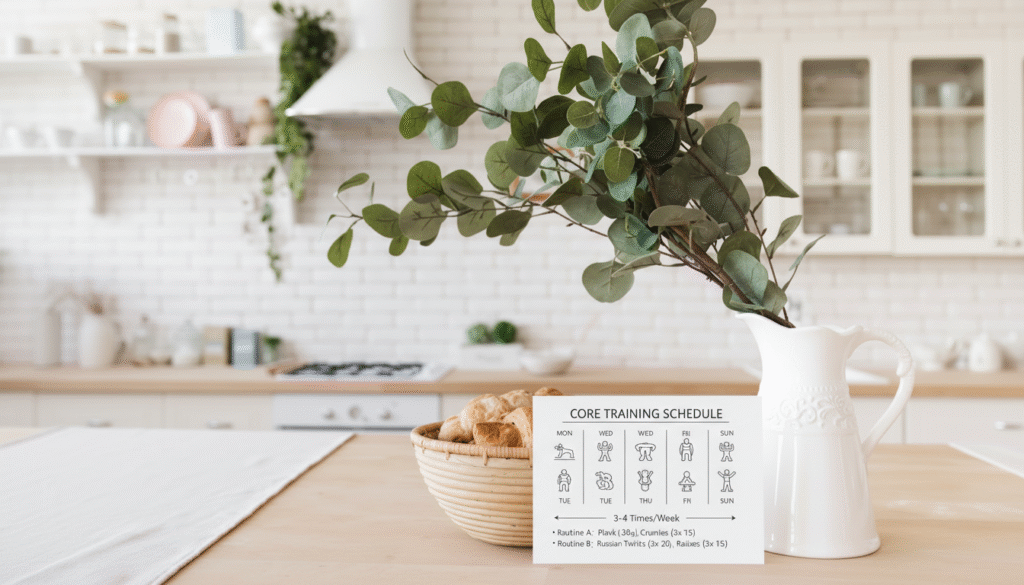
You don’t need to spend hours every day to see results. The key is consistency.
Aim to work on core and balance exercises 3 to 4 times a week. Even 15–20 minutes per session can create noticeable improvements in a few weeks.
Remember, your core is involved in almost every movement you make — so strengthening it regularly will improve everything else you do, from workouts to daily tasks.
Common Mistakes to Avoid
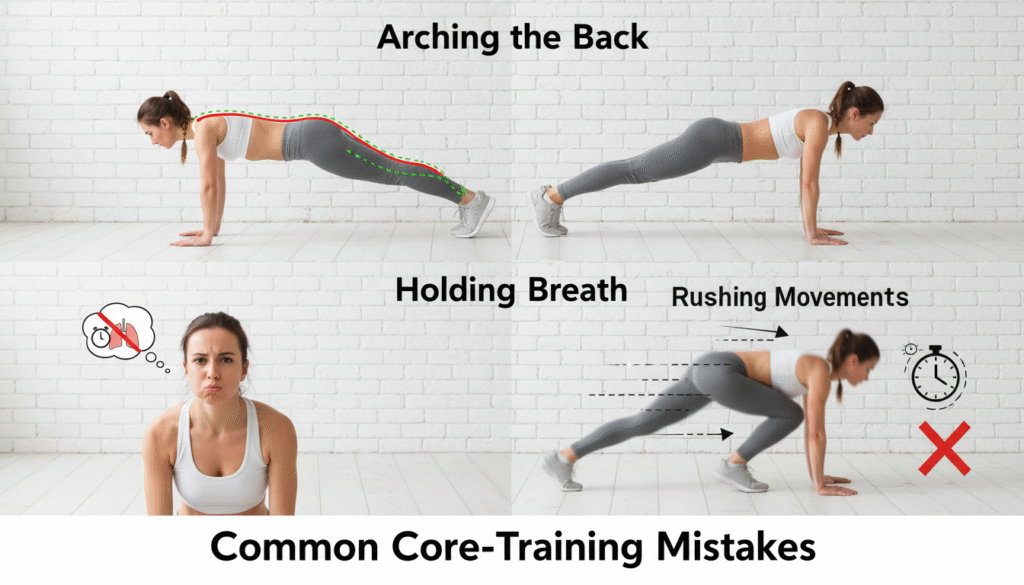
When training your core, it’s important to do it right to prevent injury and get the best results.
Avoid these common mistakes:
- Holding your breath — always breathe steadily through each movement.
- Overworking your abs — your core includes your back and hips too.
- Rushing through exercises — focus on control and quality over quantity.
- Ignoring your posture — alignment matters more than intensity.
- Forgetting to stretch — flexibility supports strong, balanced muscles.
Good form is more effective than long workouts. Listen to your body and progress gradually.
The Benefits You’ll Notice Over Time
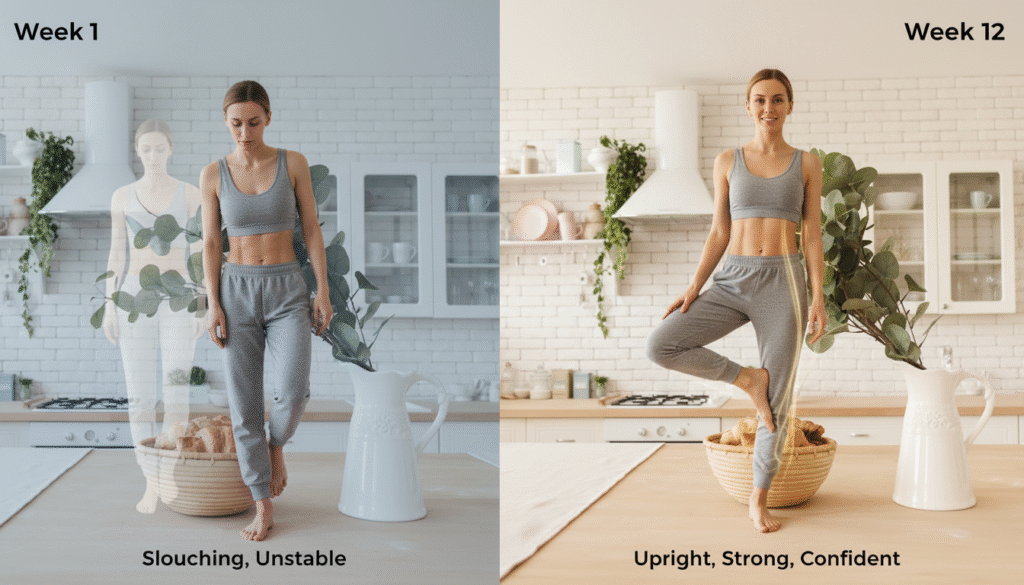
When you commit to building core strength and balance, the benefits show up in every part of your life:
- Better posture and reduced back pain
- Improved coordination and athletic performance
- Increased stability in daily movements
- More confidence in your body
- Enhanced focus, energy, and overall well-being
It’s one of those fitness goals where even a little effort goes a long way — and the results last for years.
Final Thoughts
You don’t need a gym or complicated routines to improve your core strength and balance. With a few intentional movements and consistent effort, you can build a stronger, more stable body right from the comfort of your home.
Start small — practice good posture, add a few planks, and try balance exercises daily. Over time, these habits will transform your strength, stability, and confidence.
A strong core means more than just toned abs — it’s the foundation for a healthier, more balanced, and energized life.
So take a deep breath, roll out your mat, and start today. Your body will thank you — one mindful movement at a time.