

When it comes to fitness, one of the most common questions people ask is whether they should focus more on cardio or strength training. Both forms of exercise offer unique benefits, and each contributes to health, weight loss, muscle building, and overall performance. The truth is, the best results come from a smart balance of both. Understanding how cardio and strength complement each other can help you build a stronger, fitter, and healthier body.
In this article, you’ll learn the difference between cardio and strength training, how each impacts your body, and how to create the perfect balance for maximum results — whether your goal is weight loss, muscle tone, or improved endurance.
1. Understanding Cardio: What It Does for Your Body

Cardiovascular exercise, often called cardio, involves any movement that raises your heart rate and keeps it elevated for a period of time. Examples include running, cycling, swimming, dancing, and brisk walking.
Benefits of Cardio:
- Burns calories quickly
- Improves heart and lung health
- Enhances endurance and stamina
- Reduces risk of chronic diseases
- Boosts mood by releasing endorphins
Cardio is especially effective for improving cardiovascular health and burning fat. It elevates your heart rate, increases oxygen flow, and trains your body to use energy efficiently.
2. Understanding Strength Training: How It Builds Power

Strength training involves resistance-based exercises that challenge your muscles, such as weightlifting, bodyweight exercises, resistance bands, or gym machines.
Benefits of Strength Training:
- Builds muscle and improves tone
- Boosts metabolism (even at rest)
- Increases bone density
- Supports better posture and mobility
- Helps with long-term fat loss
Strength training is essential for shaping your body, building power, and supporting a healthy metabolism. When muscles grow, they burn more calories — even when you’re not working out.
3. Cardio for Weight Loss vs Strength for Fat Loss

Many people confuse weight loss with fat loss, but they are not the same.
Cardio helps you lose weight quickly by burning calories during the workout.
Strength training helps you lose fat sustainably by increasing muscle, which boosts your metabolism.
For long-term body transformation, strength training often plays a bigger role. Muscle burns more calories than fat, meaning you burn more energy even while resting.
The ideal approach? Use cardio and strength together — cardio for calorie burn, strength for long-lasting fat reduction.
4. Which One Should You Prioritize?

Your priorities will depend on your goals:
If your goal is weight loss:
Combine moderate cardio with consistent strength training. Don’t rely on cardio alone — you may lose muscle along with fat.
If your goal is muscle building:
Prioritize strength training and use cardio for heart health and recovery days.
If your goal is endurance:
Focus more on cardio but still include basic strength training to prevent injuries.
If your goal is overall fitness:
A balanced mix of both is perfect for general health, energy, and body composition.
5. Why Finding the Balance Matters

Balancing cardio and strength prevents burnout, reduces injury risk, and ensures complete fitness development. Too much cardio can lead to muscle loss, while too much strength training without conditioning can limit endurance and stamina.
The right mix helps you:
- Burn fat efficiently
- Build functional muscles
- Improve aerobic capacity
- Maintain hormonal balance
- Stay consistent without overtraining
6. How Much Cardio vs Strength Do You Need Per Week?

Here’s a simple guideline based on fitness research:
Beginners:
- 2–3 strength sessions/week
- 2 cardio sessions/week (20–30 minutes each)
Intermediate exercisers:
- 3–4 strength sessions/week
- 2–3 cardio sessions/week
For fat loss:
- Strength: 3–4 times/week
- Cardio: 3 times/week (mix of low and high intensity)
For muscle gain:
- Strength: 4–5 times/week
- Light cardio: 1–2 times/week
For endurance:
- Cardio: 3–5 times/week
- Strength: 2 times/week
These are flexible guidelines that can be adjusted based on your schedule and goals.
7. Types of Cardio and How to Use Them

Not all cardio is the same. Each type has different effects on your body.
Low-Intensity Steady State (LISS)
Examples: Walking, slow cycling
Benefits: Fat-burning fuel source, reduces stress
Best for: Beginners, recovery days
Moderate-Intensity Cardio
Examples: Jogging, swimming
Benefits: Improves endurance and burns calories
Best for: Everyday fitness
High-Intensity Interval Training (HIIT)
Examples: Sprints, jump rope intervals
Benefits: Burns calories fast, improves athletic performance
Best for: Time-saving workouts, fat loss
Mixing these forms ensures your training never gets boring and your progress stays consistent.
8. Strength Training Methods to Include

There are different ways to train for strength — all effective in different ways.
Bodyweight Training
Push-ups, squats, planks
Ideal for beginners or home workouts
Free Weights
Dumbbells and barbells
Best for muscle growth and functional strength
Machines
Great for beginners learning movement patterns
Resistance Bands
Perfect for toning and low-impact strength work
Compound Movements
Squats, deadlifts, bench press, pull-ups
Excellent for full-body development and burning more calories
A mix of these methods keeps you strong, balanced, and injury-free.
9. Should You Do Cardio Before or After Strength?

This depends on your goals:
To build muscle:
Do strength training first. You’ll have more energy for heavy lifts.
To improve endurance:
Do cardio first. Your body will prioritize cardiovascular performance.
For weight loss:
Either order works, but many prefer strength first and cardio after.
For maximum energy and performance:
Keep them on different days or separate sessions (morning and evening).
10. Combining Cardio & Strength in the Same Workout

You can combine both using smart methods like:
Circuit Training
Alternating strength exercises with short cardio bursts.
HIIT + Strength Mix
Add 30–60 seconds of conditioning (jump rope, kettlebell swings) between strength sets.
Hybrid Workouts
Examples: Rowing + strength, running + core, cycling + leg day
These workouts save time and deliver powerful results.
11. Recovery Is the Key to Balancing Both

When combining cardio and strength, recovery becomes essential. Overtraining can lead to exhaustion, plateau, and injuries.
To recover effectively:
- Sleep 7–9 hours
- Take 1–2 rest days weekly
- Eat enough protein
- Stretch after workouts
- Hydrate well
Your muscles and cardiovascular system both need time to rebuild and grow stronger.
12. Nutrition for Cardio and Strength

Your body needs the right fuel to support both types of exercise:
Before Workout
- Carbs for energy
- Light protein for muscle support
After Workout
- Protein for muscle repair
- Healthy carbs to restore energy
Daily Nutrition
- Lean proteins
- Plenty of fruits and vegetables
- Whole grains
- Healthy fats
Balanced nutrition ensures you have the energy for cardio and the strength for lifting.
13. How to Know If Your Balance Is Working

You’re balancing cardio and strength correctly if:
- You feel energized, not exhausted
- You’re getting stronger and fitter
- Your endurance is improving
- Your clothes feel better
- You’re recovering well after workouts
If you feel constantly tired, losing strength, or not progressing, you may need to adjust your training load.
14. Sample Weekly Balanced Workout Plan
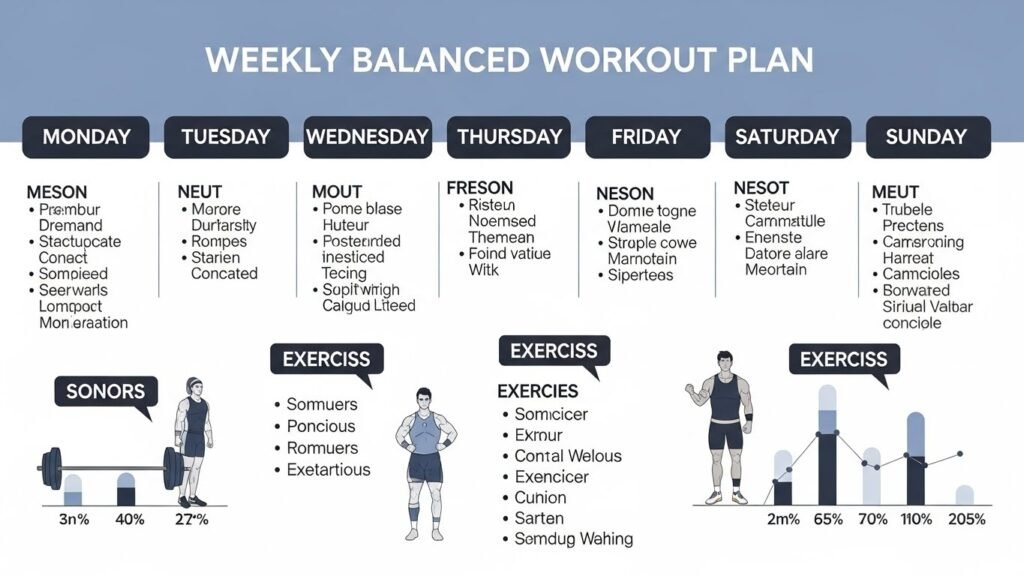
Here’s an easy plan anyone can follow:
Monday: Strength (Upper Body)
Tuesday: Cardio (HIIT or moderate intensity)
Wednesday: Strength (Lower Body)
Thursday: Light Cardio or Walking
Friday: Full-Body Strength
Saturday: Cardio or Active Recovery
Sunday: Rest
This plan supports fat loss, muscle growth, and endurance all at once.
Conclusion
Cardio and strength training are both essential parts of a balanced fitness routine. Cardio improves heart health and endurance, while strength training builds muscle, boosts metabolism, and shapes your body. The best results come when you combine both in a smart and structured way.
Whether your goal is weight loss, muscle gain, or general fitness, finding your perfect balance will help you stay consistent, feel stronger, and achieve long-lasting results. Start slowly, listen to your body, and create a routine that fits your lifestyle — because the best workout plan is the one you can maintain.