The idea that you need a gym full of heavy weights to build impressive muscle is a common misconception. While barbells and dumbbells certainly have their place, the human body is an incredible tool for strength and muscle development. Bodyweight exercises, often overlooked, offer a powerful, accessible, and highly effective path to a strong, muscular physique right from the comfort of your own home, with absolutely no equipment required.
Perhaps you’re short on time, don’t have access to a gym, or simply prefer the convenience of working out at home. Whatever your reason, this comprehensive guide will show you how to leverage the power of your own body to stimulate muscle growth, improve your strength, and transform your physique. We’ll delve into the science, break down essential exercises, provide practical routines, and offer crucial mindset tips to ensure your success.
The Science Behind Bodyweight Muscle Growth
Muscle growth, or hypertrophy, occurs when muscle fibers are damaged during exercise and then repair themselves, becoming stronger and larger in the process. This process is primarily triggered by mechanical tension, muscle damage, and metabolic stress. Bodyweight exercises, when performed correctly and progressively, can effectively create all three.
The key principle is progressive overload. This means continually challenging your muscles in new ways. With weights, this often means adding more plates. With bodyweight training, it involves manipulating variables like:
- Increased repetitions and sets: Doing more work over time.
- Decreased rest periods: Keeping muscles under tension for longer.
- Slower tempo: Increasing time under tension.
- More challenging variations: Progressing from easier to harder exercise forms (e.g., knee push-ups to standard push-ups to one-arm push-ups).
- Unilateral movements: Working one limb at a time (e.g., single-leg squats).
By understanding and applying these principles, you can continuously stimulate muscle adaptation and growth, proving that equipment isn’t a prerequisite for building a formidable physique.
Foundational Bodyweight Exercises for Every Muscle Group
Here are the core bodyweight movements that will form the backbone of your home muscle-building journey. Focus on mastering the form before attempting advanced variations.
Chest and Triceps – Push-Ups and Dips

Push-ups are the ultimate compound movement for your upper body, targeting your chest, shoulders, and triceps. Dips, often overlooked, are fantastic for tricep and lower chest development.
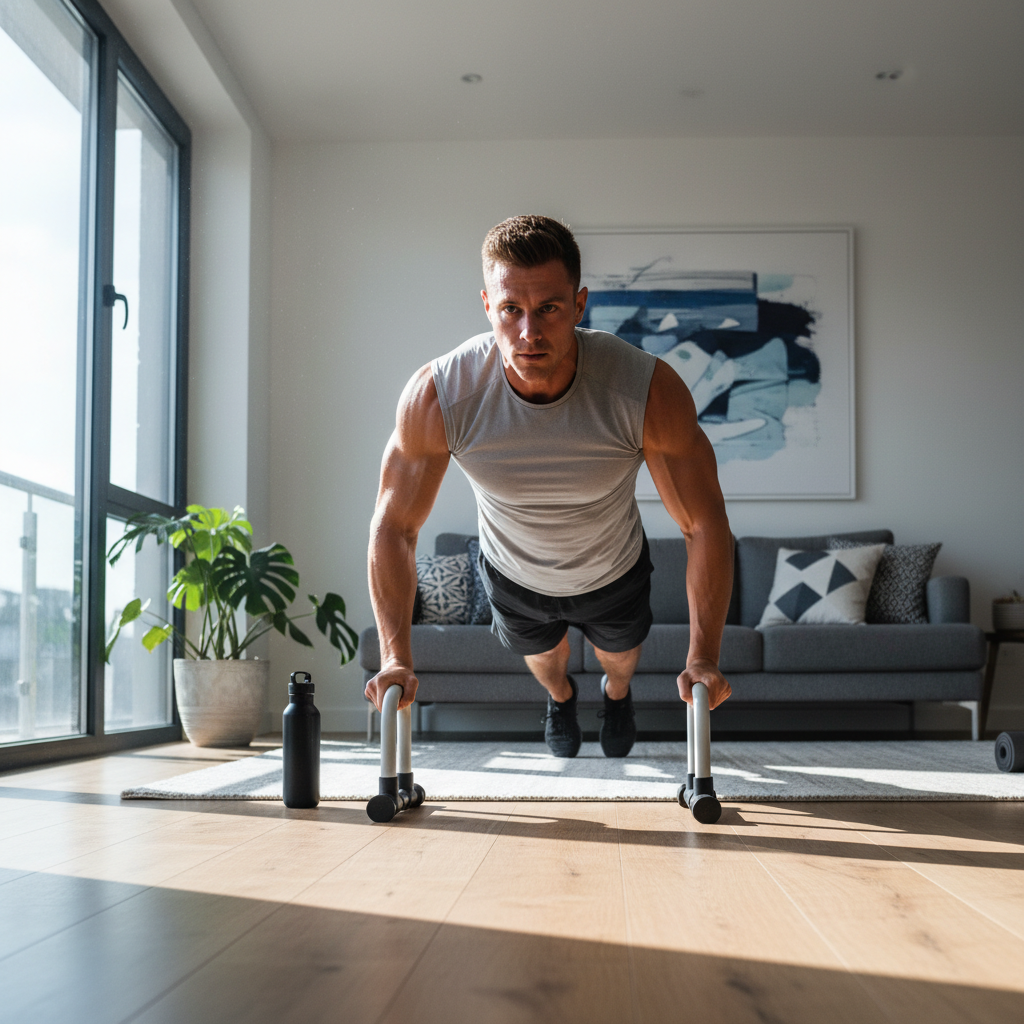
- Standard Push-Ups: Start with hands slightly wider than shoulder-width, body in a straight line. Lower your chest towards the floor, then push back up.
- Incline Push-Ups: Hands on an elevated surface (table, bench). Easier variation, great for beginners.
- Decline Push-Ups: Feet on an elevated surface. Increases difficulty by shifting more weight to your upper body.
- Diamond Push-Ups: Hands close together, forming a diamond shape. Excellent for tricep isolation.
- Chair Dips: Use a sturdy chair. Place hands on the edge, fingers pointing forward, legs extended. Lower your body by bending your elbows, then push back up.
Back and Biceps – Pull-Ups and Rows (with modifications)

Working your back and biceps with bodyweight alone can be challenging but is entirely possible. Inverted rows are your best friend here, mimicking the pulling motion of a row machine.
- Inverted Rows (Table Rows): Lie on your back under a sturdy table. Grab the edge with an overhand grip, hands shoulder-width apart. Pull your chest towards the table, keeping your body straight.
- Doorframe Rows: Stand facing a sturdy doorframe. Grip the vertical sides firmly and lean back, using your back and biceps to pull yourself forward. Use caution and test stability first!
- Scapular Pulls: Hang from a sturdy bar or doorframe. Without bending your elbows, depress your shoulders and pull your shoulder blades together, lifting your body slightly. Builds crucial upper back strength.
Legs and Glutes – Squats, Lunges, and Calf Raises

Your legs are home to some of your body’s largest muscles, and bodyweight exercises can effectively sculpt and strengthen them.
- Bodyweight Squats: Feet shoulder-width apart, toes slightly out. Descend as if sitting in a chair, keeping your chest up and back straight. Go as deep as comfortable.
- Sumo Squats: Wider stance, toes pointed further out. Targets inner thighs and glutes more.
- Lunges (Forward, Reverse, Lateral): Step forward/backward/sideways, lowering your hips until both knees are bent at a 90-degree angle.
- Bulgarian Split Squats: Place one foot on an elevated surface (chair) behind you. Perform a lunge, focusing on the front leg.
- Glute Bridges: Lie on your back, knees bent, feet flat. Lift your hips off the floor until your body forms a straight line from shoulders to knees. Squeeze your glutes at the top.
- Single-Leg Glute Bridges: Same as above, but with one leg extended.
- Calf Raises: Stand tall, then slowly raise yourself onto the balls of your feet, squeezing your calves.
Core – Planks, Crunches, and Leg Raises

A strong core is fundamental for all movements, posture, and injury prevention. These exercises hit your entire midsection.
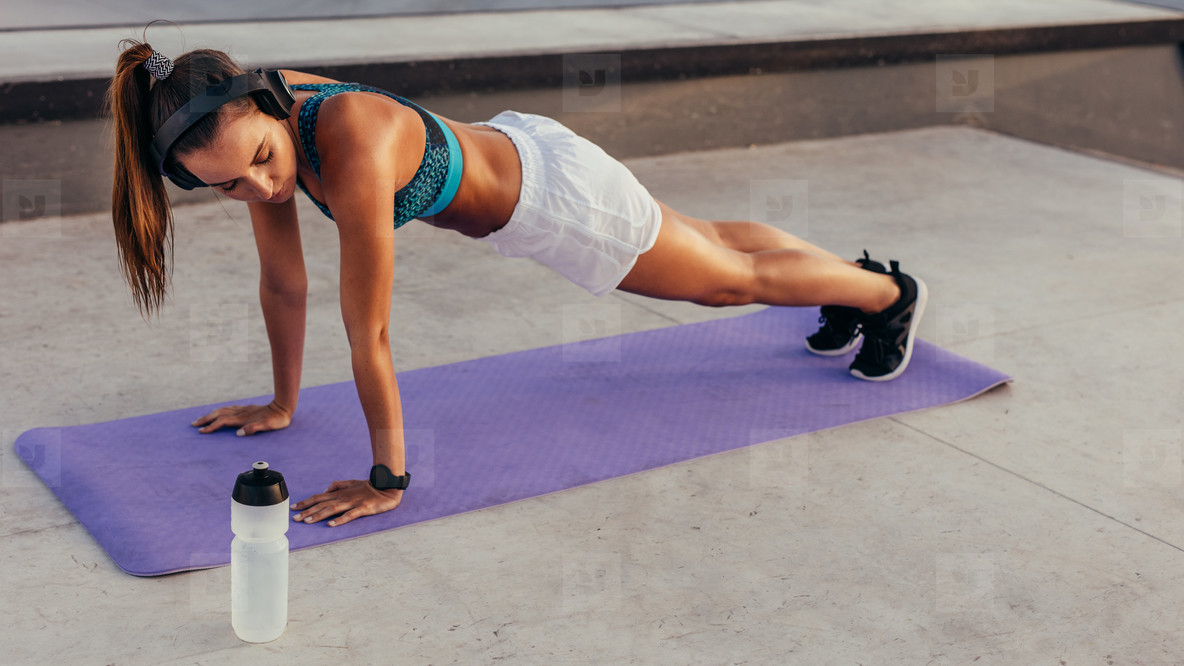
- Plank: Hold a push-up position (high plank) or forearm position (low plank), keeping your body in a straight line from head to heels. Engage your abs.
- Side Plank: Support your body on one forearm and the side of your foot, keeping your body straight.
- Crunches: Lie on your back, knees bent, feet flat. Lift your head and shoulders off the floor, engaging your upper abs.
- Reverse Crunches: Lie on your back, hands under your glutes or by your sides. Lift your hips off the floor, bringing your knees towards your chest. Targets lower abs.
- Bicycle Crunches: Lie on your back, hands behind your head, legs lifted. Bring opposite elbow to opposite knee in a cycling motion.
- Leg Raises: Lie on your back, legs extended. Slowly lift your legs towards the ceiling, keeping them straight, then lower them without touching the floor.
Mastering Progressive Overload Without Weights
This is the secret sauce to continuous muscle growth with bodyweight training. Without adding external resistance, you must find ways to make exercises harder over time.
Increase Reps and Sets
The simplest form of progression. If you can do 3 sets of 10 push-ups easily, aim for 3 sets of 12, then 15, then 20. Once you hit a high number (e.g., 20-30 reps), it might be time to move to a harder variation.
Improve Exercise Difficulty
This is where bodyweight training gets exciting. By changing leverage, stability, or the number of limbs used, you can dramatically increase the challenge:
- Leverage: For push-ups, move from incline to standard, then decline, then pseudo planche push-ups (hands further back towards your hips).
- Unilateral Movements: Progress from two-leg squats to pistol squat progressions (holding onto support, then freestanding). From glute bridges to single-leg glute bridges.
- Tempo Control: Slow down the eccentric (lowering) phase of an exercise. For example, take 3-5 seconds to lower into a push-up or squat. Add a pause at the bottom of the movement.
Decrease Rest Time
Performing exercises back-to-back with minimal rest (supersets or circuit training) increases metabolic stress and muscular endurance, which also contributes to hypertrophy.
Focus on Form and Mind-Muscle Connection
Perfecting your form not only prevents injury but also ensures the target muscles are doing the work. Actively thinking about squeezing the muscle you’re working (mind-muscle connection) enhances recruitment and growth. Quality always trumps quantity.
Designing Your Weekly Bodyweight Workout Plan

Consistency and structure are vital. Here’s a sample full-body routine, ideal for beginners and intermediates. Adjust frequency and volume based on your recovery and goals.
Sample Weekly Schedule
A full-body approach 3 times a week, with rest days in between, allows for adequate recovery and muscle repair.
Workout Structure (Perform 3-4 rounds, resting 60-90 seconds between exercises/rounds)
- Day 1: Full Body Workout A
- Standard Push-Ups: 3 sets to failure (or 10-20 reps)
- Inverted Rows: 3 sets to failure (or 10-20 reps)
- Bodyweight Squats: 3 sets of 15-25 reps
- Glute Bridges: 3 sets of 15-25 reps
- Plank: 3 sets, hold for 30-60 seconds
- Day 2: Active Recovery or Rest
- Day 3: Full Body Workout B
- Decline Push-Ups (or harder variation): 3 sets to failure
- Doorframe Rows (or harder variation): 3 sets to failure
- Lunges (alternating legs): 3 sets of 10-15 reps per leg
- Calf Raises: 3 sets of 20-30 reps
- Side Plank: 3 sets, hold for 30-45 seconds per side
- Day 4: Active Recovery or Rest
- Day 5: Full Body Workout C
- Diamond Push-Ups (or harder variation): 3 sets to failure
- Chair Dips: 3 sets to failure
- Bulgarian Split Squats: 3 sets of 8-12 reps per leg
- Reverse Crunches: 3 sets of 15-20 reps
- Leg Raises: 3 sets of 15-20 reps
- Day 6 & 7: Rest
Warm-up and Cool-down
- Warm-up (5-10 minutes): Light cardio (jumping jacks, high knees) followed by dynamic stretches (arm circles, leg swings, torso twists).
- Cool-down (5-10 minutes): Static stretches, holding each stretch for 20-30 seconds (chest stretch, tricep stretch, hamstring stretch, quad stretch).
Nutrition and Recovery – The Pillars of Muscle Growth
Your efforts in your workouts are only half the equation. What you do outside of your training sessions is equally, if not more, important for building muscle.
Fueling Your Body
- Protein Intake: Essential for muscle repair and growth. Aim for 0.7-1 gram of protein per pound of body weight daily. Lean meats, eggs, dairy, legumes, and plant-based protein sources are excellent choices.
- Carbohydrates for Energy: Provide the fuel for intense workouts and replenish glycogen stores. Opt for complex carbs like whole grains, fruits, and vegetables.
- Healthy Fats: Crucial for hormone production and overall health. Avocados, nuts, seeds, and olive oil are great sources.
- Hydration: Drink plenty of water throughout the day. Dehydration impairs performance and recovery.
The Power of Sleep
Aim for 7-9 hours of quality sleep per night. During sleep, your body releases growth hormone and repairs muscle tissue. Skimping on sleep will hinder your progress.
Stress Management
Chronic stress elevates cortisol levels, which can break down muscle tissue and impede recovery. Incorporate stress-reducing activities like meditation, yoga, or spending time in nature.
Mindset and Consistency – Staying on Track
Building muscle is a marathon, not a sprint. Your mental approach and ability to stay consistent are paramount.
Set Realistic Goals
Don’t expect overnight transformations. Celebrate small victories—an extra rep, a longer plank hold, mastering a new variation. These build momentum and motivation.
Track Your Progress
Keep a workout journal. Note down the exercises, sets, reps, and any variations. This allows you to see how far you’ve come and plan your next progressive step. You can also take progress photos or videos.
Embrace the Journey
There will be days you don’t feel like working out. Push through, even if it’s just a shorter session. Building discipline is a muscle in itself. Focus on showing up and putting in the work, and the results will follow.
Listen to Your Body
Pay attention to signs of fatigue or pain. Rest when needed, and don’t push through an injury. Recovery is part of the training process.
Conclusion
Building muscle at home without equipment is not just a possibility; it’s a powerful and effective reality. By understanding the principles of progressive overload, mastering foundational bodyweight movements, and committing to consistent effort, you can sculpt a strong, capable, and resilient physique.
This journey isn’t about expensive gym memberships or fancy gear; it’s about harnessing the incredible potential of your own body, day after day. Embrace the challenge, stay consistent, fuel your body wisely, and allow yourself the grace of recovery. You have everything you need right now to start building the body you desire. Take that first step today, and witness the transformative power of bodyweight training. Your strongest self awaits!