Building strong, well-defined biceps isn’t just about looking good in a t-shirt; it’s about developing functional strength that helps with countless everyday tasks. From carrying groceries to lifting your child, your biceps play a crucial role. But like any exercise, getting the most out of your biceps curls—and avoiding potential injury—comes down to mastering the correct form.
This guide is designed to walk you through everything you need to know about the biceps curl. We’ll break down the perfect technique, shine a light on common mistakes that hold people back, and offer practical tips to help you build those impressive arms safely and effectively. Let’s get started on your journey to stronger, healthier biceps!
Why Biceps Curls Are Important
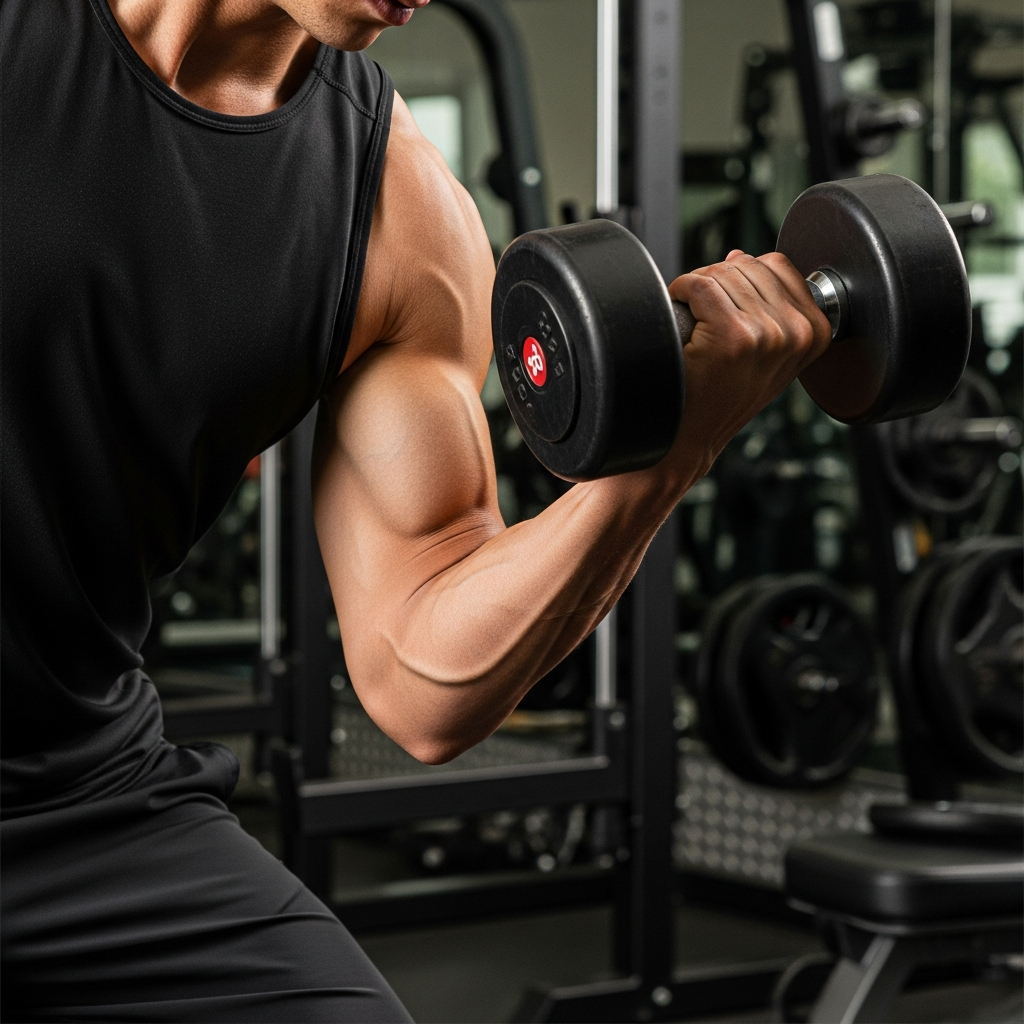
Biceps curls are more than just an “arm day” staple. They are a fundamental exercise for developing the front of your upper arm, contributing significantly to both strength and aesthetics. Understanding why they’re important can help you appreciate each repetition.
Understanding Your Biceps Muscle
Your biceps brachii, often just called “biceps,” is a two-headed muscle that runs from your shoulder to your elbow. The “bi” in biceps means two, referring to its two heads: the long head and the short head. Both heads work together to flex your elbow (bringing your forearm closer to your upper arm) and supinate your forearm (rotating your palm upwards). When you do a biceps curl, you’re primarily targeting these two parts of the muscle, engaging them to lift the weight.
Preparing for Your Biceps Curl

Before you even pick up a dumbbell, a little preparation can make a big difference in your workout quality and safety. Thinking about your warm-up and weight choice is key to a productive session.
Quick Warm-Up Routine
A proper warm-up increases blood flow to your muscles, prepares your joints for movement, and reduces the risk of injury. Spend 5-10 minutes on light cardio, followed by some dynamic stretches.
* Arm Circles: Gently swing your arms forward and backward in circles, starting small and gradually increasing the size.
* Shoulder Rotations: Roll your shoulders forward and backward.
* Elbow Flexion and Extension: Simply bend and straighten your elbows a few times without weight.
* Light Resistance Bands: If you have them, a few reps of very light band curls can also help activate the muscles.
Selecting the Right Weight
Choosing the right weight is critical for effective biceps curls. Too heavy, and you’ll sacrifice form, inviting injury and reducing muscle activation. Too light, and you won’t challenge your muscles enough for growth.
Start with a weight that allows you to complete 8-12 repetitions with good form, feeling a challenge in the last few reps. If you can easily do 15+ reps, it’s probably too light. If you can only manage 4-5 reps by swinging the weight, it’s too heavy. It’s better to go lighter and focus on perfect execution.
Step-by-Step Guide to the Perfect Biceps Curl
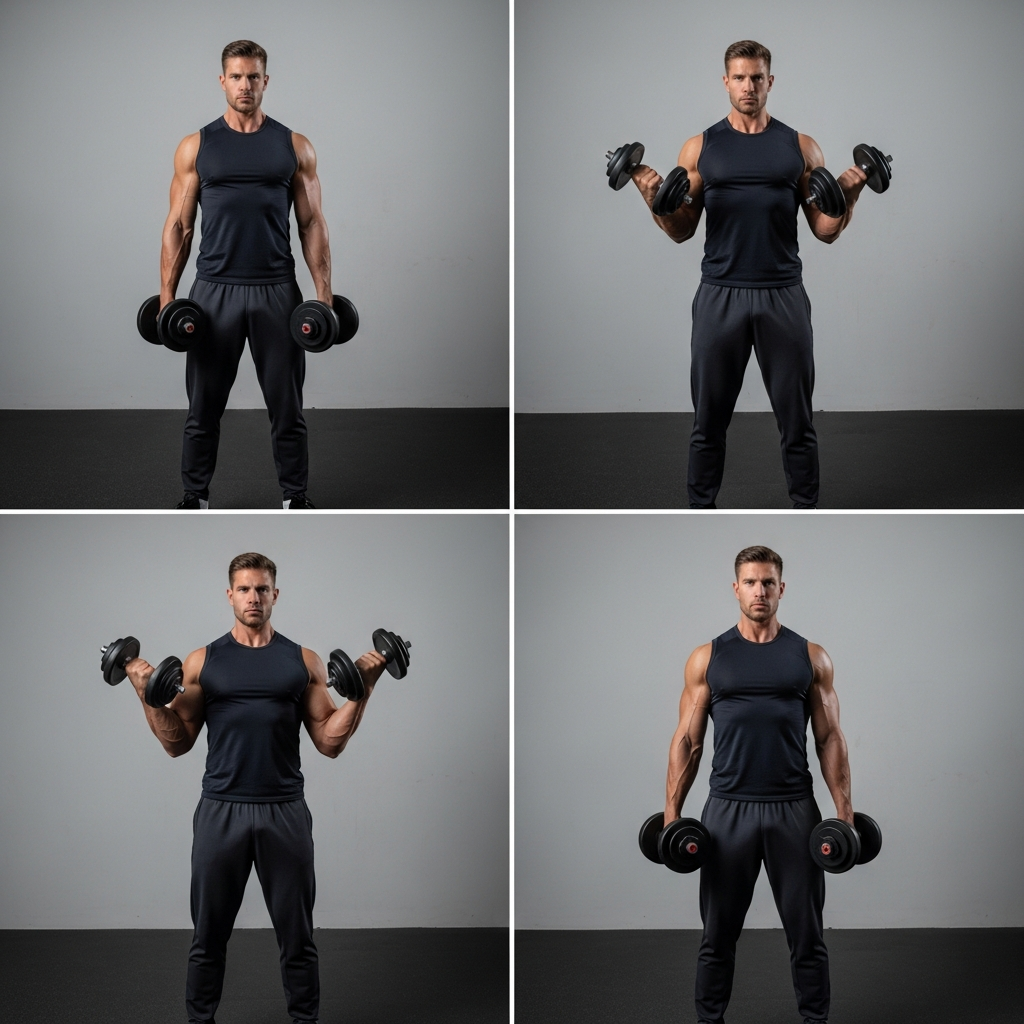
Let’s break down the classic standing dumbbell biceps curl. This is a foundational movement, and mastering it will set you up for success with other variations.
Starting Position
1. Stand Tall: Begin by standing upright with your feet shoulder-width apart. Maintain a slight bend in your knees to avoid locking them.
2. Shoulders Back and Down: Pull your shoulders slightly back and down. This helps stabilize your upper body and prevents them from shrugging forward during the lift.
3. Core Engaged: Gently brace your abdominal muscles. Think about tightening your core as if preparing for a light punch. This provides stability and protects your lower back.
4. Dumbbell Placement: Hold a dumbbell in each hand with an underhand grip (palms facing forward). Let your arms hang straight down by your sides, elbows tucked close to your body.
5. Elbows Fixed: Crucially, keep your elbows “pinned” to your sides throughout the entire movement. They should act like a hinge, not moving forward, backward, or flaring out.
The Upward Phase (Concentric)
1. Curl Up: Exhale as you slowly curl the dumbbells upwards towards your shoulders. The movement should come purely from your elbow joint.
2. Squeeze at the Top: Focus on squeezing your biceps hard at the very top of the movement. You should feel a strong contraction in the front of your upper arm. Your forearms should be perpendicular to the floor, or slightly above.
3. Avoid Momentum: Do not use your back or shoulders to swing the weight up. If you find yourself doing this, the weight is too heavy.
The Downward Phase (Eccentric)
1. Control the Descent: Inhale as you slowly and deliberately lower the dumbbells back down to the starting position. This lowering phase, known as the eccentric part of the lift, is just as important for muscle growth as the upward phase.
2. Full Extension: Allow your arms to fully extend at the bottom, but without locking your elbows. You should feel a good stretch in your biceps.
3. Maintain Elbow Position: Remember to keep your elbows tucked to your sides throughout the entire descent.
Breathing During the Curl
A simple rule of thumb for breathing during strength exercises is to exhale during the effort phase (when you’re lifting the weight) and inhale during the recovery phase (when you’re lowering the weight). So, exhale as you curl up, and inhale as you lower the dumbbells.
Mind-Muscle Connection
This is a powerful technique that helps you get more out of every rep. Instead of just going through the motions, actively think about the muscle you’re working (your biceps). Focus on contracting it to lift the weight and controlling it as you lower it. Imagine your biceps doing all the work, not your shoulders or back.
Common Biceps Curl Mistakes and How to Fix Them

Even experienced lifters can fall into bad habits. Being aware of these common mistakes and knowing how to correct them will significantly improve your curling technique and results.
Using Too Much Weight
This is perhaps the most frequent mistake. When the weight is too heavy, your body naturally tries to compensate by recruiting other muscles.
* Problem: You’ll start to swing your body, use your shoulders, or compromise your posture. This takes the stress off your biceps and puts unnecessary strain on your back and joints.
* Solution: Reduce the weight! Choose a weight that allows you to complete 8-12 reps with strict form, focusing on feeling the biceps work. There’s no shame in going lighter; it’s smarter training.
Swinging Your Body (Momentum)
Often a symptom of using too much weight, swinging involves using your back and hips to generate momentum to lift the dumbbells.
* Problem: This turns the biceps curl into a full-body swing, not an isolated biceps exercise. It dramatically reduces the effectiveness for your biceps and can lead to lower back strain.
* Solution: Lighten the weight. Engage your core tightly throughout the movement. Imagine your body is fixed from the waist down, with only your forearms moving. If needed, try doing curls seated or with your back against a wall to prevent swinging.
Not Going Through Full Range of Motion
Some people only curl halfway up or halfway down, missing out on the full benefits of the exercise.
* Problem: Partial reps lead to partial muscle development. You won’t fully stretch or fully contract your biceps, limiting growth and strength gains.
* Solution: Ensure your arms are fully extended at the bottom (without locking your elbows) and that your hands come up near your shoulders at the top, allowing a full squeeze. Focus on the stretch at the bottom and the contraction at the top.
Elbows Flaring Out or Moving Too Much
Your elbows should act as a stable hinge, staying tucked close to your sides.
* Problem: If your elbows move forward, backward, or flare out to the sides, other muscles (like your front deltoids) take over, reducing the isolation on your biceps.
* Solution: Consciously keep your elbows pinned to your sides. Imagine a string connecting your elbows to your ribcage. If you struggle, try doing concentration curls or preacher curls, which inherently stabilize your elbows.
Poor Grip Technique
A death grip or a very loose grip can impact your curl.
* Problem: Squeezing the dumbbell too hard can fatigue your forearms prematurely. A grip that’s too loose can compromise control and lead to the dumbbell slipping.
* Solution: Use a firm, but not white-knuckle, grip. The dumbbell should sit comfortably in the palm of your hand. Focus on holding the weight securely without unnecessary tension.
Holding Your Breath
Sometimes people hold their breath during the exertion phase, which can increase blood pressure.
* Problem: This is known as the Valsalva maneuver, and while sometimes useful for very heavy lifts, it’s generally not recommended for isolation exercises like biceps curls, especially for those with blood pressure concerns.
* Solution: Remember to breathe! Exhale as you lift the weight (concentric phase) and inhale as you lower it (eccentric phase). Consistent breathing helps maintain oxygen flow and reduce internal pressure.
Biceps Curl Variations to Keep Things Interesting
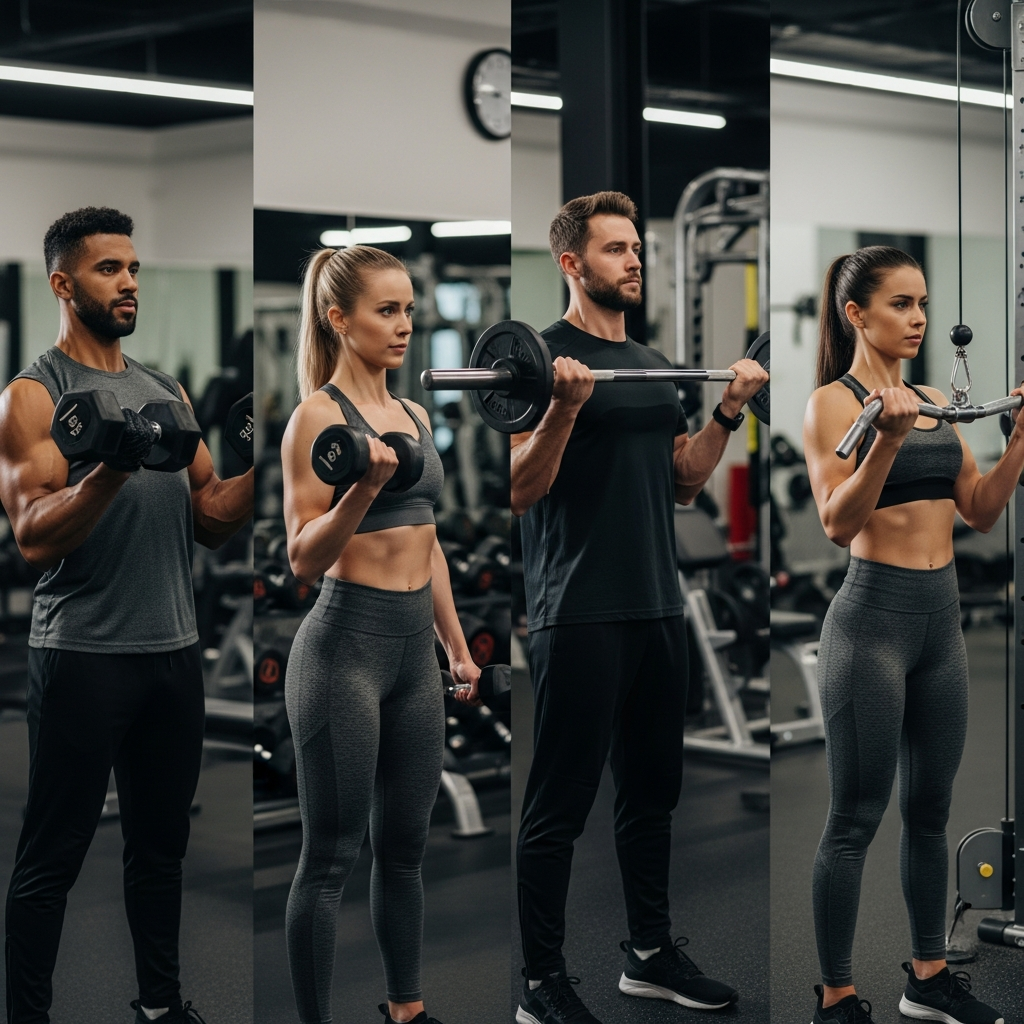
While the standard dumbbell curl is fantastic, incorporating variations can target your biceps from different angles, keep your workouts fresh, and prevent plateaus.
Hammer Curls
* How to: Hold the dumbbells with your palms facing each other (a neutral grip). Curl the dumbbells up, keeping your palms facing each other throughout the movement.
* Benefit: Emphasizes the long head of the biceps and also works the brachialis and brachioradialis (forearm muscles), contributing to overall arm thickness.
Concentration Curls
* How to: Sit on a bench, lean forward, and rest your elbow against your inner thigh. Curl the dumbbell upwards with strict control.
* Benefit: This variation provides maximum isolation for the biceps, making it impossible to use momentum. It’s excellent for building the mind-muscle connection.
Preacher Curls
* How to: Use a preacher curl bench. Rest your upper arms on the pad, holding a barbell or dumbbells. Curl the weight up, keeping your triceps pressed against the pad.
* Benefit: The bench position locks your arms into place, forcing strict form and intense biceps isolation, particularly at the bottom of the movement.
Barbell Curls
* How to: Stand holding a barbell with an underhand grip, hands roughly shoulder-width apart. Curl the barbell up, keeping elbows tucked.
* Benefit: Allows you to lift heavier weight than dumbbells, promoting overall biceps mass. Can be done with a straight bar or an EZ-curl bar.
Cable Curls
* How to: Stand facing a cable machine, holding a D-handle or straight bar attachment with an underhand grip. Curl the handle upwards.
* Benefit: Cables provide constant tension throughout the entire range of motion, which can be great for muscle stimulation.
Integrating Biceps Curls Into Your Routine
Consistency is key to seeing results. Don’t just do biceps curls once and expect magic. Integrate them smartly into your weekly fitness plan.
Sample Weekly Workout Plan for Arm Day
Here’s an example of how you might structure an arm-focused workout that includes biceps curls. This is just one option; you can adjust it based on your goals and other training days.
| Exercise | Sets | Reps | Focus |
| Standing Dumbbell Curl | 3 | 8-12 | Overall Biceps Mass, Form Reinforcement |
| Hammer Curl | 3 | 10-15 | Long Head, Forearm Thickness |
| Preacher Curl | 3 | 8-12 | Biceps Isolation, Peak Contraction |
| Triceps Pushdowns | 3 | 10-15 | Triceps Strength (Antagonist Muscle) |
| Overhead Triceps Ext.| 3 | 10-15 | Long Head of Triceps |
Remember to rest for 60-90 seconds between sets. You might do this “Arm Day” once or twice a week, or integrate biceps work into a push/pull/legs split.
Everyday Habits for Stronger Biceps
Training isn’t just about the gym. Your daily habits outside of your workouts also contribute significantly to your progress.
* Prioritize Protein: Muscles need protein to repair and grow. Aim for adequate protein intake with every meal (e.g., lean meats, eggs, dairy, legumes, tofu).
* Stay Hydrated: Water is essential for muscle function, nutrient transport, and overall health. Drink plenty throughout the day.
* Get Enough Sleep: Muscle repair and hormone regulation happen while you sleep. Aim for 7-9 hours of quality sleep each night.
* Active Recovery: On rest days, consider light activities like walking or stretching to promote blood flow and aid recovery without taxing your muscles.
* Listen to Your Body: Don’t push through sharp pain. Rest when needed, and consult a professional if pain persists.
The Mindset of Consistency and Progress

Building muscle and strength is a journey, not a sprint. Your mindset plays a huge role in staying on track and achieving your goals.
Listening to Your Body
It’s tempting to always push harder, but sometimes your body needs a break. Overtraining can lead to injury, fatigue, and burnout. Learn to differentiate between muscle soreness (good) and joint pain (bad). If you’re feeling unusually tired or experiencing persistent aches, take an extra rest day or opt for a lighter workout. Recovery is when muscles grow stronger.
Tracking Your Progress
Don’t rely solely on how you feel. Keep a workout journal or use a fitness app. Note down the exercises, sets, reps, and weight you use. This allows you to objectively see if you’re getting stronger, whether you’re adding reps, increasing weight, or improving your form. Seeing tangible progress is incredibly motivating.
Celebrating Small Wins
Progress isn’t always about hitting a new personal best on weight. Maybe you completed an extra rep with perfect form, or you maintained better control on the eccentric phase, or you just showed up to the gym when you really didn’t feel like it. Acknowledge and celebrate these small victories. They build momentum and reinforce positive habits, making the journey more enjoyable and sustainable.