
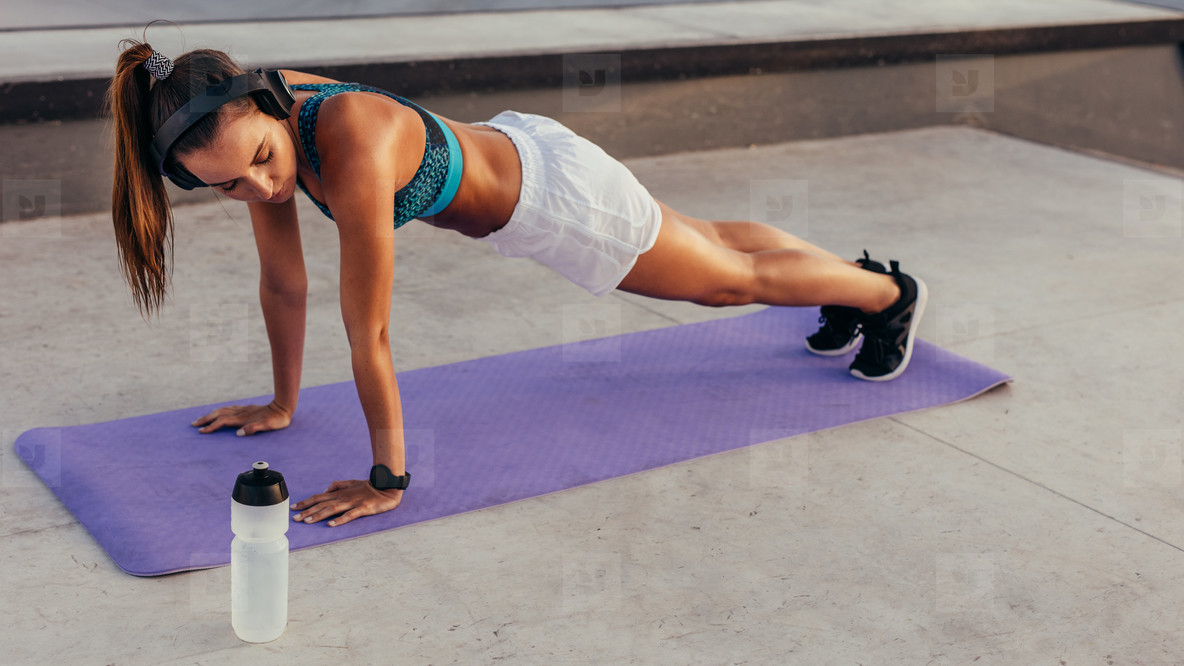
Imagine a time before shoes. Our ancestors moved freely, their feet adapting to every terrain, strong and agile. Fast forward to today, and most of us spend our lives encased in padded, supportive footwear. While modern shoes offer protection, they might also be hindering our natural foot strength and overall body mechanics.
This article dives into the world of barefoot training – the practice of exercising without shoes, or with minimal footwear. We’ll explore why so many people are drawn to this natural approach, what incredible benefits it can offer, the important risks you need to be aware of, and most importantly, how to safely and effectively incorporate it into your fitness routine. Get ready to reconnect with your feet and rediscover the power of natural movement.
What Exactly is Barefoot Training?
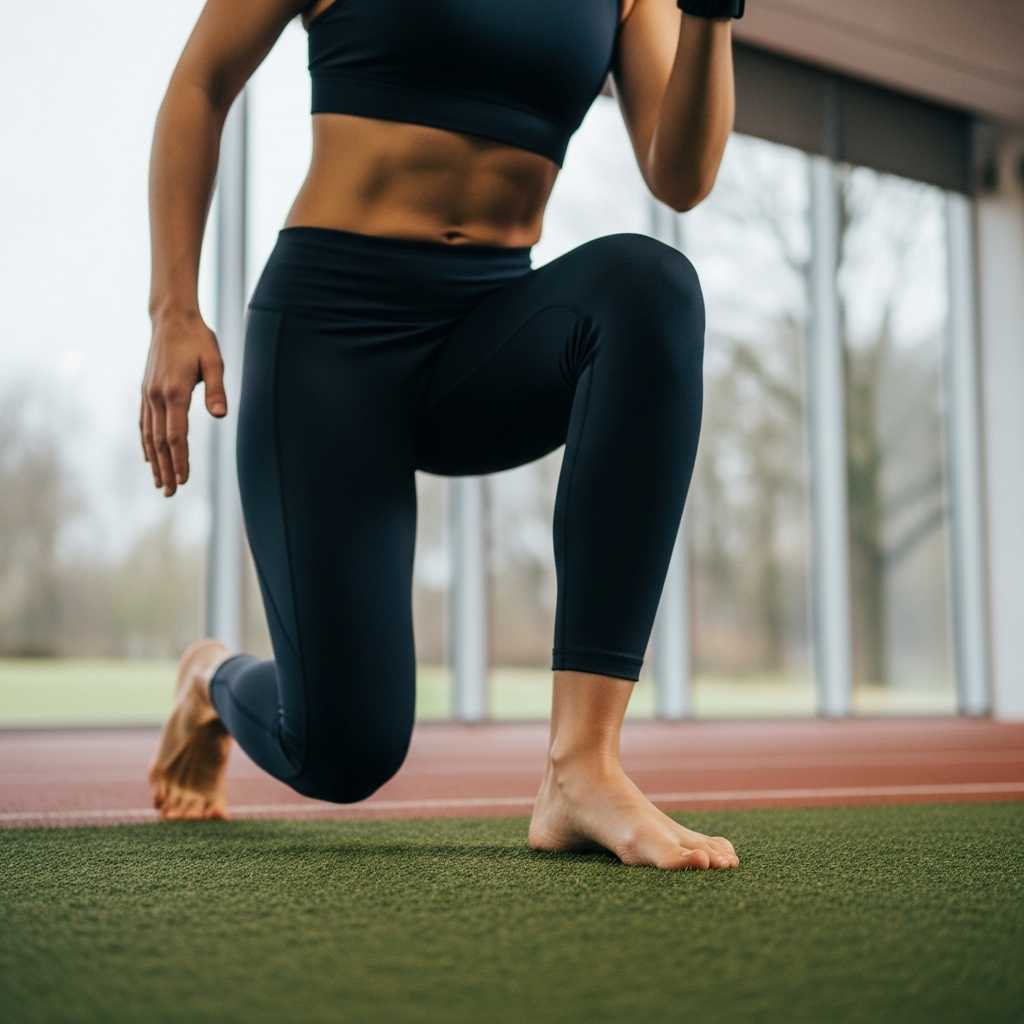
At its core, barefoot training is simply performing physical activities without the traditional cushioning and support of shoes. This can range from walking around your house to complex strength exercises, or even running outdoors. It’s about letting your feet be free and engaging with the ground beneath you directly.
More Than Just Kicking Off Your Shoes
It’s not just about comfort; it’s about stimulating the hundreds of thousands of nerve endings in your soles. These nerves provide crucial sensory feedback to your brain, helping it understand your position, balance, and how to best move your body. When you wear shoes, especially thick, cushioned ones, much of this valuable information is lost. Barefoot training aims to restore this natural communication, leading to stronger feet and better overall movement.
The Benefits of Barefoot Training
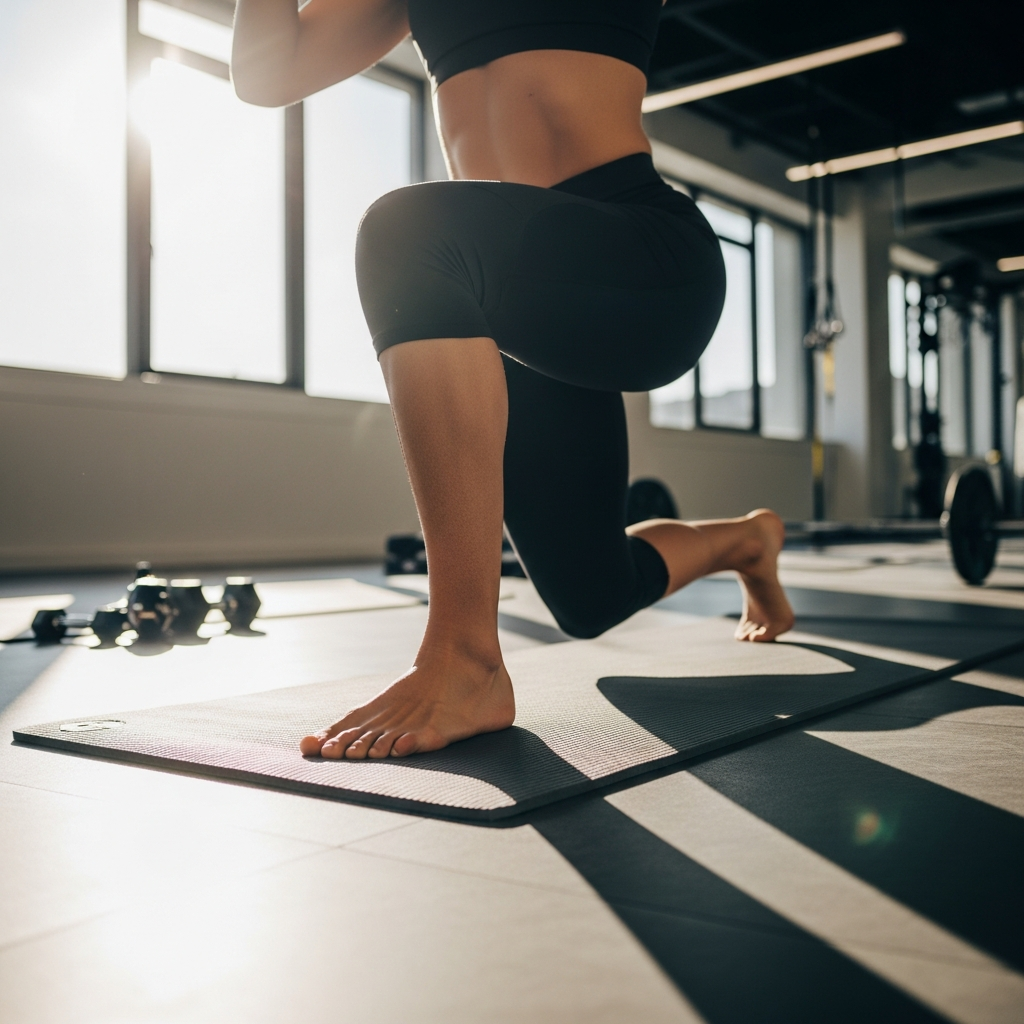
Embracing barefoot movement can unlock a surprising array of advantages for your body, from the ground up.
Strengthening Your Feet and Ankles
Think of your feet as the foundation of your body. Just like any other muscle group, they need to be worked to stay strong and functional.
Enhanced Foot Muscle Activation
Shoes often immobilize many of the small muscles in your feet. Barefoot training forces these intrinsic muscles to work harder to stabilize and propel your body. This regular activation can lead to significantly stronger feet over time.
Improved Arch Support
Many people rely on artificial arch support from their shoes. Going barefoot encourages your foot’s natural arch to strengthen, improving its ability to absorb shock and support your body weight without external aids.
Better Ankle Stability
With direct ground contact, your ankles become more responsive. They learn to make subtle adjustments to maintain balance, leading to increased stability and reduced risk of twists and sprains.
Boosting Balance and Proprioception
Proprioception is your body’s sense of its position in space. Barefoot training significantly enhances this crucial ability.
Increased Sensory Feedback
Your soles are packed with receptors. When they directly touch the ground, they send a continuous stream of information to your brain about surface texture, temperature, and pressure. This rich sensory input sharpens your balance reflexes.
Greater Body Awareness
By feeling every subtle shift in weight and every contour of the ground, you become more aware of how your body moves and interacts with its environment. This heightened awareness translates to better control and coordination in all activities.
Improving Running Form and Efficiency
Many runners find barefoot training or minimalist running helps them run more naturally and efficiently.
Encouraging a Natural Midfoot Strike
Traditional running shoes often promote a heel-first landing, which can generate higher impact forces. Barefoot running naturally encourages a midfoot or forefoot strike, which is generally considered more efficient and less impactful on your joints.
Reducing Impact Forces
Without the cushioning of shoes, your body learns to absorb impact more effectively through the natural springiness of your feet and ankles, rather than relying on external padding. This can lessen stress on your knees, hips, and lower back.
Alleviating Pain and Preventing Injuries
Strengthening your feet and improving your movement patterns can have far-reaching positive effects on your body.
Addressing Common Foot Ailments
Conditions like plantar fasciitis, bunions, and hammer toes are often linked to weak foot muscles and ill-fitting footwear. Barefoot training can help strengthen the structures that support your foot, potentially alleviating these issues.
Strengthening the Kinetic Chain
Your body is a connected system, known as the kinetic chain. Stronger feet and ankles can improve the alignment and function of your entire leg, hips, and even your spine, potentially reducing pain in other areas.
Connecting with Nature and Mindset
Beyond the physical benefits, barefoot training can offer a unique mental and emotional experience.
Grounding Benefits
Many people report feeling more “grounded” or connected to the earth when walking barefoot, especially outdoors. It can be a simple, yet powerful, way to destress and feel more present.
Mental Clarity
The sensory experience of walking barefoot can be meditative. Focusing on the sensations beneath your feet can help clear your mind and bring a sense of calm and focus.
Understanding the Risks of Barefoot Training
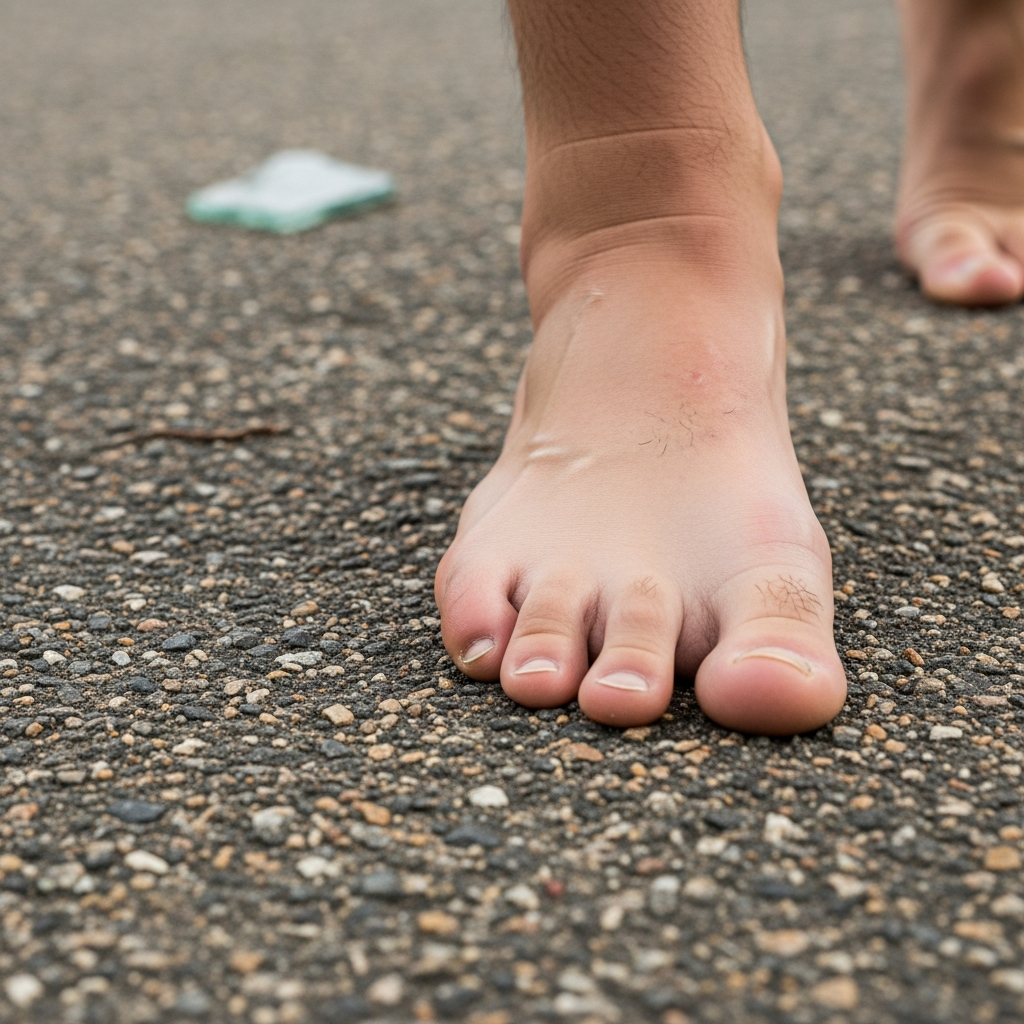
While the benefits are compelling, it’s crucial to acknowledge and prepare for the potential downsides of barefoot training. Moving without protection carries inherent risks.
Increased Risk of Injury
Your feet are exposed when you go barefoot, making them vulnerable to direct harm.
Punctures and Cuts
Stepping on sharp objects like glass, thorns, or jagged rocks is a real possibility, especially outdoors. These can cause painful wounds and potential infections.
Stubbed Toes and Bruises
Without the protective barrier of a shoe, stubbing your toe on furniture or uneven pavement can be far more painful and damaging. Impact from dropped objects is also a concern.
Overuse Injuries
If you transition to barefoot training too quickly, your feet and lower legs may not be ready for the increased workload. This can lead to stress fractures, tendonitis, or muscle strains, particularly in the calves and Achilles tendon.
Exposure to Germs and Infections
The ground isn’t always clean, and direct contact can expose your feet to various pathogens.
Fungal Infections
Walking barefoot in public showers, locker rooms, or swimming pool areas increases your risk of contracting fungal infections like athlete’s foot.
Bacterial Exposure
Cuts or scrapes can become entry points for bacteria, especially on dirty surfaces, potentially leading to more serious infections.
Improper Technique and Overload
Attempting barefoot activities without proper guidance or rushing the process can cause problems.
Rushing the Process
Your feet need time to adapt. Jumping straight into a barefoot run after years of cushioned shoes can be detrimental, as your muscles, tendons, and bones haven’t built the necessary strength.
Ignoring Foot Pain
Pain is your body’s signal that something is wrong. Pushing through significant discomfort during barefoot training can lead to serious injury and prolonged recovery.
Specific Medical Conditions
For some individuals, barefoot training might be contraindicated or require special precautions.
Diabetes and Neuropathy
People with diabetes, especially those with neuropathy (nerve damage), may have reduced sensation in their feet, making them unaware of cuts or injuries. This can lead to serious complications.
Pre-existing Foot Deformities
Individuals with severe flat feet, high arches, or other structural foot deformities should consult a doctor or physical therapist before starting barefoot training to ensure it’s safe and beneficial for their specific condition.
How to Start Barefoot Training Safely and Effectively (Tips)
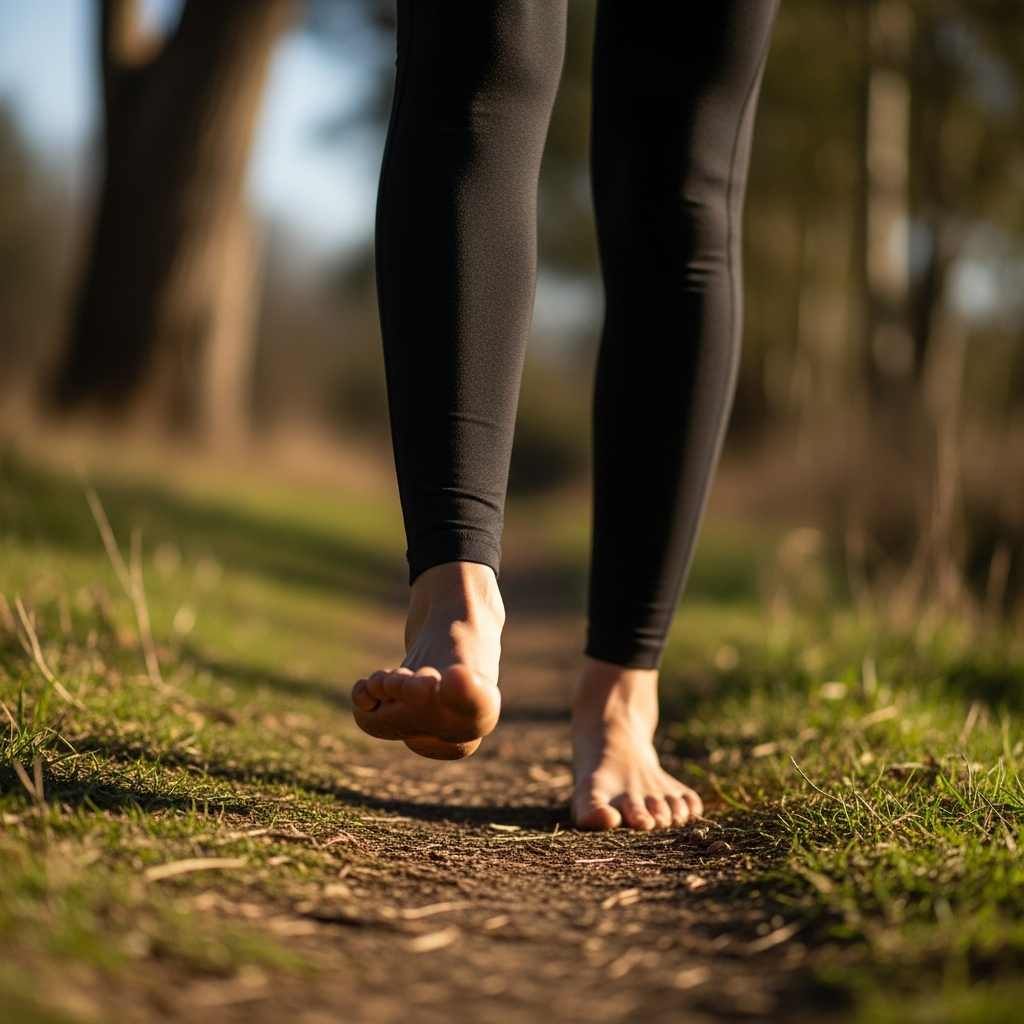
The key to successful barefoot training is a slow, mindful, and gradual approach. Think of it as teaching your feet to walk again.
Start Slow and Gradually
Patience is your best friend when embarking on this journey. Your feet need time to adapt to new sensations and demands.
Indoor Exploration First
Begin by simply walking barefoot around your home for short periods each day. This allows your feet to get used to the feeling of different surfaces in a safe, controlled environment.
Short Outdoor Sessions
Once comfortable indoors, take short walks (5-10 minutes) on safe, natural surfaces like grass or sand. Gradually increase the duration as your feet grow stronger and more resilient.
Choose Your Environment Wisely
The surface you train on makes a huge difference, especially when you’re starting out.
Smooth, Clean Surfaces
Initially, stick to surfaces you know are free of debris and sharp objects. A clean, smooth patch of grass in your yard or a sandy beach is ideal.
Natural Ground
As your feet adapt, explore varied natural terrains like packed dirt trails, gravel (gently at first), or even smooth rocks. These surfaces provide excellent sensory input and challenge your feet in different ways.
Focus on Form, Not Distance
Quality of movement is far more important than how far or fast you go.
Gentle Landings
When walking or lightly jogging barefoot, aim for light, quiet steps. Try to land softly on the midfoot, letting your entire foot act as a natural shock absorber. Avoid heavy heel striking.
Short Strides
Take shorter, quicker strides. This naturally encourages a more efficient midfoot landing and reduces impact forces.
Incorporate Foot Strengthening Exercises
Actively strengthening your foot muscles will accelerate your progress and reduce injury risk.
Toe Splay Exercises
While seated or standing, try to spread your toes as wide as possible, holding for a few seconds. Repeat 10-15 times. This improves toe mobility and strength.
Calf Raises
Perform standard calf raises, both with straight knees and slightly bent knees, to strengthen your calves and Achilles tendon, which are crucial for barefoot movement.
Foot Rolls (with a ball)
Use a tennis ball or a specialized foot massage ball to roll out the sole of your foot. This can release tension and improve circulation.
Listen to Your Body
This is perhaps the most important tip. Your body will tell you what it needs.
Pain is a Warning Sign
If you experience sharp pain, stop immediately. Mild muscle soreness is normal as your feet adjust, but sharp or persistent pain indicates you’re overdoing it.
Rest and Recovery Are Key
Allow your feet adequate rest between barefoot sessions. Overtraining can lead to injuries and hinder adaptation.
Consider Minimalist Footwear
For times when going completely barefoot isn’t practical or safe, minimalist shoes can be a great bridge.
Bridging the Gap
Minimalist shoes (often called “barefoot shoes”) offer protection while still allowing your feet to move naturally. They have zero drop (no elevated heel), a wide toe box, and a thin, flexible sole.
Protection Without Restriction
These shoes allow your feet to strengthen and adapt while keeping them safe from hazards and extreme weather. They’re an excellent tool for transitioning into more advanced barefoot activities.
Integrating Barefoot Habits into Your Daily Life
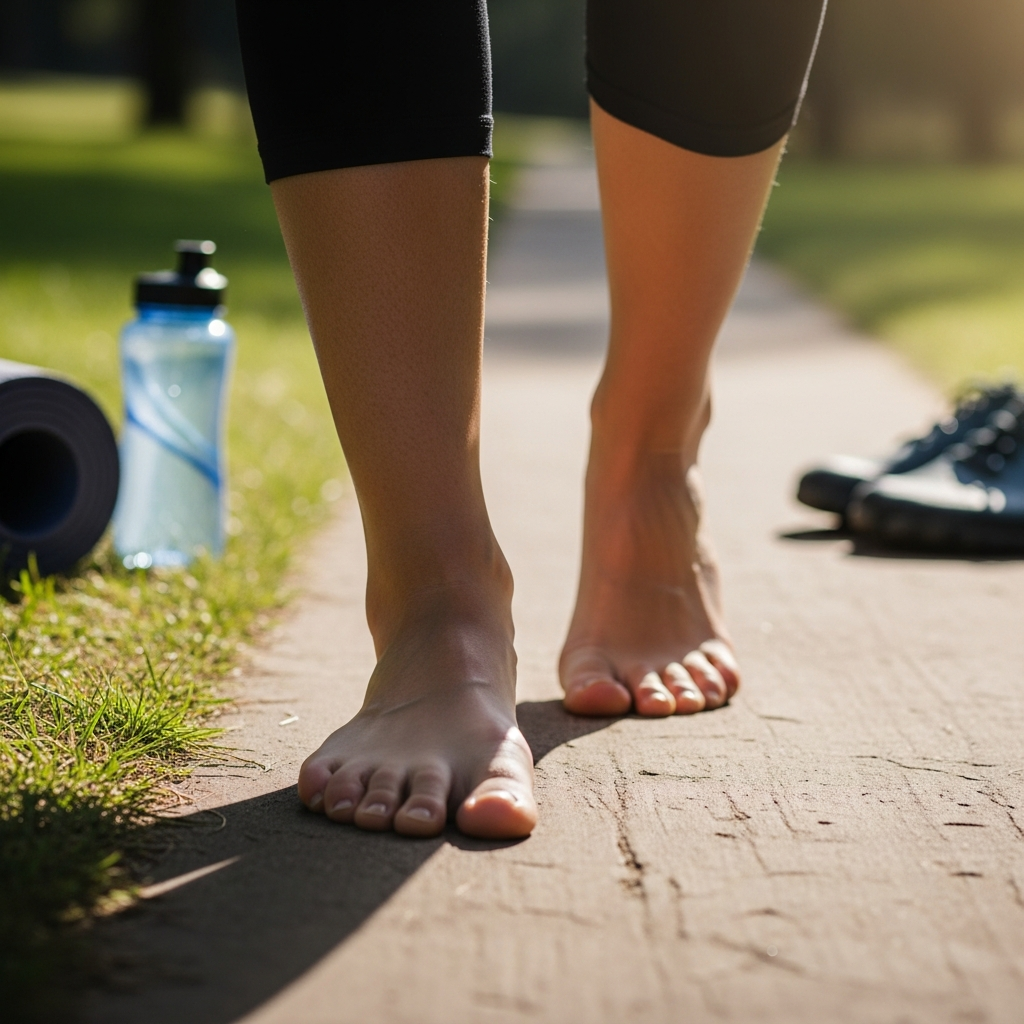
You don’t need to commit to full-time barefoot running to enjoy the benefits. Small, consistent changes can make a big difference.
Barefoot Walking at Home
This is the easiest and safest place to start building foot strength and sensory awareness.
Daily Routine Suggestion
Commit to going barefoot for at least 30-60 minutes each day while doing chores, cooking, or relaxing at home. Feel the different textures of your floors, the subtle temperature changes.
Barefoot Warm-ups and Cool-downs
Before and after your regular workouts, take a few minutes to connect with your feet.
Pre-Workout Prep
Spend 5 minutes barefoot before a workout. Do some gentle foot exercises, ankle rotations, and toe wiggles. This activates the foot muscles and prepares them for movement.
Short Barefoot Workouts
Once your feet are getting stronger, you can introduce short, controlled barefoot exercises.
Sample Weekly Plan for Barefoot Integration
This is a gentle progression, perfect for beginners. Remember to adjust based on how your feet feel.
| Day | Activity | Duration | Notes |
| Monday | Barefoot walking indoors + Foot exercises | 10 min walk, 5 min exercises | Focus on gentle steps and spreading toes. |
| Tuesday | Barefoot yoga or stretching | 15-20 min | Explore balance poses and gentle foot stretches. |
| Wednesday | Rest or regular activities (with shoes) | As needed | Give your feet a break. |
| Thursday | Barefoot walking on grass + Balance drills | 15 min walk, 5 min drills | Walk slowly, try single-leg stands on soft ground. |
| Friday | Barefoot strength exercises | 10-15 min | Bodyweight squats, lunges, calf raises – all barefoot. |
| Saturday| Longer barefoot walk on safe surface | 20-30 min | Beach, park, or clean trail – listen to your feet. |
| Sunday | Rest or light activities (with shoes) | As needed | Prioritize recovery. |
Mindset for Sustainable Barefoot Training
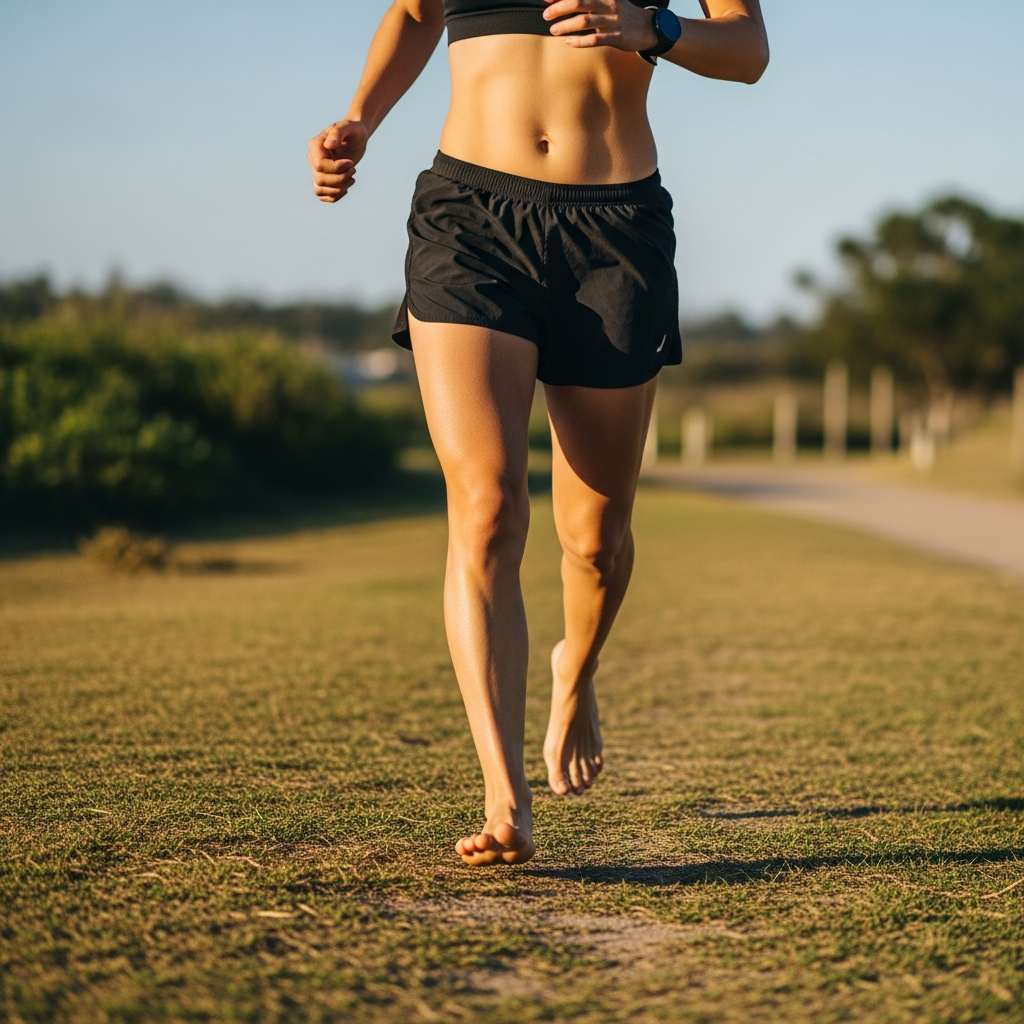
Barefoot training is a journey, not a sprint. Cultivating the right mindset will help you stay consistent and enjoy the process.
Patience is a Virtue
You’re re-educating your feet after years of being confined. This takes time, consistency, and a realistic expectation of progress.
It’s a Journey, Not a Race
Don’t compare your barefoot journey to others. Focus on your own body’s signals and celebrate small victories. Some days you’ll feel great, others might be more challenging.
Embrace the Sensory Experience
Part of the joy of barefoot training is the connection it fosters with your environment.
Connect with the Earth
Pay attention to the textures, temperatures, and subtle nuances of the ground beneath you. Let it be a mindful practice that brings you into the present moment.
Prioritize Foot Health
Just like you care for the rest of your body, your feet deserve attention.
Regular Checks and Care
Inspect your feet regularly for any cuts, blisters, or unusual soreness. Keep them clean and moisturized. Consider occasional foot massages to aid recovery and flexibility.