

7 Essential Bicep Stretches for Before and After Training
Ever felt a nagging tightness in your biceps after a tough arm day or during everyday movements? That familiar stiffness can be more than just uncomfortable; tight biceps can limit your range of motion, hinder performance in the gym, and even increase your risk of injury. But there’s good news! Incorporating targeted bicep stretches into your routine is a game-changer for flexibility, recovery, and overall arm health.
This comprehensive guide will walk you through 7 essential bicep stretches, explaining not just how to perform them, but also why they are so crucial for anyone serious about their fitness. Whether you’re warming up for an intense session or cooling down to aid recovery, these stretches will help you build stronger, more resilient arms.
Why Bicep Stretching Matters for Your Training

Stretching often takes a backseat to lifting heavy or hitting cardio, but its role in a balanced fitness regimen cannot be overstated. For your biceps, in particular, proper stretching can dramatically improve your training outcomes and reduce the likelihood of setbacks.
The Benefits of Pre-Workout Stretching
Before you dive into your workout, dynamic stretches are key. These aren’t about holding a position, but rather moving your muscles through their full range of motion. For your biceps, this type of stretching helps to increase blood flow to the muscles, activate the nervous system, and prepare your joints and tissues for the demands of lifting. It effectively primes your biceps, making them more pliable and less prone to sudden strains or pulls during your workout.
The Importance of Post-Workout Stretching
After your workout, static stretching becomes vital. This is where you gently hold a stretch for an extended period. Post-workout bicep stretches help your muscles return to their resting length, which can prevent them from shortening and tightening over time. This leads to improved long-term flexibility, better posture, and can significantly aid in muscle recovery by reducing stiffness and promoting blood flow to flush out metabolic waste products.
Understanding Your Biceps – A Quick Anatomy Lesson
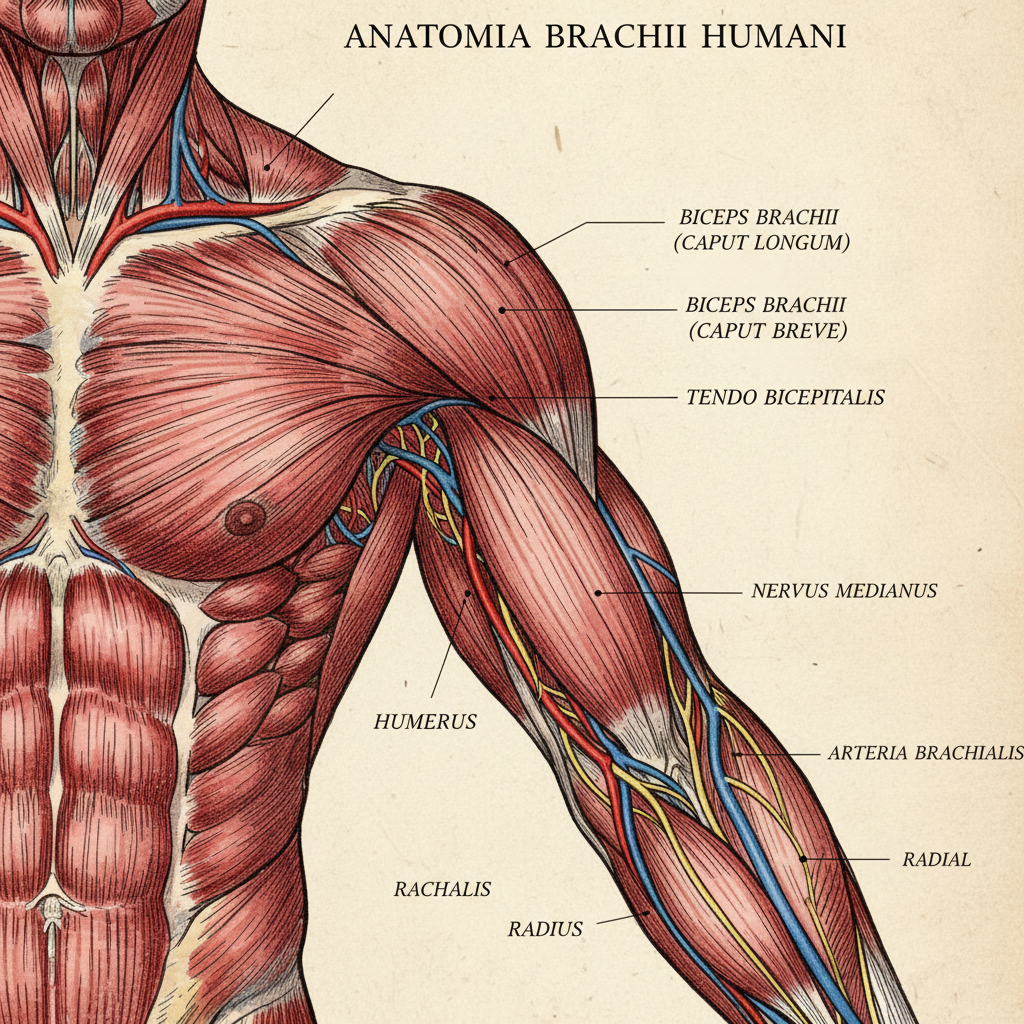
To stretch effectively, it helps to understand what you’re stretching. Your biceps brachii, commonly known as your biceps, are a two-headed muscle located on the front of your upper arm. The ‘bi’ in biceps refers to these two heads—the long head and the short head—which originate at different points on your shoulder blade and insert into your forearm bones. Their primary functions are to flex your elbow (think curling a weight) and supinate your forearm (rotating your palm upwards). Because they cross both the shoulder and elbow joints, tightness in your biceps can impact the mobility of both, affecting everything from overhead presses to simply reaching for something on a high shelf.
The 7 Essential Bicep Stretches
Here are seven powerful stretches you can integrate into your routine to keep your biceps supple and strong.
1. Wall Bicep Stretch

This stretch effectively targets the bicep and shoulder capsule, promoting deep flexibility.
- How to Perform Stand beside a wall, about an arm’s length away. Extend the arm closest to the wall straight out to your side, placing your palm flat against the wall with fingers pointing backwards. Slowly and gently rotate your body away from the arm, keeping your arm straight and your shoulder relaxed.
- Tips for Effectiveness Feel the stretch along the front of your bicep and into your shoulder. Avoid shrugging your shoulder up. Hold for 20-30 seconds per side.
2. Doorway Bicep Stretch

A great way to stretch both biceps and open up your chest at the same time.
- How to Perform Stand in a doorway with your arms extended out to your sides, forearms resting against the doorframe, palms facing forward (or grasping the frame). Gently step forward with one foot, leaning your body slightly through the doorway until you feel a stretch in your biceps and chest.
- Tips for Effectiveness Keep your shoulders down and relaxed. Avoid arching your lower back excessively. Hold for 20-30 seconds.
3. Overhead Bicep Stretch with Resistance Band

Using a resistance band allows for a deeper, more controlled stretch.
- How to Perform Hold a light resistance band behind your back with both hands, palms facing away from your body. Slowly extend your arms overhead, gently pulling the band taut. You should feel a stretch in your biceps and shoulders.
- Tips for Effectiveness Control the movement; don’t yank the band. Adjust your grip on the band to modify the intensity. This is a dynamic stretch for warm-ups or a static one if held gently for recovery.
4. Supine Bicep Stretch on Floor
This floor-based stretch helps to isolate the bicep and can be very relaxing.
- How to Perform Lie on your back on the floor. Extend one arm straight out to your side, palm facing up. Slowly and gently rotate your torso away from the outstretched arm, keeping your shoulder flat on the floor if possible.
- Tips for Effectiveness Focus on keeping your shoulder grounded. You should feel the stretch across your chest and into the bicep. Hold for 20-30 seconds per side.
5. Arm Across Body Stretch
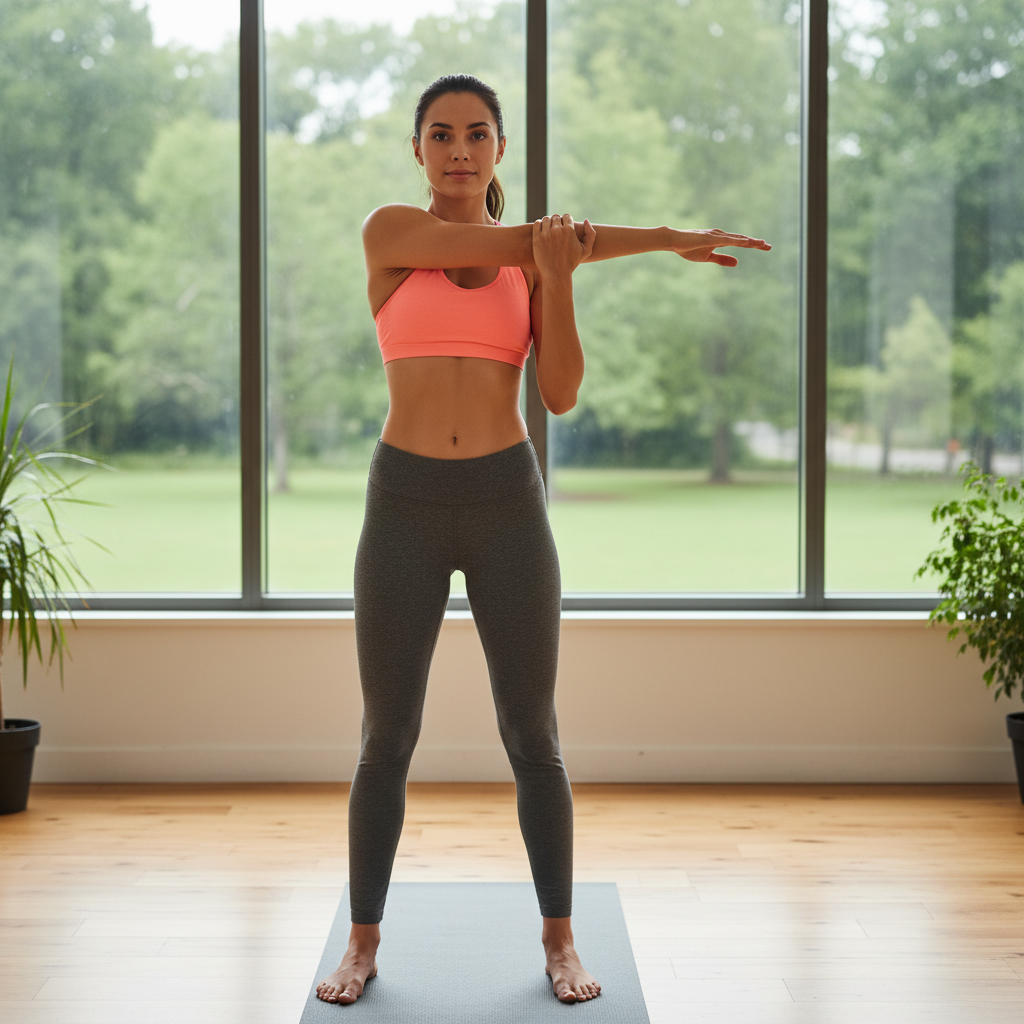
A simple yet effective stretch for both the bicep and rear shoulder.
- How to Perform Extend one arm straight out in front of you. Bring that arm across your chest. Use your other hand to gently pull the elbow of the stretching arm closer to your body, deepening the stretch.
- Tips for Effectiveness Keep your shoulders relaxed and down, avoiding shrugging. Focus on feeling the stretch in the bicep and outer shoulder. Hold for 20-30 seconds per side.
6. Wrist Extension Bicep Stretch

While primarily a forearm stretch, this impacts the bicep’s connection points and overall arm flexibility.
- How to Perform Extend one arm straight out in front of you, palm facing up. With your other hand, gently grasp the fingers of the outstretched hand and pull them down towards your body, extending your wrist.
- Tips for Effectiveness You should feel the stretch along the forearm and potentially into the lower bicep. Be gentle, especially if you have wrist issues. Hold for 20-30 seconds per side.
7. Behind-the-Back Bicep Reach

This stretch helps to open the chest and stretch the front of the shoulders and biceps.
- How to Perform Stand tall. Clasp your hands together behind your back, palms facing each other (or interlace your fingers). Keeping your shoulders down and back, gently lift your clasped hands away from your body and slightly upwards.
- Tips for Effectiveness Maintain a straight posture and avoid arching your lower back. Focus on the stretch across your chest and the front of your shoulders, which impacts the bicep’s origin. Hold for 20-30 seconds.
Integrating Stretches into Your Routine
Knowing the stretches is only half the battle; consistently incorporating them is where the real change happens.
Pre-Workout Warm-up Routine
Before your main workout, focus on dynamic movements. Perform light arm circles, arm swings, and gentle rotations. You can incorporate dynamic versions of some of the stretches above—for example, gentle arm swings that mimic the overhead bicep stretch, or controlled rotations similar to the wall stretch but without holding. Aim for 5-10 repetitions or 30-60 seconds of continuous movement for each dynamic stretch, focusing on fluidity rather than maximal range.
Post-Workout Cool-down Routine
This is the ideal time for static stretching. Your muscles are warm and more pliable, making them more receptive to lengthening. Perform each of the 7 essential bicep stretches, holding each for 20-30 seconds. Remember to breathe deeply and consistently throughout the stretch, allowing your muscles to relax into the position. Aim to complete your full stretching routine within 5-10 minutes after your workout.
Mindset and Consistency – Making Stretching a Habit
Consistency is paramount when it comes to flexibility. Don’t view stretching as a chore, but rather as an essential part of your self-care and training longevity. Start small, perhaps by dedicating just 5 minutes to stretching after every workout. Listen to your body—never stretch to the point of pain, only to a comfortable tension. Consider setting a reminder on your phone or pairing your stretching with an existing habit, like cooling down after a shower or before bed. Over time, these small, consistent efforts will lead to significant improvements in your bicep health and overall physical well-being.
Conclusion
Your biceps are powerful muscles, vital for countless daily activities and nearly every upper body exercise. Neglecting their flexibility can lead to discomfort, limited performance, and even injury. By dedicating a few minutes a day to these 7 essential bicep stretches, you’re not just improving your flexibility and range of motion; you’re investing in a stronger, healthier, and more resilient you. Embrace stretching as an integral part of your fitness journey. Start incorporating these stretches today and feel the profound difference they make in your workouts and everyday life!