
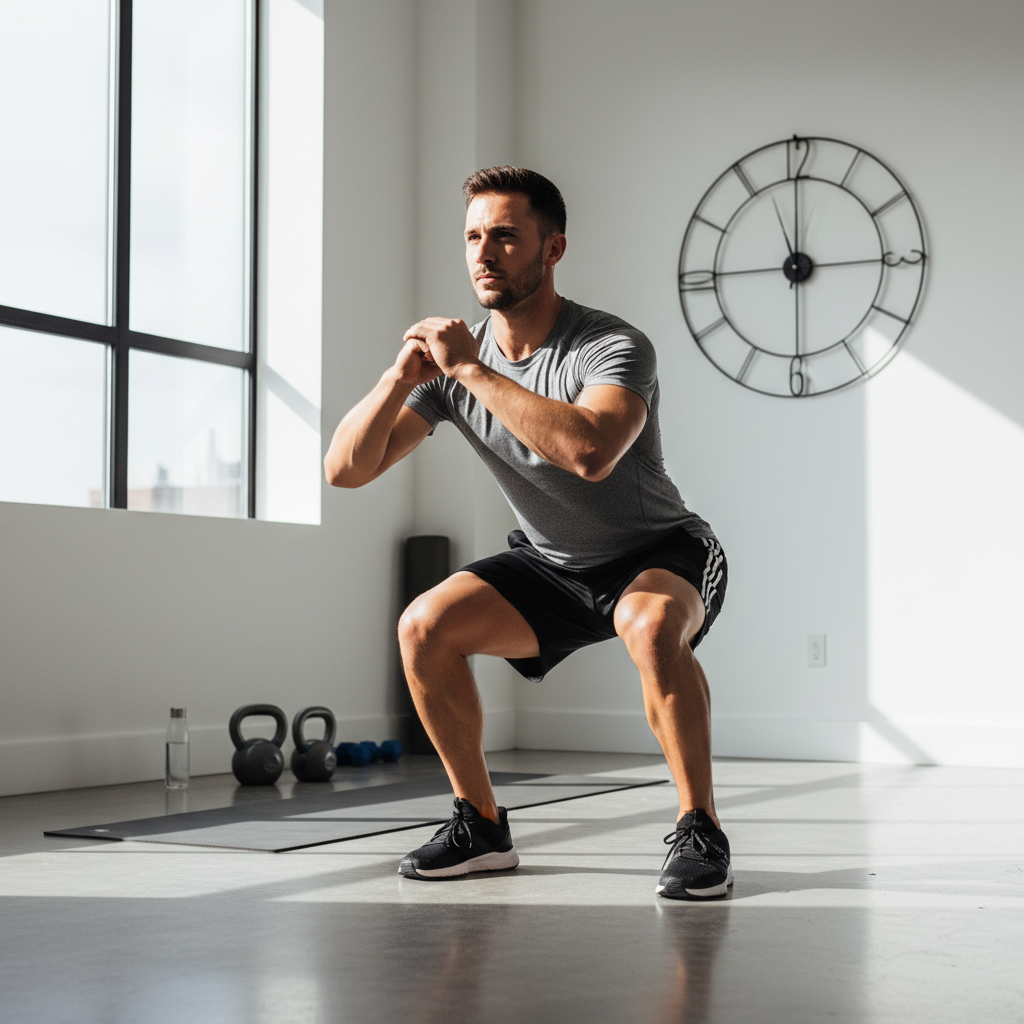
7 Best Home Gym Exercises to Build Muscle Effectively
Building muscle doesn’t require an expensive gym membership or a room full of elaborate equipment. With the right approach and a few foundational exercises, you can create an incredibly effective home gym setup that delivers real results. Whether you’re short on time, prefer the comfort of your own space, or are simply looking for a convenient way to stay strong, this guide will show you how to maximize your muscle growth right where you are.
We’ll dive into the seven most effective exercises you can perform at home, focusing on movements that engage multiple muscle groups for optimal gains. Beyond just the exercises, we’ll cover the essential principles of muscle growth, how to structure your workouts, and the crucial mindset needed to stay consistent and see lasting change.
The Power of Home Workouts for Muscle Growth
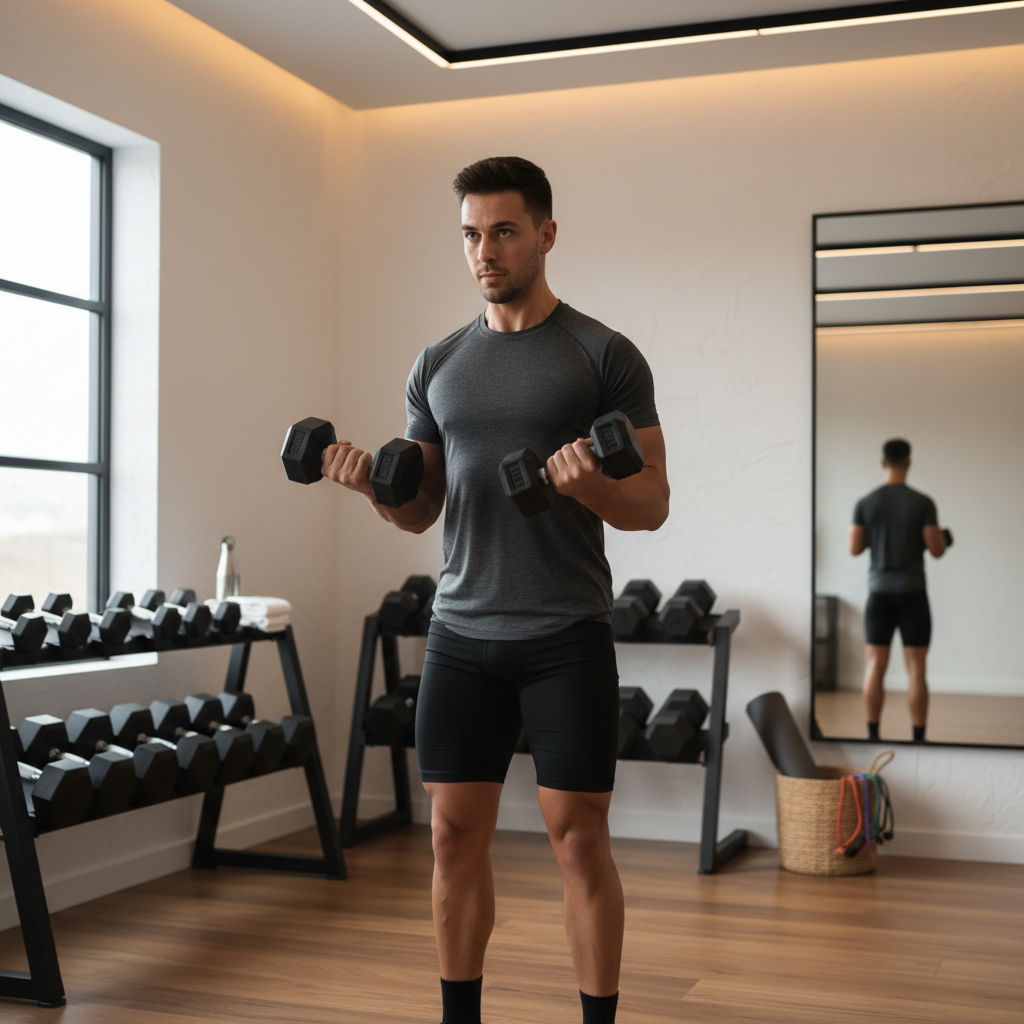
The beauty of a home gym is its accessibility. No travel time, no waiting for equipment, and complete control over your environment. This convenience often translates into greater consistency, which is arguably the most vital ingredient for muscle building. Bodyweight exercises, combined with minimal equipment like dumbbells or resistance bands, can provide sufficient stimulus for progressive overload—the key to continually challenging your muscles to grow stronger and larger.
Essential Principles for Home Muscle Building
To truly build muscle effectively at home, you need to understand a few core principles. It’s not just about doing the exercises; it’s about how you do them.
- Progressive Overload– Your muscles need to be challenged more over time. This can mean more reps, more sets, slower tempo, shorter rest, or adding resistance (even household items can work).
- Proper Form– Always prioritize correct technique over lifting heavy or doing more reps. Poor form leads to injury and ineffective muscle engagement.
- Nutrition– Muscle growth requires adequate protein intake and sufficient calories. Fuel your body with whole foods.
- Recovery– Muscles grow when you rest. Ensure you’re getting enough sleep and allowing your body time to repair and rebuild.
- Consistency– Show up, even on days you don’t feel like it. Regular effort compounds into significant results.
The 7 Best Home Gym Exercises to Build Muscle Effectively
These exercises form the cornerstone of an effective home muscle-building program. Master them, and you’ll be well on your way to a stronger physique.
1. Push-ups- Upper Body Strength
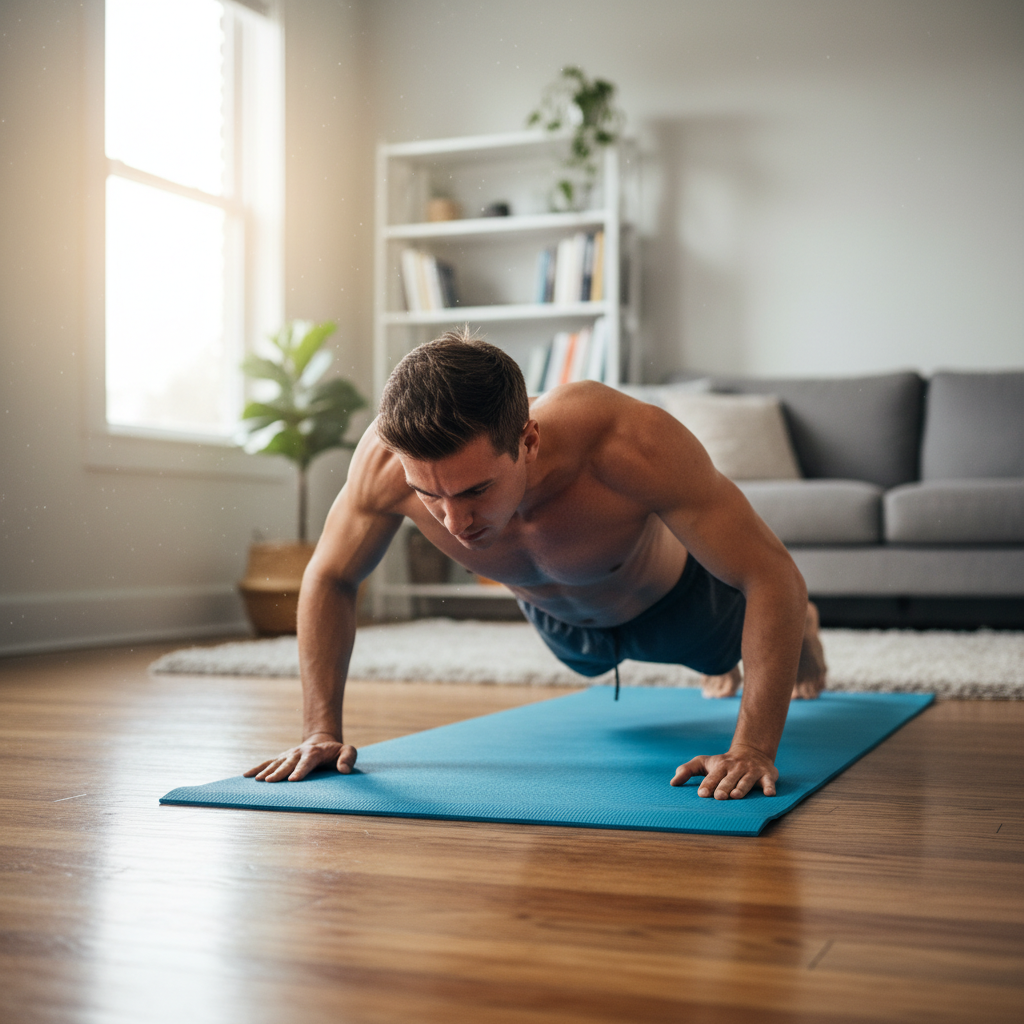
The classic push-up is a phenomenal compound exercise, targeting your chest, shoulders, and triceps, with significant core engagement. It’s highly versatile and can be modified for all fitness levels.
How to Perform a Standard Push-up
- Start in a plank position, hands slightly wider than shoulder-width apart, fingers pointing forward.
- Keep your body in a straight line from head to heels, core tight.
- Lower your chest towards the floor by bending your elbows, keeping them tucked slightly towards your body (not flaring out).
- Push through your hands to return to the starting position.
- Progression– Try incline push-ups (hands on an elevated surface) to make it easier, or decline push-ups (feet elevated) to make it harder.
2. Squats- Lower Body Powerhouse
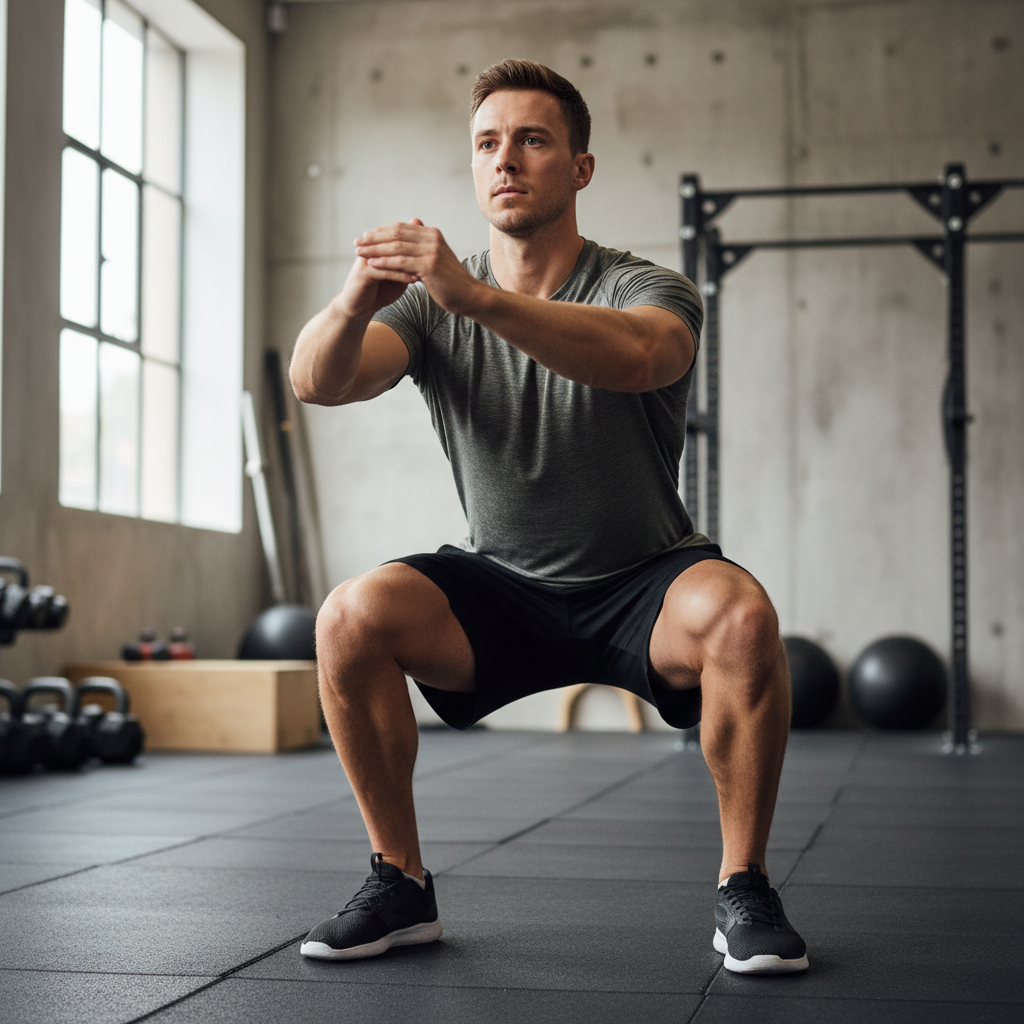
Squats are king for lower body development, working your glutes, quadriceps, and hamstrings, while also improving core stability. They are fundamental for functional strength.
How to Perform a Bodyweight Squat
- Stand with your feet shoulder-width apart, toes pointing slightly out.
- Keep your chest up, shoulders back, and core engaged.
- Initiate the movement by pushing your hips back as if sitting in a chair.
- Lower your body until your thighs are parallel to the floor (or as deep as comfortable with good form).
- Push through your heels to return to the standing position.
- Progression– Add dumbbells for goblet squats, or perform jump squats for an explosive challenge.
3. Lunges- Unilateral Leg Strength
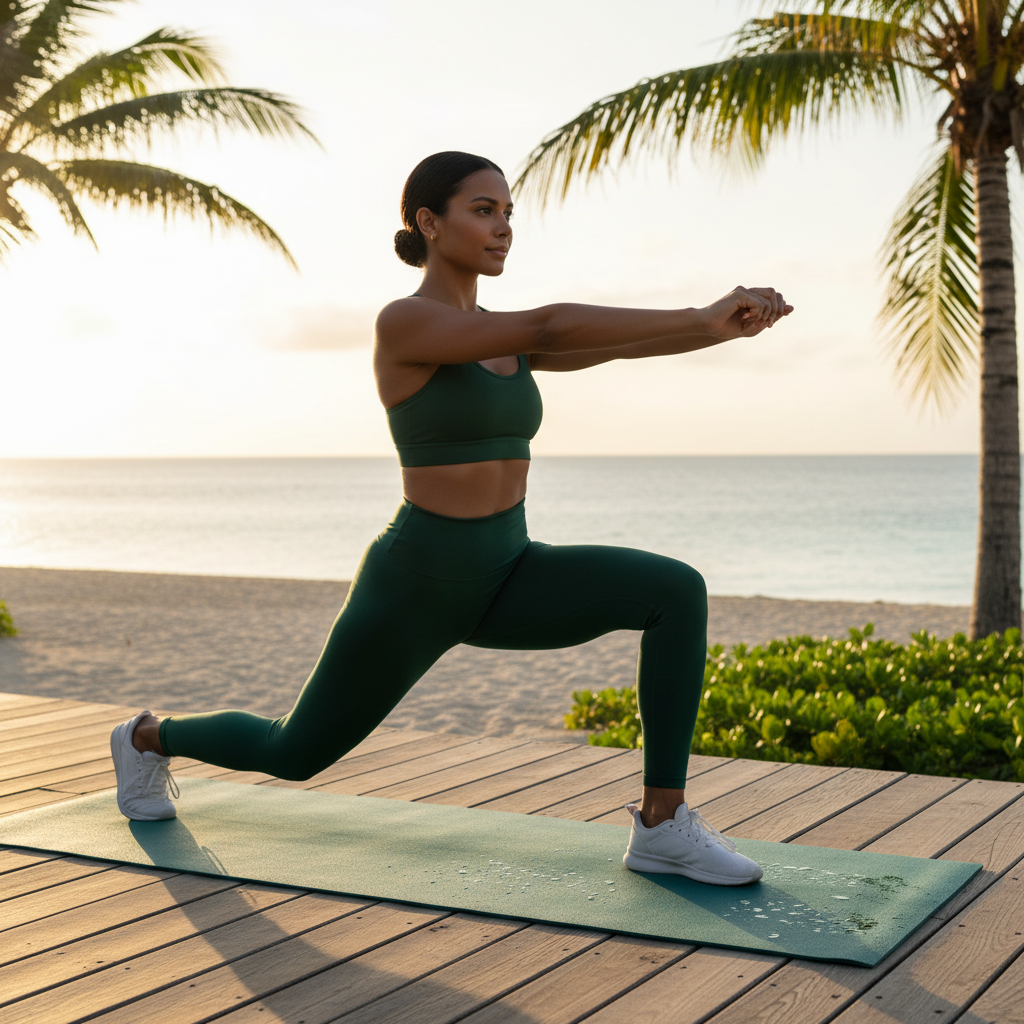
Lunges are excellent for building unilateral (single-leg) strength, which helps correct muscle imbalances and improves balance. They target the quads, hamstrings, and glutes.
How to Perform a Forward Lunge
- Stand tall with feet hip-width apart.
- Step forward with one leg, lowering your hips until both knees are bent at approximately a 90-degree angle.
- Ensure your front knee is directly above your ankle and your back knee hovers just above the floor.
- Push off your front foot to return to the starting position.
- Alternate legs.
- Progression– Hold dumbbells in each hand for added resistance.
4. Dumbbell Rows- Back Muscle Builder
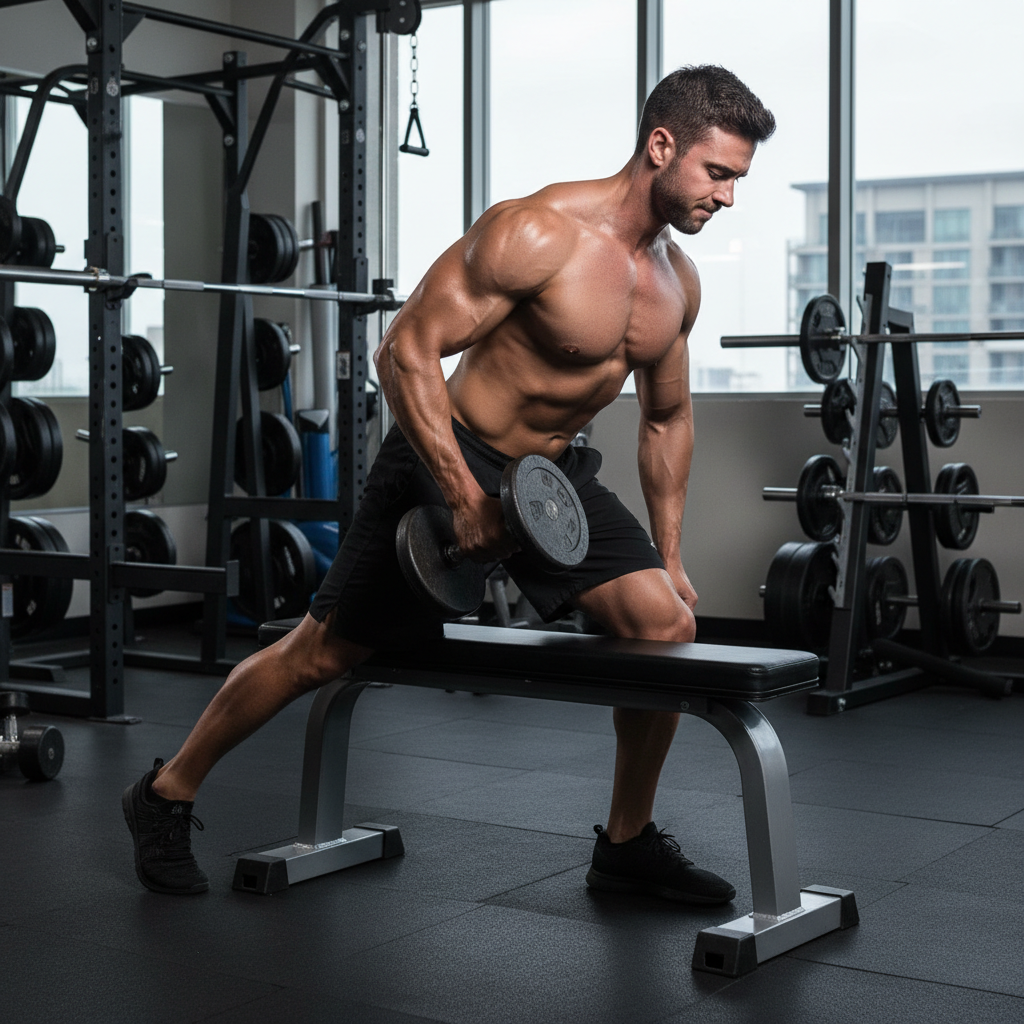
If you have dumbbells, rows are indispensable for building a strong, muscular back and improving posture. They target the lats, rhomboids, and biceps.
How to Perform a Single-Arm Dumbbell Row
- Place your left knee and left hand on a bench or sturdy chair, keeping your back flat and parallel to the floor.
- Hold a dumbbell in your right hand, arm extended towards the floor.
- Pull the dumbbell up towards your chest, squeezing your shoulder blade at the top.
- Slowly lower the dumbbell back down with control.
- Complete all reps on one side before switching.
- Note– If no dumbbells, use a heavy backpack or water jugs.
5. Overhead Press- Shoulder and Core Strength
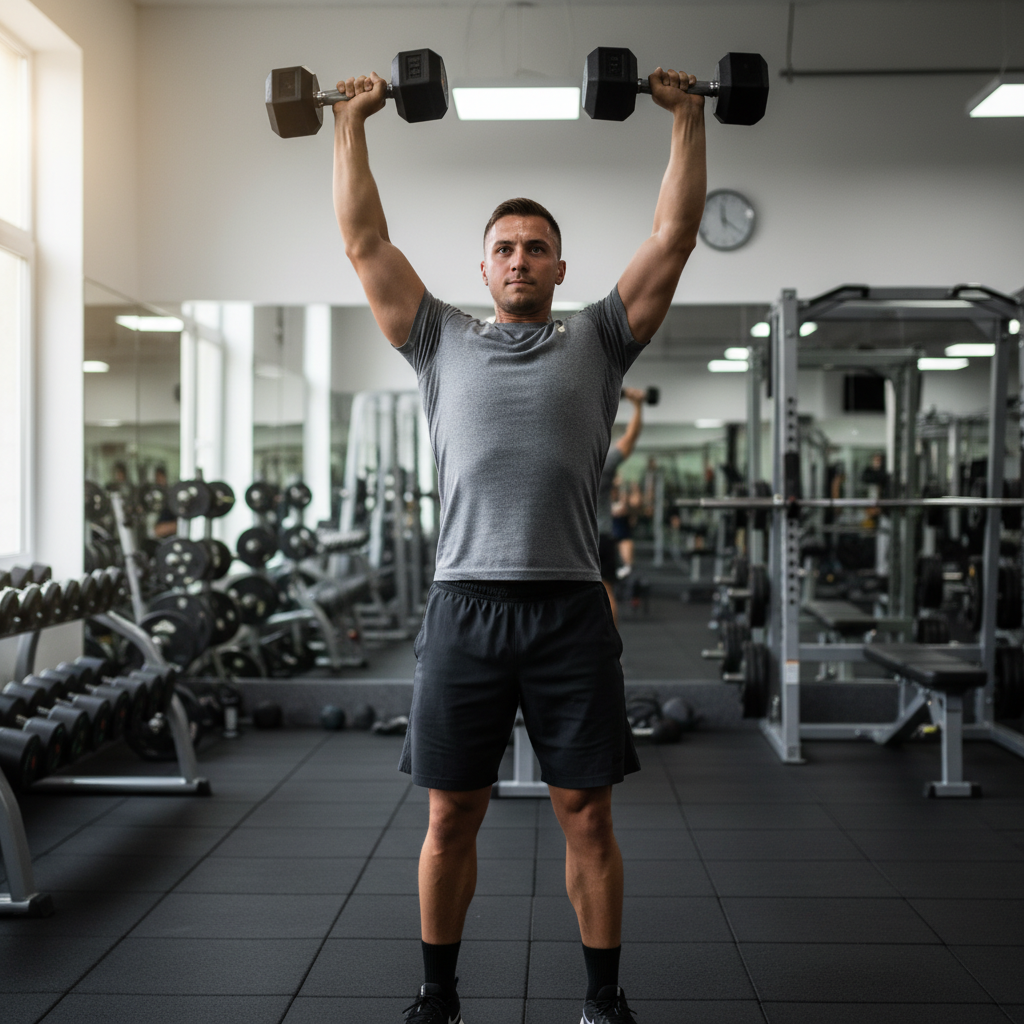
Another fantastic dumbbell exercise, the overhead press builds powerful shoulders and triceps while demanding significant core stability. It’s a key movement for upper body strength.
How to Perform a Standing Dumbbell Overhead Press
- Stand with feet shoulder-width apart, holding a dumbbell in each hand at shoulder height, palms facing forward.
- Engage your core and keep your back straight.
- Press the dumbbells directly overhead until your arms are fully extended (but not locked).
- Slowly lower the dumbbells back to the starting position.
- Note– Start with lighter weights to master form.
6. Plank- Core Foundation
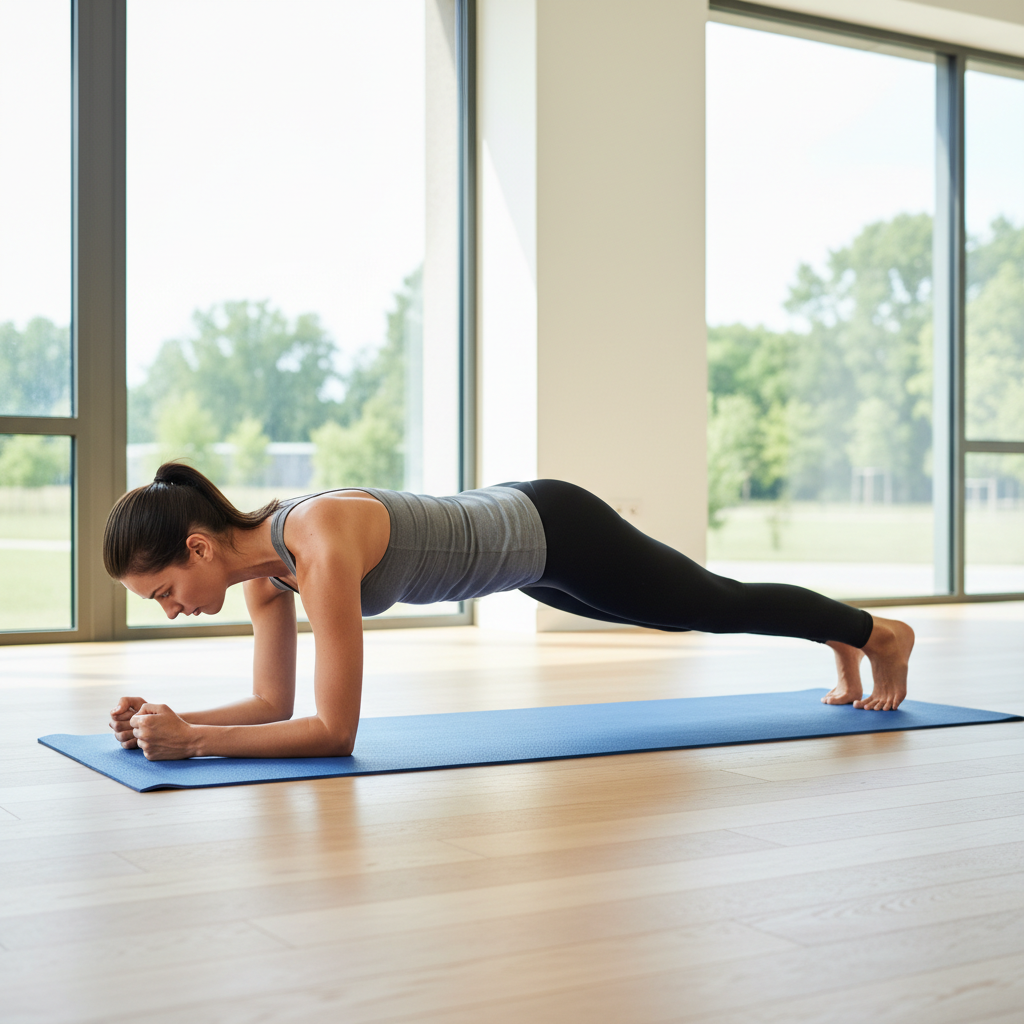
The plank is a static exercise that builds incredible core strength and stability, crucial for all other movements and protecting your spine. It works your entire core, including abs, obliques, and lower back.
How to Perform a Standard Plank
- Start in a push-up position, then lower onto your forearms, keeping your elbows directly under your shoulders.
- Maintain a straight line from your head to your heels, ensuring your hips don’t sag or pike up.
- Engage your core tightly.
- Hold this position for a set duration, focusing on maintaining perfect form.
- Progression– Increase hold time, or try single-arm/single-leg planks.
7. Glute Bridges- Posterior Chain Builder
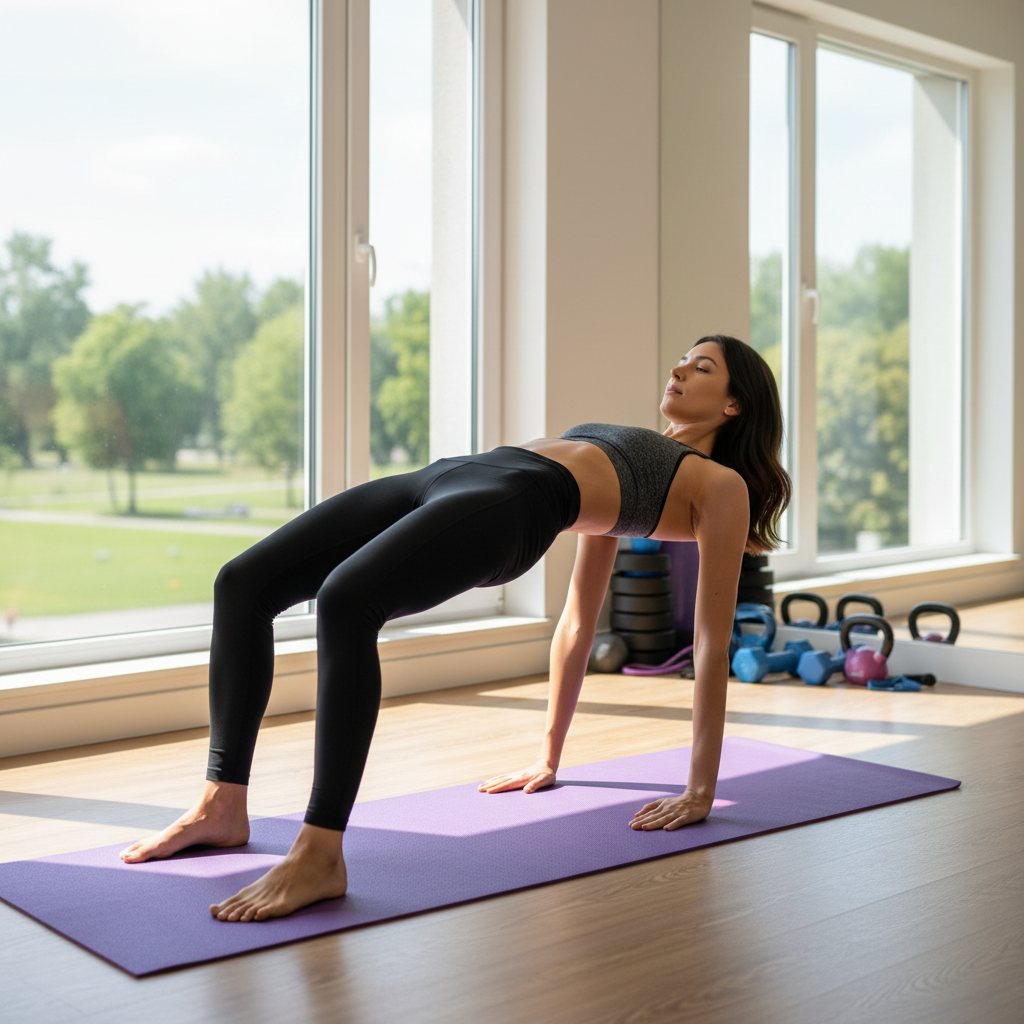
Often overlooked, glute bridges are excellent for strengthening your glutes and hamstrings, improving hip extension, and alleviating lower back pain. They are perfect for activating the posterior chain.
How to Perform a Glute Bridge
- Lie on your back with your knees bent, feet flat on the floor hip-width apart, close to your glutes.
- Keep your arms by your sides, palms down.
- Engage your core and glutes, then lift your hips off the floor until your body forms a straight line from your shoulders to your knees.
- Squeeze your glutes at the top.
- Slowly lower your hips back down to the starting position.
- Progression– Perform single-leg glute bridges or place a dumbbell on your hips for added resistance.
Building Your Home Workout Routine for Consistent Gains
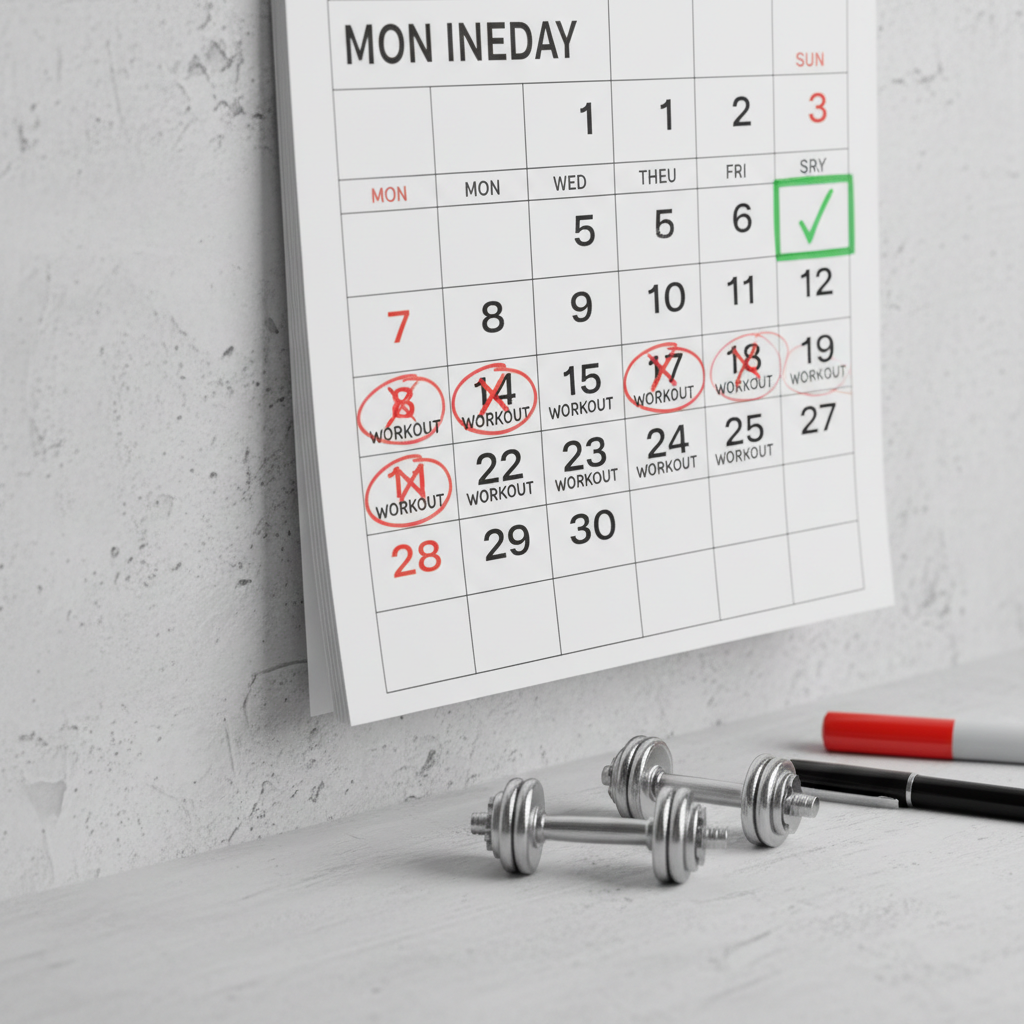
Now that you have your arsenal of exercises, let’s put them into a routine. A full-body workout performed 2-3 times a week is a great starting point for home muscle building.
Sample Weekly Home Workout Plan
| Day | Workout Focus | Exercises | Sets & Reps |
|---|---|---|---|
| Monday | Full Body Strength | Squats, Push-ups, Lunges (each leg), Dumbbell Rows (each arm), Plank | 3 sets of 8-12 reps (Plank 30-60 sec) |
| Tuesday | Active Recovery / Rest | Light walk, stretching | |
| Wednesday | Full Body Strength | Glute Bridges, Overhead Press, Push-ups (variation), Squats (variation), Plank | 3 sets of 8-12 reps (Plank 30-60 sec) |
| Thursday | Active Recovery / Rest | Light walk, stretching | |
| Friday | Full Body Strength | Lunges (each leg), Dumbbell Rows (each arm), Push-ups, Glute Bridges, Plank | 3 sets of 8-12 reps (Plank 30-60 sec) |
| Saturday | Active Recovery / Rest | Light walk, stretching | |
| Sunday | Rest | Complete rest |
Remember to warm up for 5-10 minutes before each workout (light cardio, dynamic stretches) and cool down afterwards (static stretches).
Mindset and Consistency for Lasting Results

The physical aspects of building muscle are only half the battle. Your mindset and ability to stay consistent are equally, if not more, important.
- Set Realistic Goals– Muscle growth is a journey. Celebrate small victories and don’t get discouraged by slow progress.
- Make it a Habit– Schedule your workouts like important appointments. Create cues (e.g., changing into workout clothes after work) to make it automatic.
- Listen to Your Body– Rest when you need to. Pushing too hard can lead to burnout or injury.
- Find Your Why– Remind yourself why you started. Is it for health, strength, confidence? This intrinsic motivation is powerful.
- Track Your Progress– Keep a simple journal of your reps, sets, and weights. Seeing your improvements is incredibly motivating and helps ensure progressive overload.
Conclusion
Building muscle effectively at home is not just possible—it’s a powerful way to take control of your fitness journey. By mastering these 7 foundational exercises and applying the principles of progressive overload, proper nutrition, and consistent effort, you can transform your body and build lasting strength. Remember, your home gym is more than just a space; it’s a testament to your commitment and resilience. Embrace the process, stay dedicated, and watch yourself grow stronger, healthier, and more confident every single day. The power to build the physique you desire is literally in your hands, right in your own home. Start today, stay consistent, and unlock your full potential!