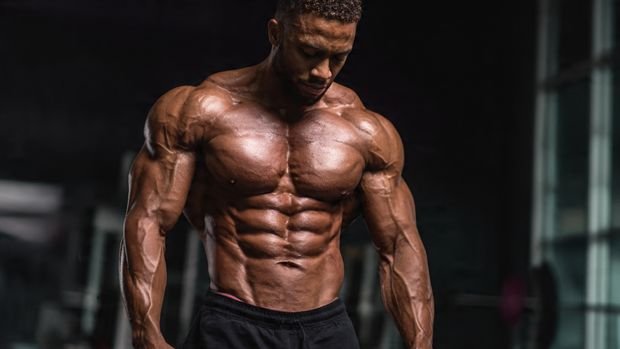

Get Bigger Forearms Without Fancy Gym Equipment
Strong, muscular forearms don’t just look impressive; they’re vital for everyday strength, grip power, and injury prevention. Whether you’re opening a stubborn jar, carrying groceries, or excelling in sports, robust forearms make a significant difference. Many people overlook forearm training, assuming it requires special gym equipment, but that couldn’t be further from the truth. You can build powerful forearms right from the comfort of your home, using nothing but your body weight and common household items.
This guide will show you how to target your forearm muscles effectively, explaining the science behind grip strength and providing a practical, step-by-step routine that fits into any busy schedule. Get ready to unlock new levels of strength and aesthetics, all without stepping foot in a gym.
Why Strong Forearms Matter for Everyone

Beyond aesthetics, strong forearms offer a myriad of functional benefits that impact daily life and athletic performance. They are the unsung heroes of your upper body, connecting your hands to your arms and powering almost every gripping, lifting, and pulling movement.
Enhanced Grip Strength
Your grip strength is a direct reflection of your forearm power. A stronger grip means you can lift heavier objects, maintain hold for longer periods, and perform better in activities like rock climbing, martial arts, and even simply carrying multiple items at once. It also plays a crucial role in many strength training exercises, allowing you to hold onto barbells or dumbbells more securely, thus maximizing your other lifts.
Injury Prevention
Well-developed forearms help stabilize your wrists and elbows, reducing the risk of common injuries like tennis elbow, golfer’s elbow, and carpal tunnel syndrome. Strengthening these muscles provides better support for the joints, especially for those who engage in repetitive hand or arm movements, whether at work or during hobbies.
Improved Daily Function
From opening tight lids to performing manual labor, strong forearms make everyday tasks feel easier. They contribute to overall functional fitness, making you more capable and resilient in various real-world situations.
Understanding Your Forearm Muscles
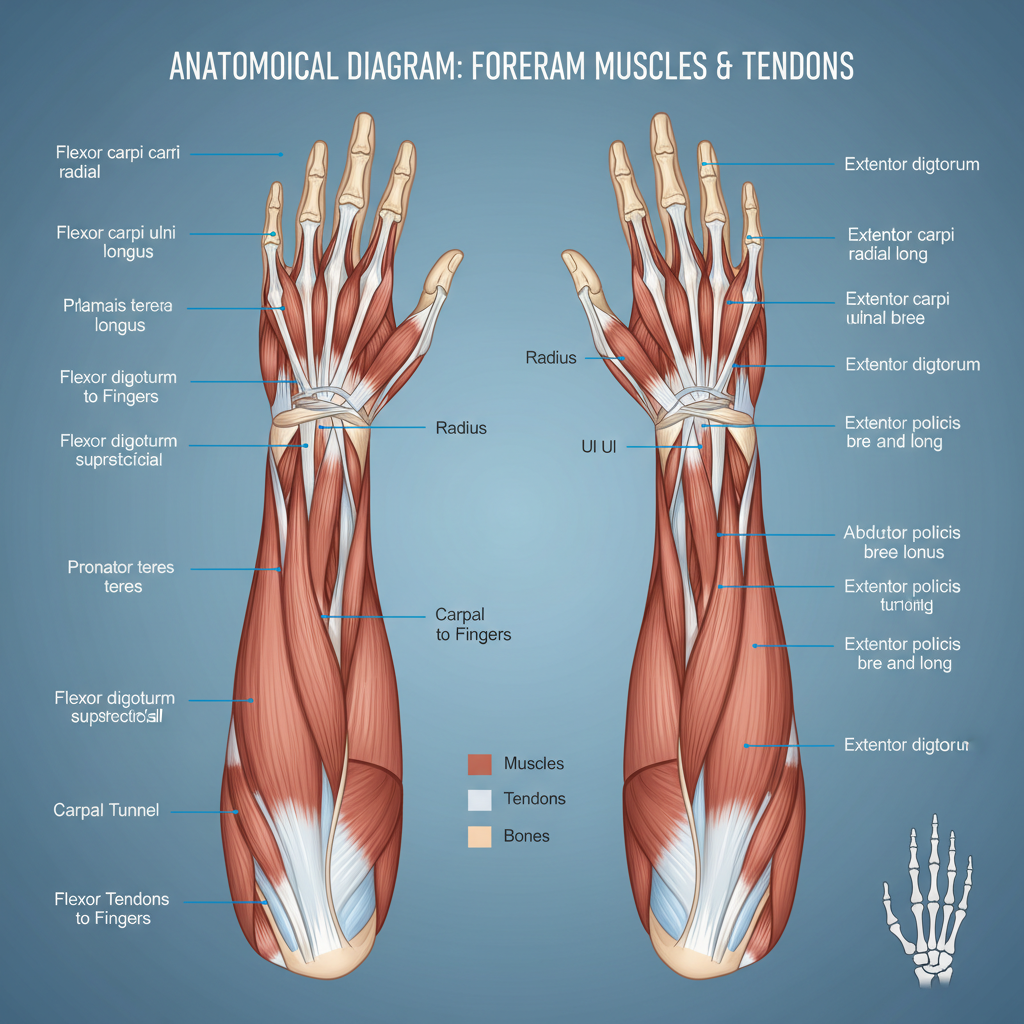
To effectively train your forearms, it helps to understand their basic anatomy. Your forearms are a complex group of muscles divided into two main compartments-the flexors and the extensors.
- Forearm Flexors These muscles are located on the underside of your forearm (palm-facing side). They are responsible for flexing your wrist (bending it forward), curling your fingers, and providing grip strength.
- Forearm Extensors Found on the top side of your forearm (knuckle-facing side), these muscles extend your wrist (bending it backward) and open your fingers.
A balanced approach that targets both sets of muscles is essential for comprehensive forearm development and injury prevention.
Effective Bodyweight and Household Item Exercises
You don’t need fancy equipment to challenge your forearms. These exercises leverage your body weight or simple items found around your home to build impressive strength and size.
Grip Strength Exercises
1. Towel Hangs
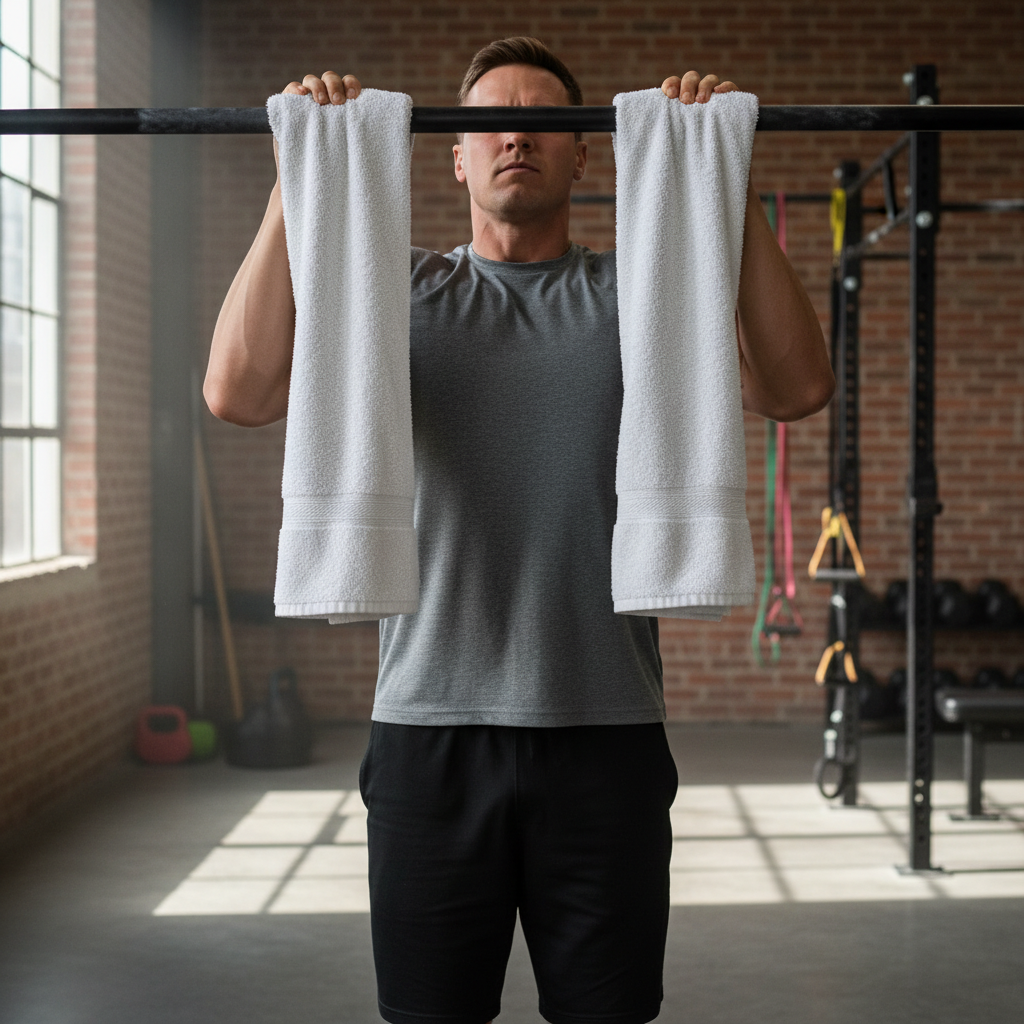
This is an excellent exercise for developing crushing grip strength. You’ll need a sturdy pull-up bar or a strong, stable beam.
- Drape two thick towels over a pull-up bar, ensuring they are evenly hung.
- Grab the ends of the towels with an overhand grip, one towel in each hand.
- Hang from the towels for as long as you can, keeping your body straight and engaged.
- Start with short holds (10-15 seconds) and gradually increase your duration as your grip improves.
- Aim for 3-5 sets.
2. Plate Pinches (or Book Pinches)

If you have weight plates at home, great! If not, heavy books or even thick phone books work just as well.
- Take two weight plates (or books) and press their smooth sides together.
- Grip them firmly with your thumb on one side and your fingers on the other.
- Lift them off the ground and hold them for as long as possible.
- Keep your arm extended by your side.
- Repeat for 3-4 sets, alternating hands if needed.
3. Tennis Ball Squeezes
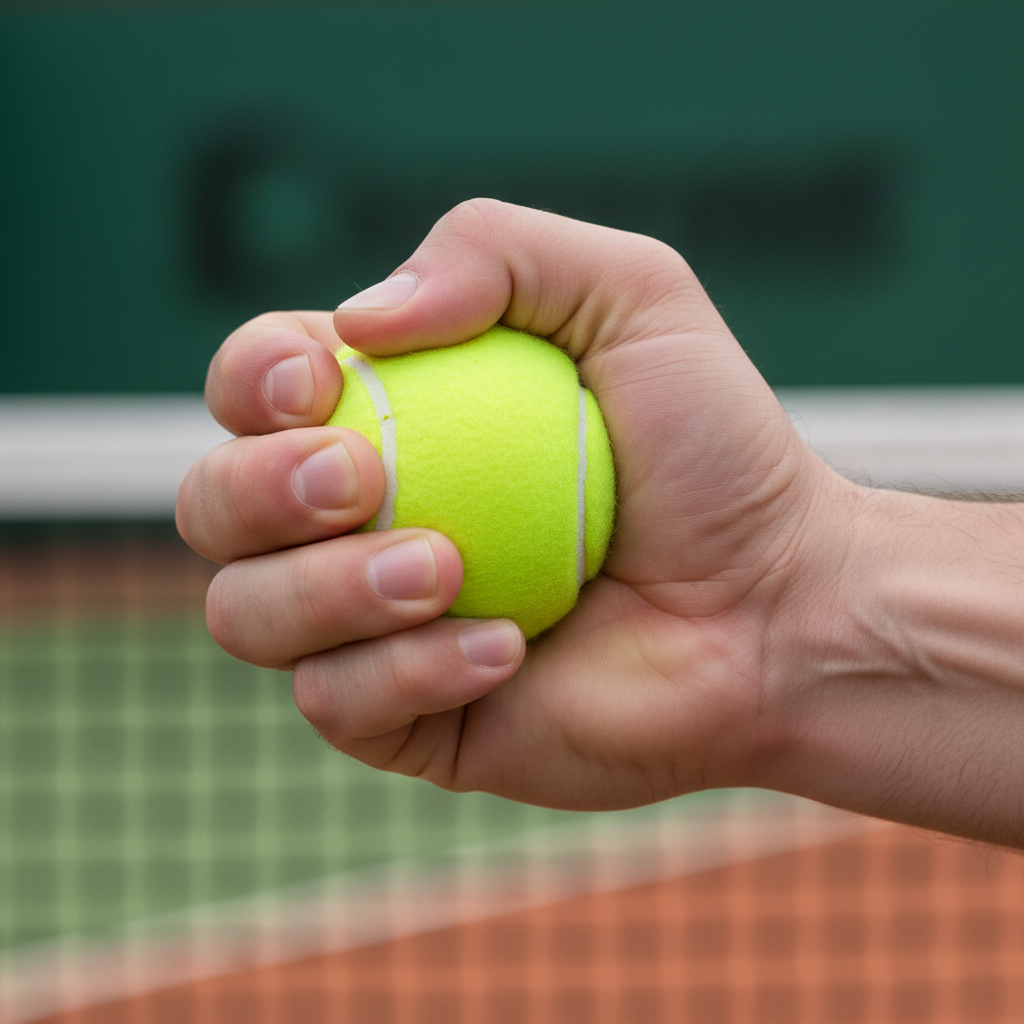
A simple yet effective way to work your forearm flexors and improve endurance.
- Grab a tennis ball (or a stress ball, a rolled-up sock, etc.).
- Squeeze it as hard as you can for 5-10 seconds.
- Release and repeat for 10-15 repetitions per hand.
- Perform 3-4 sets for each hand.
Wrist Flexion and Extension Exercises
These movements directly target the flexor and extensor muscles of your forearms.
1. Wrist Curls (with Household Weight)

You can use a heavy water bottle, a can of food, or a small bag of rice as your weight.
- Sit down and rest your forearm on your thigh, with your wrist and hand hanging off your knee, palm facing up.
- Hold your household weight in your hand.
- Slowly lower the weight by extending your wrist downwards.
- Curl the weight back up, flexing your wrist as high as possible.
- Perform 12-15 repetitions for 3 sets per arm.
2. Reverse Wrist Curls (with Household Weight)
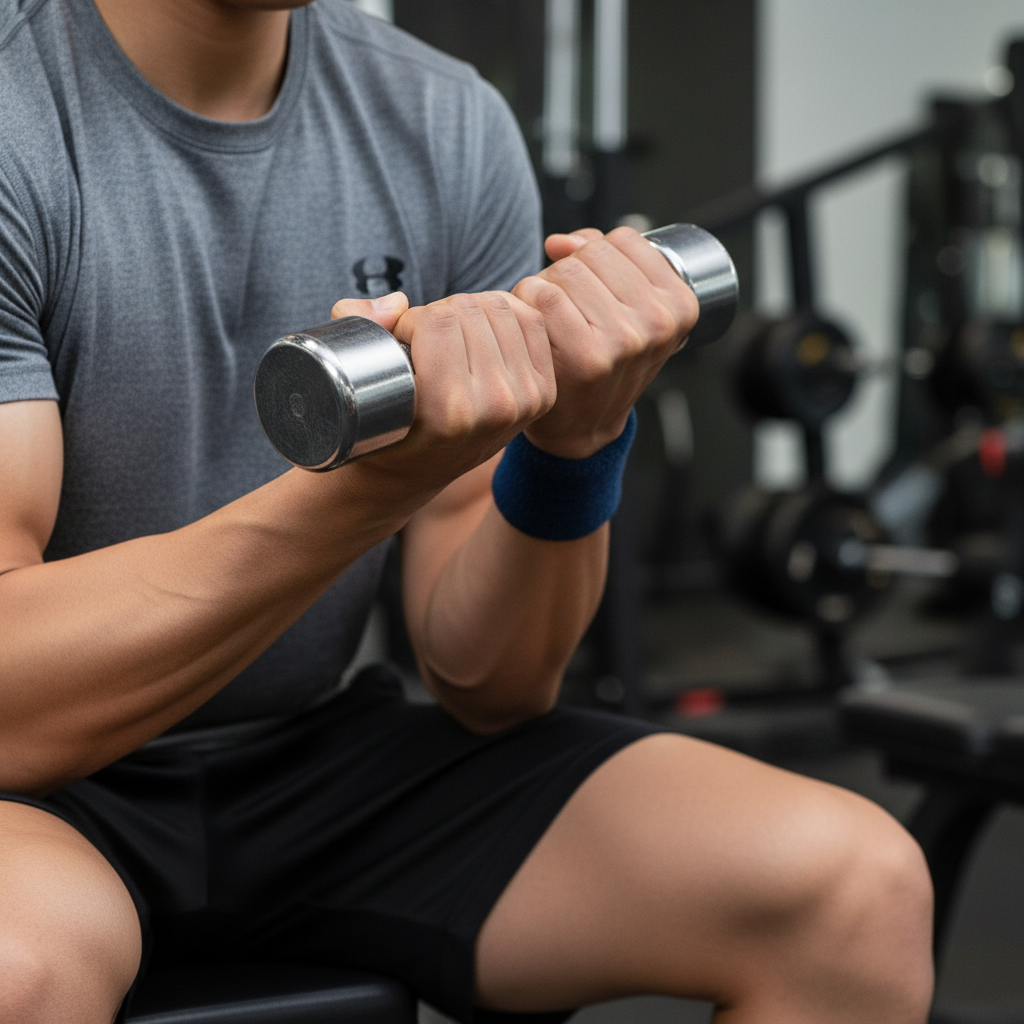
Similar to wrist curls, but targeting the extensors.
- Sit down and rest your forearm on your thigh, with your wrist and hand hanging off your knee, palm facing down.
- Hold your household weight in your hand.
- Slowly lower the weight by flexing your wrist downwards.
- Curl the weight back up, extending your wrist as high as possible.
- Perform 12-15 repetitions for 3 sets per arm.
Forearm Rotation Exercises
1. Hammer Curls (with Household Weight)
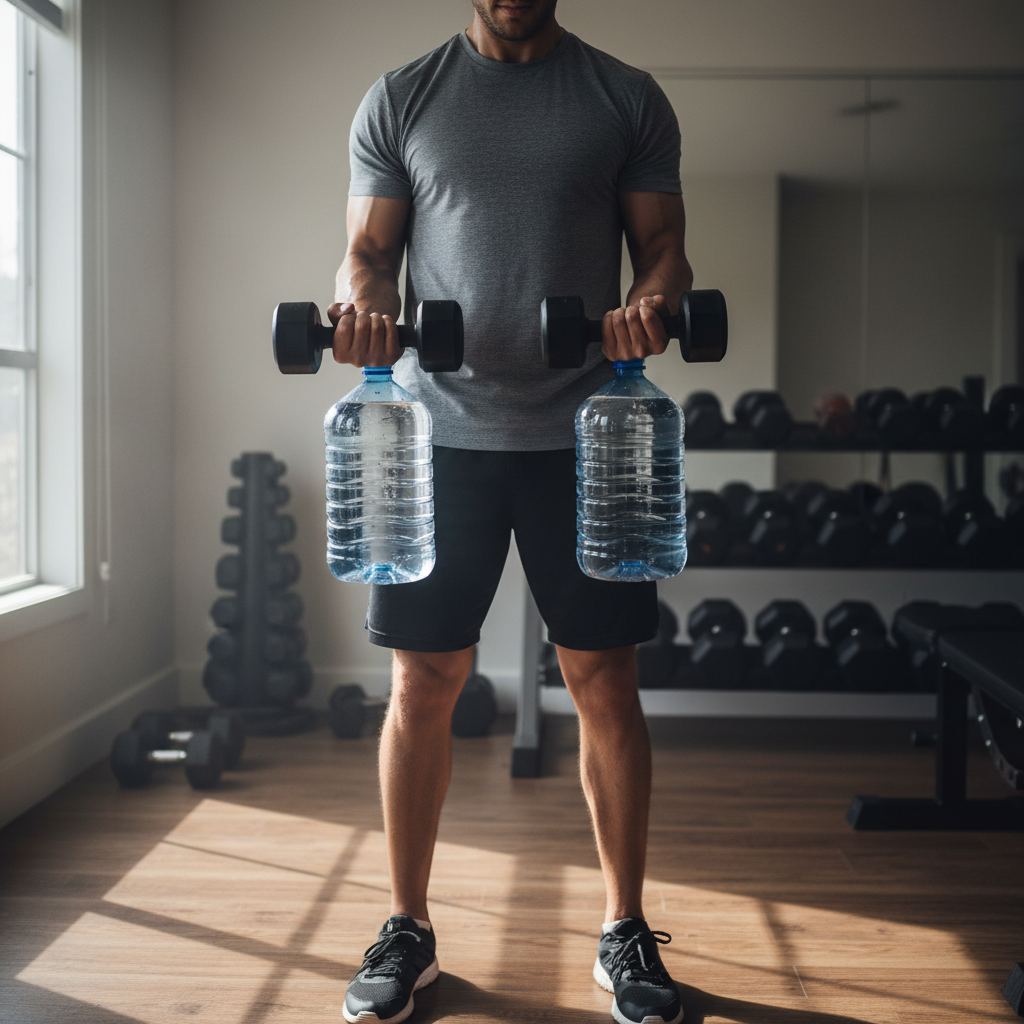
This targets the brachioradialis, a prominent forearm muscle.
- Stand or sit, holding your household weight with a neutral grip (palm facing your body).
- Keep your elbow close to your side and curl the weight up towards your shoulder.
- Lower with control.
- Perform 10-12 repetitions for 3 sets per arm.
Sample Weekly Forearm Routine
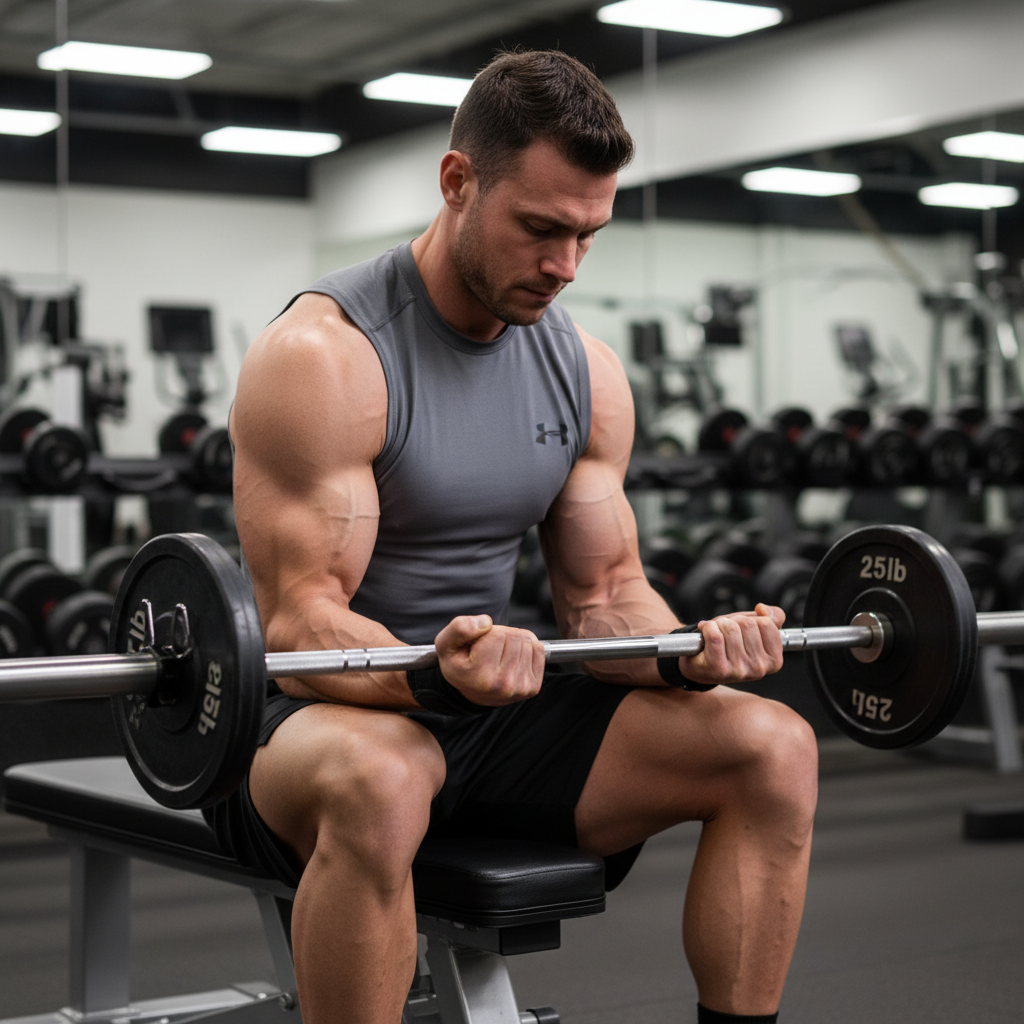
Consistency is key for muscle growth. Aim to train your forearms 2-3 times a week, allowing for rest days in between. You can integrate these exercises into your existing routine or perform them as a standalone mini-workout.
| Day | Exercise | Sets | Reps/Hold Time |
|---|---|---|---|
| Monday | Towel Hangs | 3-4 | Max Hold |
| Wrist Curls | 3 | 12-15 | |
| Reverse Wrist Curls | 3 | 12-15 | |
| Wednesday | Plate/Book Pinches | 3-4 | Max Hold |
| Tennis Ball Squeezes | 3 | 10-15 | |
| Hammer Curls | 3 | 10-12 | |
| Friday | Towel Hangs | 3-4 | Max Hold |
| Wrist Curls | 3 | 12-15 | |
| Reverse Wrist Curls | 3 | 12-15 |
Mindset and Consistency- Staying on Track

Building strength and muscle is a journey, not a destination. It requires patience, discipline, and a positive mindset. Here’s how to stay consistent with your forearm training:
- Set Realistic Goals Don’t expect immediate results. Forearm growth, like all muscle growth, takes time. Focus on small, incremental improvements in your grip strength or endurance.
- Track Your Progress Keep a simple log of your sets, reps, and hold times. Seeing your progress will be incredibly motivating and help you push past plateaus.
- Make It a Habit Integrate forearm exercises into your daily routine. Maybe you do wrist curls while watching TV or towel hangs after your main workout. Consistency trumps intensity when it comes to long-term gains.
- Listen to Your Body While progressive overload is important, don’t overtrain. If you feel pain, take a rest day. Proper recovery is just as crucial as the workout itself.
- Celebrate Small Wins Acknowledge every improvement, no matter how minor. Each extra second on a towel hang or an added rep on wrist curls is a step forward.
Conclusion
You now have all the tools and knowledge to sculpt stronger, more defined forearms without needing any specialized gym equipment. From simple towel hangs to using everyday household items, the path to impressive forearm development is accessible to everyone. Remember, consistency, proper form, and a positive mindset are your most powerful allies on this journey.
Don’t underestimate the impact that powerful forearms can have on your overall strength, functional ability, and confidence. Start today, commit to the routine, and watch as your grip strength skyrockets and your forearms transform. Embrace the challenge, stay dedicated, and soon you’ll be showcasing forearms that truly speak volumes about your commitment to fitness. Your stronger self awaits!