Why High-Calorie Foods Can Be Harmful – Hidden Side Effects Explained
High-calorie foods are everywhere — in snacks, fast food, sweet beverages, processed meals, and even some “healthy” treats. While calories are essential for energy and survival, consuming too many high-calorie foods can lead to serious health problems over time. The danger often lies in foods that are calorie-dense but nutrient-poor, meaning they provide lots of energy but very few vitamins, minerals, or beneficial nutrients.
The hidden side effects of these foods don’t always show instantly. Instead, they appear gradually through weight gain, low energy, hormonal imbalances, digestive problems, and more. Understanding why high-calorie foods can be harmful helps you make healthier eating choices and protect your long-term well-being.
This guide explains the hidden dangers, common sources, and practical ways to reduce harmful high-calorie foods from your diet.
1. What Are High-Calorie Foods?
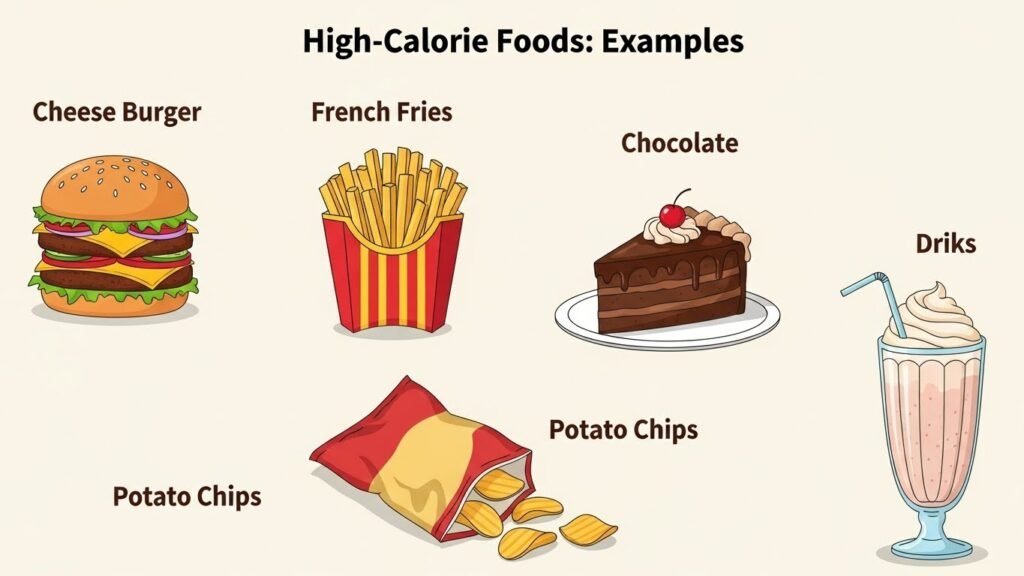
High-calorie foods are foods that contain a large amount of energy in a small portion. Many of them are heavily processed and designed to taste addictive.
These foods are often:
- High in sugar
- High in unhealthy fats
- Low in fiber
- Low in nutrients
- Highly processed
Examples include:
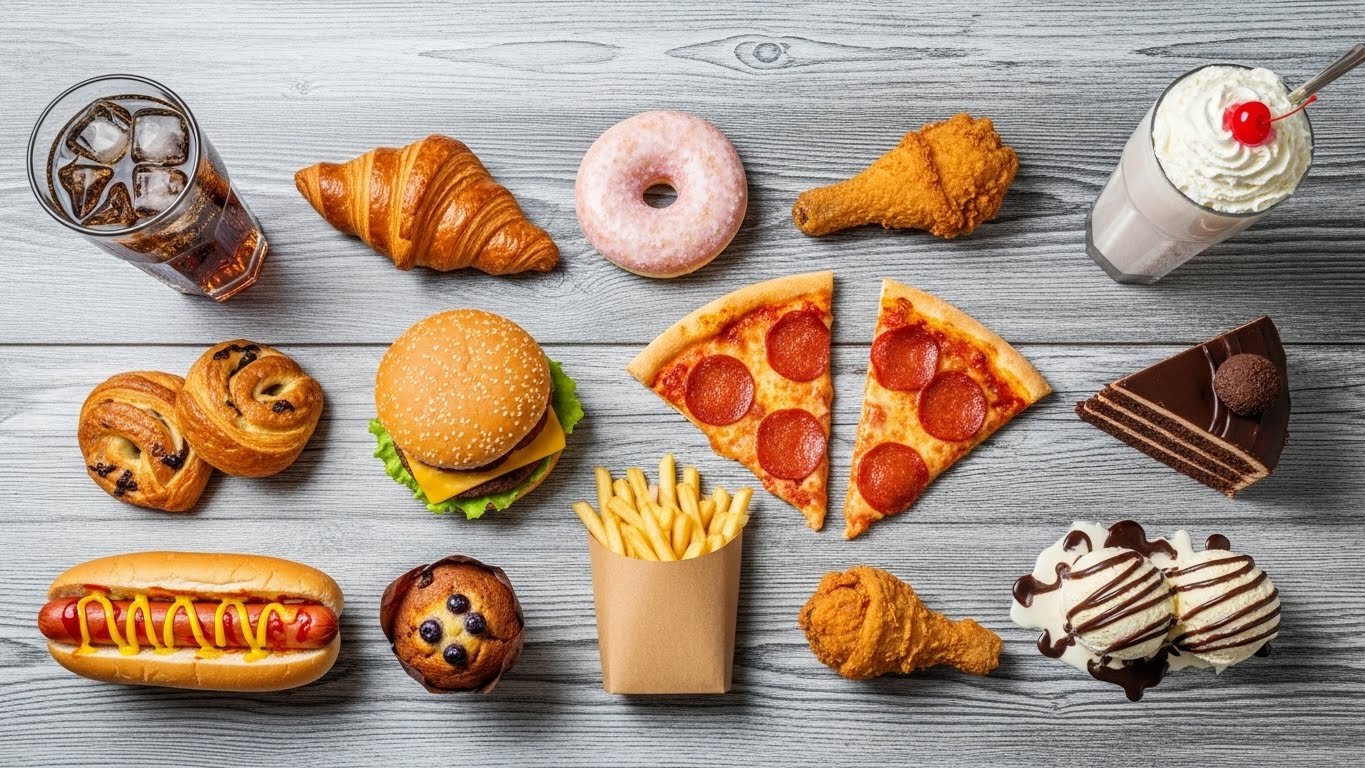
- Fast food
- Chips and fried snacks
- Cookies, cakes, pastries
- Ice cream
- Soda and sugary drinks
- Processed meat
- Packaged instant meals
Not all high-calorie foods are bad, but excessive intake of the harmful ones can cause long-term health issues.
2. The Hidden Side Effects of Eating Too Many High-Calorie Foods
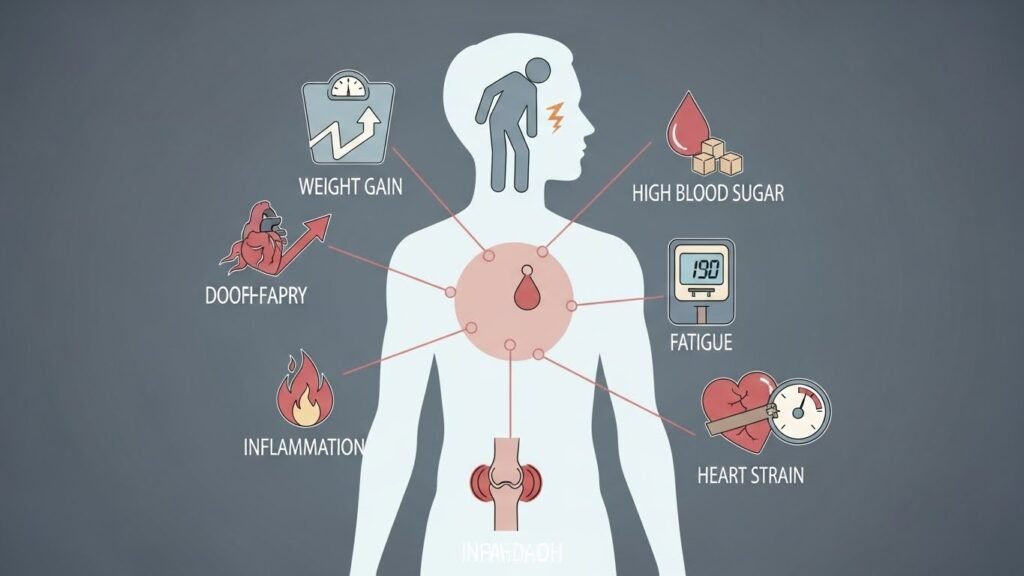
Many people know high-calorie foods cause weight gain, but the hidden side effects go far beyond that.
1. Weight Gain & Belly Fat
High-calorie foods are often loaded with fats, oils, and sugars that the body quickly stores as fat.
They cause:
- Excess calorie intake
- Belly fat accumulation
- Higher risk of obesity
Calories from sugary or fatty foods add up quickly, leading to long-term weight issues.
2. Blood Sugar Spikes
Foods high in calories from sugar (cakes, pastries, soft drinks) cause rapid blood sugar rises.
Side effects include:
- Fatigue
- Mood swings
- Intense cravings
- Insulin resistance
- Risk of type 2 diabetes
Your body struggles to manage these repeated spikes.
3. Low Nutrient Intake
High-calorie foods often lack vitamins, minerals, and antioxidants.
This leads to:
- Weak immunity
- Hair loss
- Poor skin health
- Constant tiredness
- Vitamin deficiency
You get plenty of energy, but almost no nourishment.
4. Digestive Problems
Many calorie-dense foods contain preservatives, artificial ingredients, and low fiber.
This causes:
- Constipation
- Bloating
- Indigestion
- Slow metabolism
A low-fiber diet affects gut health and digestion.
5. Increased Cholesterol Levels
Many high-calorie foods contain saturated and trans fats.
These raise:
- LDL (“bad”) cholesterol
- Risk of heart disease
- Risk of artery blockage
Fast food and fried snacks are major culprits.
6. Low Energy & Constant Fatigue
High-calorie processed foods may give a quick energy boost, but the crash afterward is harsh.
You may feel:
- Tired
- Unproductive
- Mentally foggy
Your energy becomes unstable throughout the day.
7. Hormonal Imbalance
Sugary and fatty foods disrupt hormone production.
This leads to:
- Weight gain
- Mood swings
- Poor sleep
- Increased appetite
Imbalanced hormones make weight loss even harder.
8. Skin Problems
High-calorie, high-sugar foods increase inflammation.
Common skin issues:
- Acne
- Oily skin
- Dull complexion
- Early aging
What you eat shows up on your skin.
9. Emotional Eating & Food Addiction
High-calorie foods stimulate dopamine release — the “pleasure hormone” — making them addictive.
This leads to:
- Overeating
- Cravings
- Loss of portion control
It becomes easy to eat more than your body actually needs.
3. Common High-Calorie Foods That Can Be Harmful
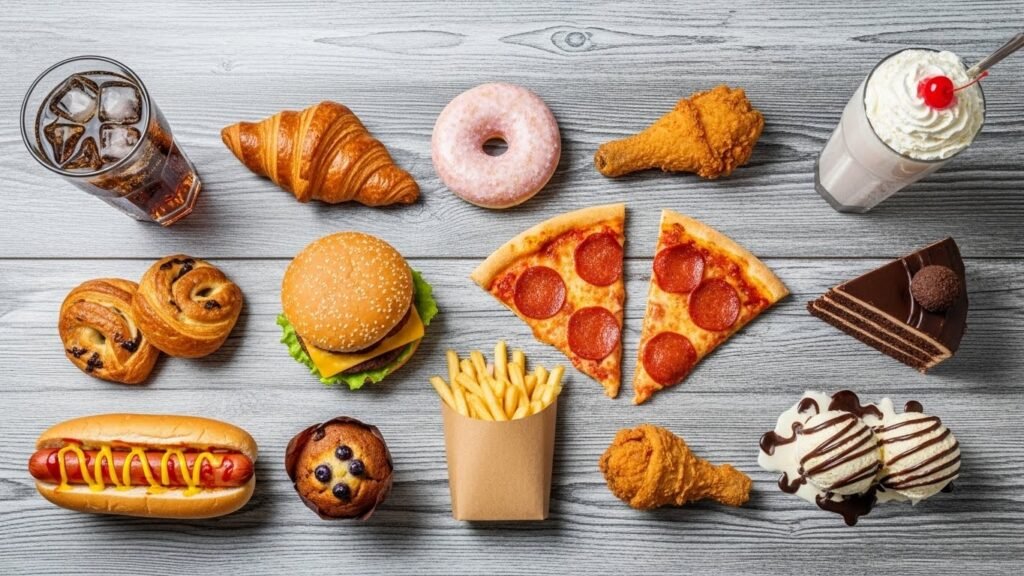
Here are everyday foods that contribute to hidden health issues:
1. Fast Food
- Burgers
- Fries
- Fried chicken
- Pizza
High in trans fats, sodium, and calories.
2. Sugary Drinks
- Soft drinks
- Energy drinks
- Milkshakes
- Sweetened coffee
One large soda can contain over 300 calories — almost all sugar.
3. Processed Snacks
- Chips
- Crackers
- Cheese puffs
Loaded with oils, salt, and preservatives.
4. Desserts
- Cakes
- Cookies
- Donuts
- Ice cream
Calorie-dense with low nutritional value.
5. Packaged Frozen Meals
Instant noodles, frozen pizzas, and ready-made dinners are extremely high in sodium and calories.
6. Refined Carbs
- White bread
- Bagels
- Pastries
- White pasta
They digest fast and convert into fat easily.
4. Why These Foods Are Hard to Resist
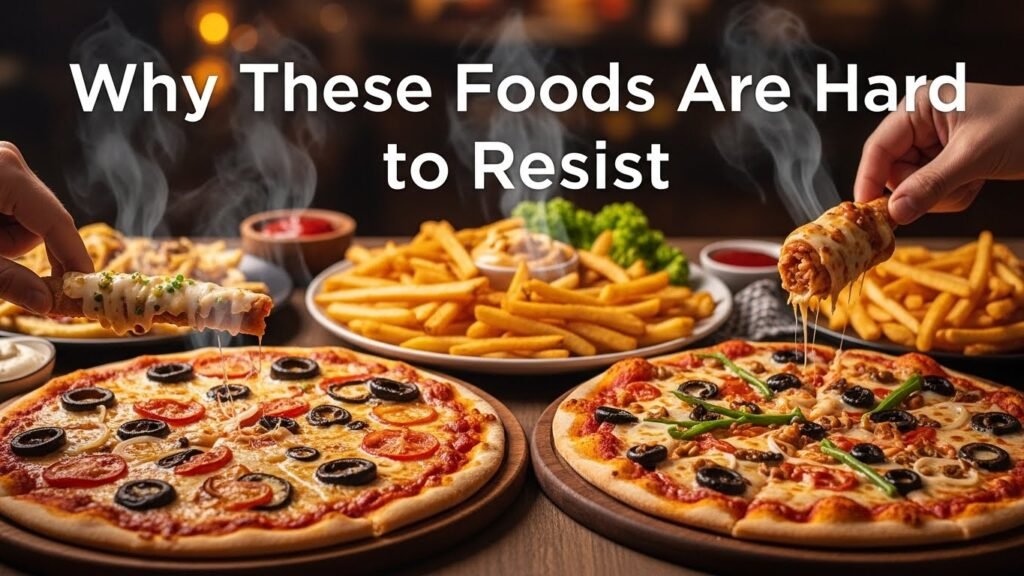
High-calorie foods are often engineered to be addictive.
They contain:
- High sugar
- High fat
- High salt
- Artificial flavor enhancers
This makes your brain crave more, even when you’re full.
Manufacturers design them to:
- Smell delicious
- Look appealing
- Trigger cravings
Knowing this helps you make better choices.
5. Signs You’re Eating Too Many High-Calorie Foods
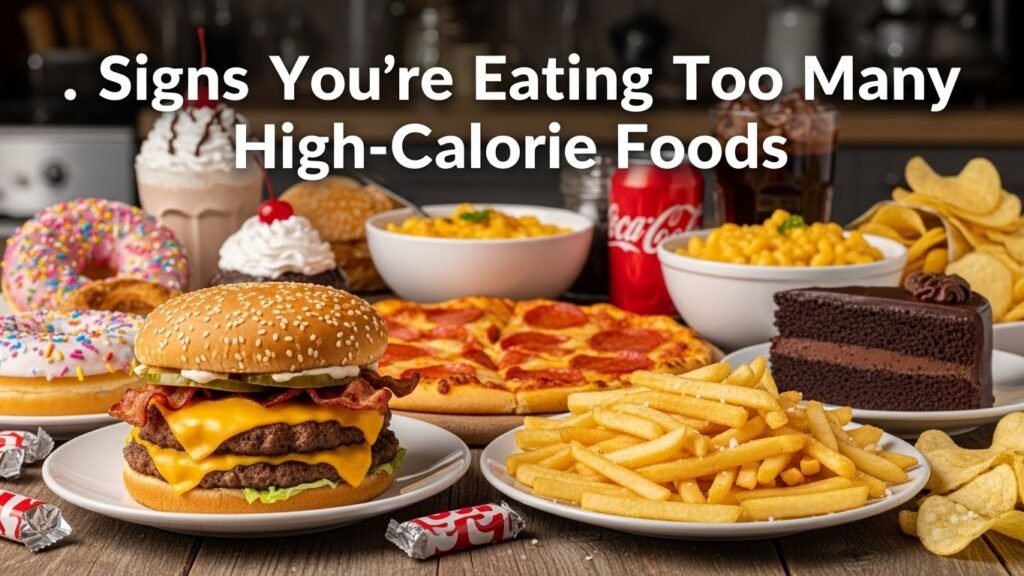
Your body may show:
- Constant cravings
- Weight gain
- Low energy
- Mood swings
- Digestive issues
- Skin breakouts
- Trouble concentrating
- Bloating
These signs mean your diet needs balancing.
6. How to Reduce Harmful High-Calorie Foods Safely

You don’t need to quit everything overnight. Small daily changes lead to lasting results.
1. Read Food Labels
Avoid foods with:
- Trans fats
- High sugar
- Artificial ingredients
2. Replace Sugary Drinks
Switch to:
- Water
- Lemon water
- Herbal teas
- Coconut water
3. Add More Whole Foods
Eat:
- Fresh fruits
- Vegetables
- Lean proteins
- Whole grains
4. Avoid Late-Night Eating
Calories eaten at night are more likely to be stored as fat.
5. Portion Control
Eat slowly and stop when full.
6. Healthy Snacks Instead
Try:
- Nuts
- Greek yogurt
- Fruit
- Hummus and veggies
7. Cook More Meals at Home
You control the ingredients, calories, and quality.
7. Health Benefits of Reducing High-Calorie Foods
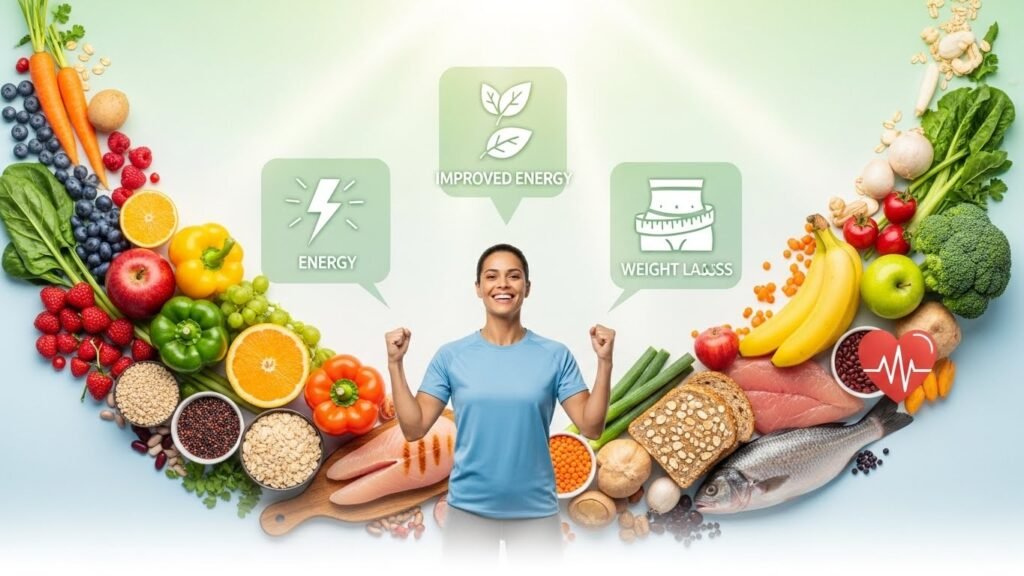
When you replace harmful foods with nutritious options, you may notice:
- More energy
- Better digestion
- Clearer skin
- Improved mood
- Weight loss
- Reduced cravings
- Better sleep
- Stronger immunity
Your overall health begins to transform.
Conclusion
High-calorie foods can be harmful when consumed regularly, especially when they come from processed, sugary, or fried sources. The hidden side effects — from weight gain and fatigue to hormonal imbalance and digestive issues — often build up slowly, making them easy to ignore until they become serious.
The good news? Making simple changes like choosing whole foods, drinking more water, cooking at home, and reducing processed snacks can drastically improve your health. You don’t have to eliminate all high-calorie foods, but learning how to balance your meals will help you maintain energy, stay at a healthy weight, and feel your best every day.


