Senior Fitness Made Simple: Gentle Workouts That Work
Getting older doesn’t mean slowing down — it means moving smarter. Staying active is one of the most powerful ways to maintain health, energy, and independence as we age. The best part? You don’t need to do anything extreme to stay strong and mobile.
Gentle, consistent workouts can improve balance, strength, flexibility, and mood — all while keeping you feeling young at heart. Whether you’re new to exercise or returning after a break, the key is finding simple movements that feel good for your body and that you can do at your own pace.
This guide will show you how to make senior fitness simple, enjoyable, and effective — no fancy equipment, no gym required.
Why Staying Active Matters as You Age

As we age, our bodies naturally lose muscle mass, flexibility, and balance. But regular movement can slow these changes and even reverse some of them.
Here’s how staying active helps:
- Keeps muscles and joints strong
- Improves posture and balance (reducing fall risk)
- Strengthens the heart and lungs
- Enhances energy levels and mood
- Helps control weight and blood sugar
- Supports better sleep and brain health
Exercise doesn’t just add years to your life — it adds life to your years. You’ll feel stronger, more confident, and more capable in daily tasks.
The Golden Rule: Move a Little Every Day

You don’t have to work out intensely to see benefits. In fact, gentle, daily movement is often more effective and sustainable for seniors than strenuous sessions.
Aim for a mix of:
- Aerobic activity: To keep your heart and lungs healthy
- Strength training: To protect muscles and bones
- Flexibility work: To maintain mobility
- Balance exercises: To prevent falls and keep coordination strong
Just 20–30 minutes of movement each day can make a big difference in how you feel.
Warm-Up: Prepare Your Body Gently
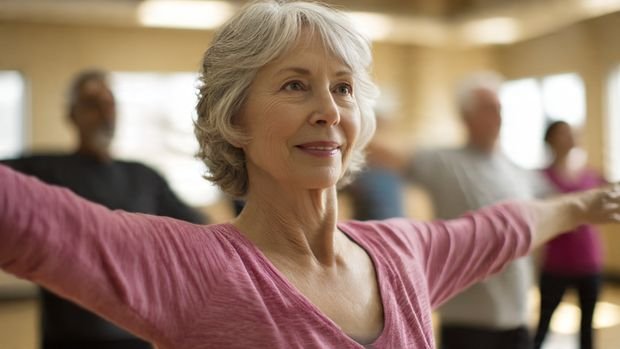
Always begin with a few minutes of warm-up to loosen your muscles and increase circulation. A warm-up can prevent injury and make movement feel smoother.
Try this simple 5-minute warm-up:
- March in place – 1 minute
- Arm circles – 30 seconds each direction
- Shoulder rolls – 30 seconds
- Side-to-side steps – 1 minute
- Gentle torso twists – 1 minute
Take deep breaths as you move and keep your posture tall. Once your body feels warm, you’re ready to exercise.
1. Strength Training for Stability and Independence
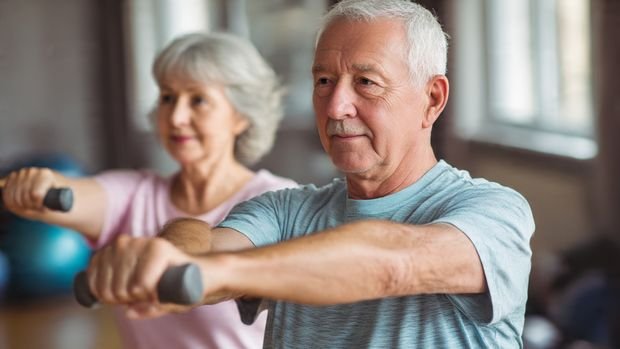
Building strength helps with everyday activities like climbing stairs, carrying groceries, or getting up from a chair. You don’t need heavy weights — your own body weight or light resistance is enough.
Chair Squats
- Stand in front of a sturdy chair.
- Sit down slowly, then stand back up using your legs (not your hands).
- Repeat 10–12 times.
This strengthens your thighs, hips, and core — key muscles for mobility.
Wall Push-Ups
- Stand facing a wall, arms straight and hands flat against it.
- Bend your elbows to bring your chest toward the wall, then push back.
- Repeat 10–15 times.
This builds upper body strength safely and gently.
Bicep Curls (With Light Weights or Water Bottles)
- Sit or stand with arms at your sides, palms facing forward.
- Bend your elbows and bring your hands toward your shoulders.
- Slowly lower back down.
- Repeat 10–12 times.
Strength training twice a week can help prevent muscle loss and keep you strong for daily life.
2. Balance Exercises to Prevent Falls
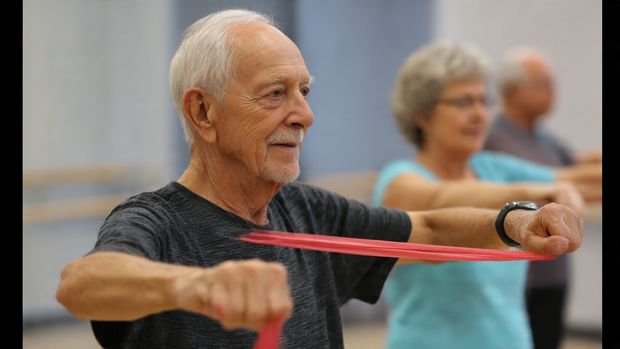
Falls are a major concern for seniors, but regular balance exercises can greatly reduce the risk. These movements strengthen stabilizing muscles and improve coordination.
Heel-to-Toe Walk
- Stand tall and walk in a straight line, placing one foot directly in front of the other.
- Look ahead, not down.
- Walk 10–20 steps.
This strengthens leg muscles and improves concentration.
Single-Leg Stand
- Hold onto a chair or counter for support.
- Lift one foot slightly off the floor and hold for 10–20 seconds.
- Switch legs.
Try to rely less on your hands over time — balance improves with practice.
Side Leg Lifts
- Hold onto a chair and lift one leg out to the side.
- Keep your body straight, not leaning.
- Lower your leg and repeat 10–12 times per side.
Balance work is simple but powerful — just a few minutes a day helps you move with confidence.
3. Gentle Cardio for Heart and Lung Health
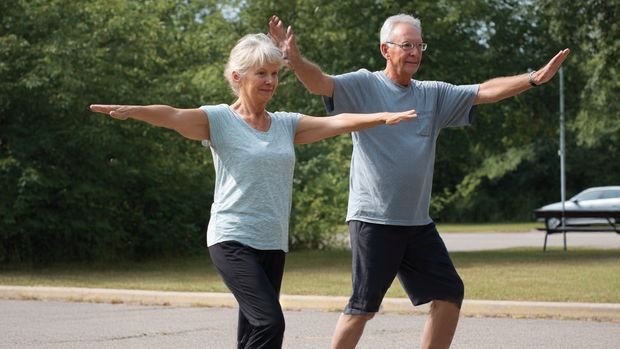
Cardiovascular exercise keeps your heart strong, improves stamina, and increases circulation. You don’t have to run or jump — low-impact cardio is just as effective.
Walking
The easiest and most natural form of cardio. Walk outdoors or indoors for 15–30 minutes at a comfortable pace.
Marching in Place
A perfect indoor option. March for 2–3 minutes at a time, lifting your knees slightly higher to raise your heart rate.
Seated Cardio
If standing is difficult, sit in a sturdy chair and do:
- Arm punches
- Leg marches
- Shoulder taps
Do 30–60 seconds per move, rest, then repeat for 10–15 minutes.
Aim for 150 minutes of moderate cardio per week — that’s about 20–25 minutes daily.
4. Flexibility and Stretching for Comfort and Mobility
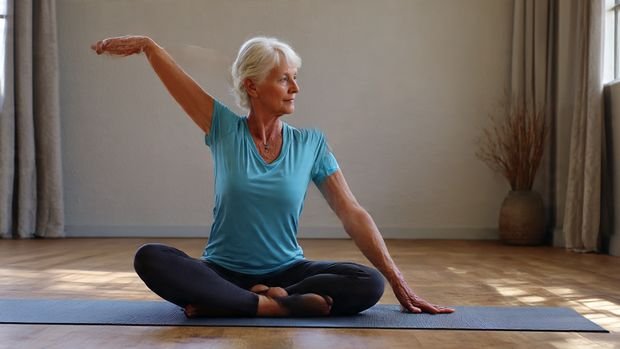
Stretching keeps muscles flexible, reduces stiffness, and improves circulation. You can stretch any time — after workouts or even while watching TV.
Neck Stretch
Gently tilt your head toward one shoulder, hold for 10 seconds, then switch sides.
Shoulder Stretch
Bring one arm across your chest, use your other arm to gently press it closer. Hold 15 seconds per side.
Seated Hamstring Stretch
Sit on the edge of a chair, extend one leg straight out, and reach toward your toes. Hold 15 seconds, then switch legs.
Ankle Circles
Lift one foot off the ground and slowly rotate your ankle in circles. Switch directions and repeat on the other foot.
Stretching for 5–10 minutes daily keeps your joints happy and helps you move freely.
5. Gentle Yoga and Mobility Work
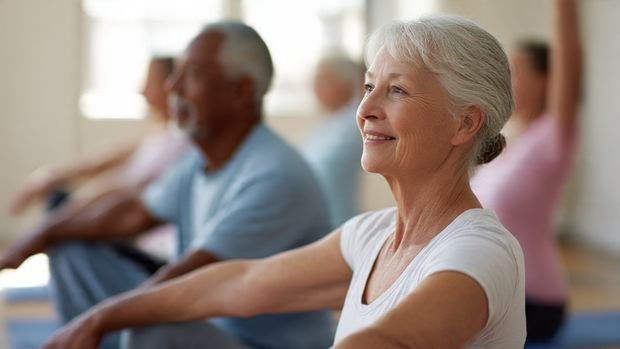
Yoga is an excellent way to combine flexibility, balance, and relaxation. You don’t need to be flexible to start — yoga meets you where you are.
Try these simple yoga-inspired moves:
- Seated Mountain Pose: Sit tall, shoulders relaxed, and breathe deeply.
- Cat-Cow Stretch: From hands and knees, alternate between arching and rounding your back.
- Standing Side Stretch: Reach one arm overhead and lean gently to the side, then switch.
- Child’s Pose: Kneel on the floor, stretch your arms forward, and rest your forehead down.
Gentle yoga 2–3 times a week can ease joint stiffness and calm the mind.
6. Seated Exercises for Limited Mobility
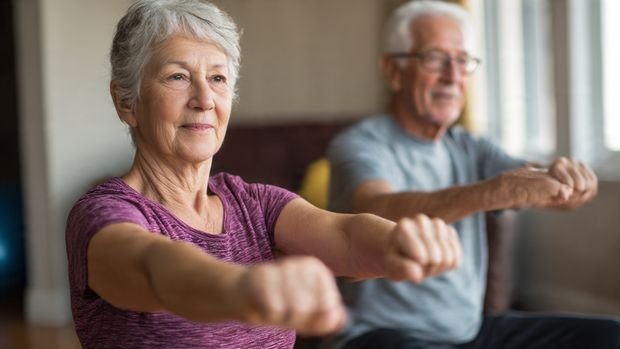
Even if you have limited mobility or balance challenges, you can still stay active safely. Chair-based workouts improve strength, flexibility, and circulation.
Seated Marches
Sit tall and lift your knees alternately, as if marching. Continue for 1–2 minutes.
Arm Circles
Raise your arms to shoulder height and make small circles. Do 10 forward and 10 backward.
Seated Leg Extensions
Extend one leg forward, hold for a moment, then lower it down. Alternate sides for 10–12 reps.
Shoulder Press
Hold light weights (or water bottles) at shoulder height and press upward. Repeat 10–12 times.
Chair workouts are gentle but effective — perfect for anyone who wants to stay active safely.
Safety Tips for Senior Exercise

- Consult your doctor before starting a new routine, especially if you have health conditions.
- Start slowly and increase intensity gradually.
- Use support (like a chair or wall) when needed for balance.
- Wear proper footwear for stability and comfort.
- Stay hydrated — even light workouts can cause dehydration.
- Listen to your body. Mild soreness is normal, but sharp pain means stop.
Consistency and comfort matter more than intensity. The goal is to move regularly, not perfectly.
How to Stay Motivated
It’s easy to lose motivation, but the secret is to make exercise enjoyable and social.
Here are a few ideas:
- Find a workout buddy or walking partner.
- Take short movement breaks throughout your day.
- Join a gentle fitness or chair yoga class (in person or online).
- Track your progress — celebrate small wins like walking longer or improving balance.
- Listen to uplifting music while exercising.
When exercise becomes something you look forward to, it stops feeling like a chore.
A Simple Weekly Fitness Plan for Seniors

Here’s a balanced routine you can follow to keep your body strong, flexible, and energized.
Monday:
20-minute walk + 10 minutes of stretching
Tuesday:
Strength training (chair squats, wall push-ups, bicep curls)
Wednesday:
Balance exercises + light yoga
Thursday:
Rest or gentle stretching
Friday:
Cardio session (walk, march, or chair workout for 25 minutes)
Saturday:
Strength and flexibility combo (bodyweight exercises + yoga)
Sunday:
Leisure activity — gardening, dancing, or outdoor stroll
The goal is consistency, not perfection. A few minutes a day of gentle movement adds up to powerful long-term results.
The Mind-Body Connection
Exercise benefits more than just your body — it supports mental and emotional health too.
Regular movement:
- Reduces stress and anxiety
- Improves memory and focus
- Boosts mood and self-confidence
- Increases social engagement and independence
Even five minutes of breathing or stretching can lift your spirits and improve your mindset. The more you move, the better you’ll feel — physically and mentally.
Final Thoughts
Senior fitness doesn’t have to be complicated or intense. It’s about moving with intention, listening to your body, and staying consistent.
Whether you walk, stretch, or practice yoga, every movement supports your strength, independence, and joy in daily life.
Start small — five minutes of movement today can lead to lasting health tomorrow. The goal isn’t to move like you used to — it’s to move well for where you are right now.
Gentle workouts work. They protect your body, sharpen your mind, and help you live fully — one steady step at a time.